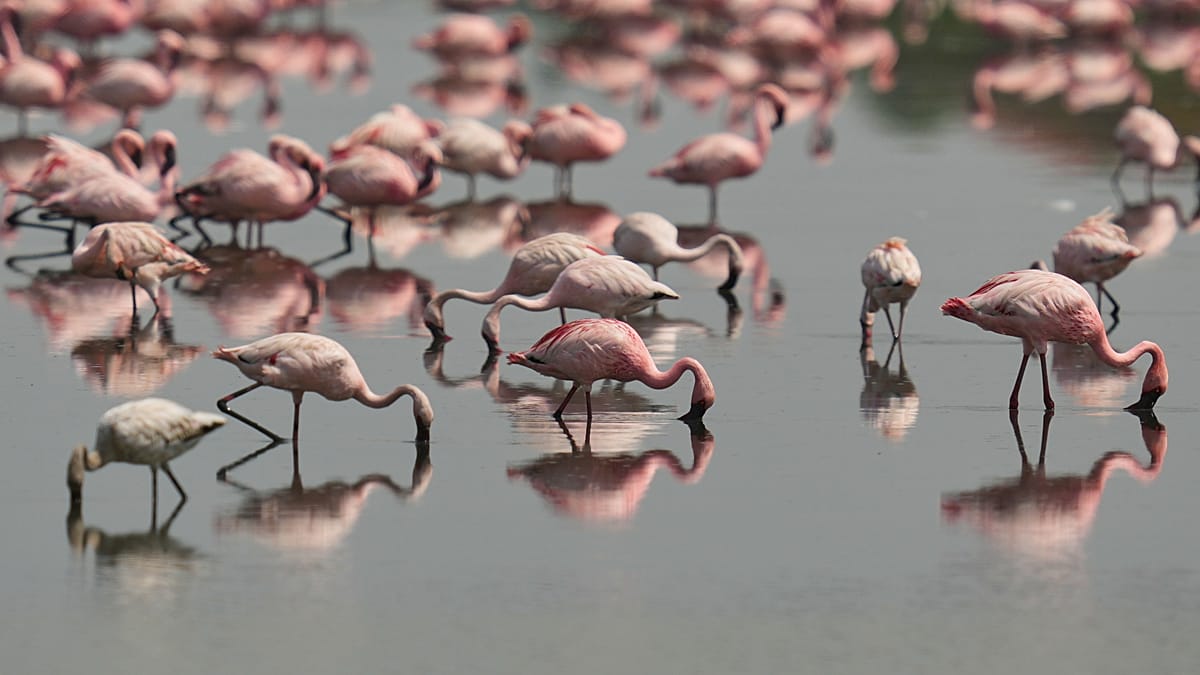
In the Venetian Lagoon, a dialect that has no word for the pale pink birds now has to make room for them. Flamingos—fenicotteri in Italian—have been appearing in growing numbers since the early 2000s, mostly in the remote fishing valleys and mudflats far from the tourist-packed canals of Venice’s historic centre. But in 2025, their presence became impossible to ignore: nearly 24,000 individuals were counted during the winter census, 6,000 more than the previous year.
Why the Lagoon Is Becoming a Flamingo Haven
Ornithologist Alessandro Sartori, who surveys the lagoon weekly by boat, describes the surge as a sign of ecological health. “These numbers position the Venetian Lagoon as one of the most important wintering spots in its entire habitat range,” he says. More than 90 percent of the birds were found in the northern lagoon, which retains large areas of natural salt marsh—known locally as barene—and traditional fishing valleys that offer abundant food.
Yet nesting remains elusive. Two attempts, in 2008 and 2013, ended in failure after violent hail killed dozens of chicks. Sartori has seen no fresh signs of nesting since, but he remains hopeful that ongoing restoration work could change that.
EU-Funded Restoration Targets Erosion and Climate
The lagoon originally covered 550 square kilometres, nearly half of which was salt marsh. Today, only about 7 percent remains, half of it reconstructed, according to Jane da Mosto, executive director of We Are Here Venice. Her organisation is the local partner in WaterLANDS, a €23.6 million, five-year EU project to restore wetlands across Europe.
The damage is most severe in the central and southern lagoon, where natural erosion combined with dredging of shipping channels to the Marghera industrial port in the 1960s has accelerated sediment loss. “Venice is now on a trajectory to becoming a marine bay,” da Mosto warns. The reconstruction project aims to demonstrate that this trend can be reversed.
Rebuilding salt marshes also boosts carbon capture and helps mitigate sea-level rise. Da Mosto acknowledges that much larger areas would need to be restored for meaningful climate benefits, but the EU project’s goal is to make the approach scalable.
Flamingos as Indicators of Biodiversity
The restored mudflats already show signs of flamingo activity—stray pink feathers, and flocks of more than 30 birds observed perching in the distance. Over the past three years, Sartori has seen numbers in the southern lagoon grow from a handful to 300–400 at certain times. “The hope is that they can find—as they have found in other parts of the Mediterranean—right here on these barene, places where they can nest,” he says.
Da Mosto’s team is also researching ways to increase biodiversity on the reconstructed marshes, including planting species that reduce erosion and improve resilience. The flamingos’ presence underscores the lagoon’s ecological value, offering visitors a chance to appreciate Venice beyond its historical and artistic treasures.
Casual flamingo-spotting remains difficult, however. AP reporters recently travelled an hour by boat to see any, and the birds are easily disturbed. Sartori predicts sightings will become more common as numbers grow, but urges respect: “This should always be done with respect for the animals, keeping a safe distance and not interfering with their daily lives.”
The flamingos’ arrival also highlights a broader European story: the potential of targeted wetland restoration to reverse decades of environmental degradation. As the EU’s WaterLANDS project expands, similar transformations may unfold across the continent’s coastal and inland wetlands.