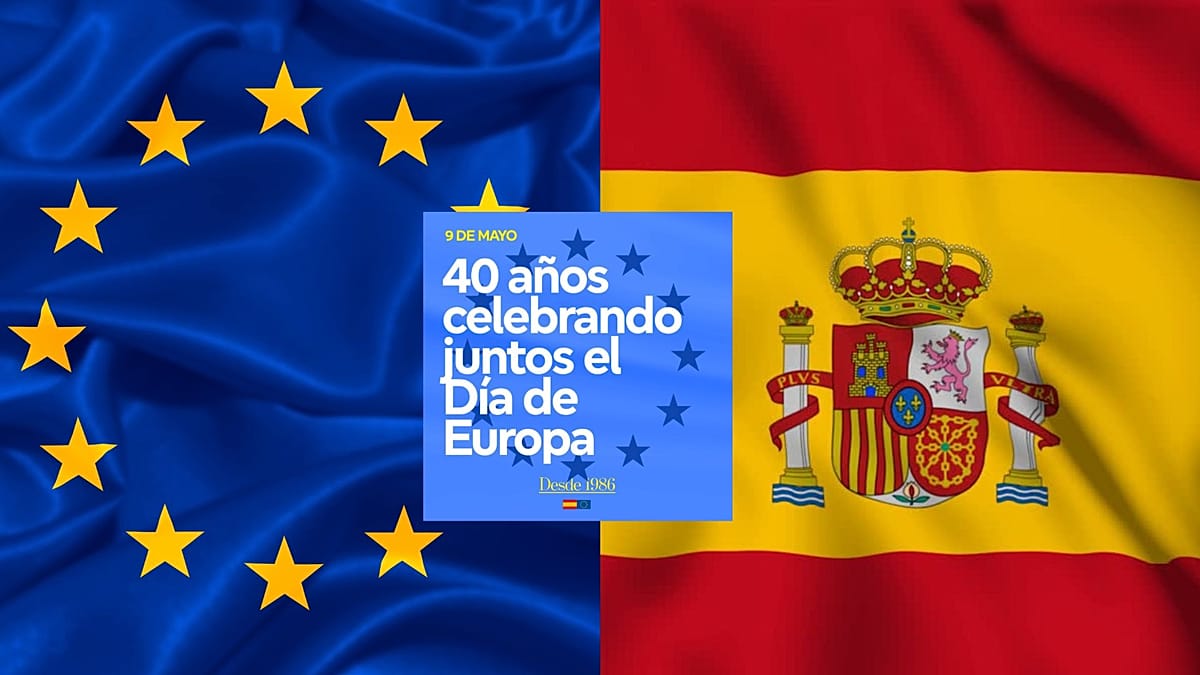
In the early hours of 1 January 1986, Spain crossed a threshold that would transform its future: joining the European Economic Community alongside Portugal. For a country that had only just emerged from four decades of Francoist dictatorship, this was far more than a diplomatic formality. It was a statement of political identity—a re-entry into the community of democratic nations from which it had been excluded.
Felipe González, who had applied for membership in 1977 as leader of the Socialist opposition and was now prime minister, understood that European integration was not merely about economics. It provided an institutional anchor for Spain's still-fragile democratic transition, a guarantee that the hard-won freedoms would not be reversed.
From Backwardness to Modernisation
The Spain of 1986 was a country with per capita income around €7,300, life expectancy of 76, and a population under 38 million. Exports accounted for barely 4.9% of GDP, and infrastructure lagged decades behind European standards. Forty years on, per capita income exceeds €31,000, life expectancy has reached 84, and exports have climbed to 34% of GDP. None of these transformations can be separated from EU membership.
The early years were not easy. Spain faced the abrupt opening of its market to European competition, triggering tensions across industry and agriculture. The Common Agricultural Policy (CAP) profoundly reshaped the Spanish countryside, forcing painful reconversions but also opening new markets for Mediterranean products—olive oil, fruit, wine. European structural funds began flowing into a country desperate for them. The motorways linking the Peninsula, the trains criss-crossing the country, modernised ports, and telecommunications systems were all built largely with financial backing from Brussels. Over four decades, Spain has received more than €185 billion in European funds for infrastructure, employment, innovation, and regional development.
An unexpected symbol of those early years was the Erasmus programme, launched by the European Community in 1987. What began as a modest university exchange initiative became the defining experience of a generation. Spain now receives the most Erasmus students in Europe, and more than 1.6 million Spaniards have participated over these four decades. For many young people, Erasmus was not just a semester abroad—it was the first time they truly felt European.
Maastricht, Schengen, and the Euro
The 1992 Maastricht Treaty transformed the European Economic Community into the European Union and paved the way for the single currency. For Spain, this meant taking on economic convergence commitments: deficit control, inflation management, budgetary discipline. It was the price of a seat at the top table. In 1995, the Schengen Agreement came into force in Spain, alongside Germany, France, Belgium, Luxembourg, the Netherlands, and Portugal. For the first time in modern history, citizens could cross Europe's internal borders without showing a passport—a physical embodiment of the idea that freedom of movement is a right, not a privilege.
The euro arrived on 1 January 1999 for financial transactions, and notes and coins reached citizens' pockets on 1 January 2002, replacing the peseta. It was a moment of emotion and melancholy—abandoning a currency with centuries of history—but also of gaining the feeling of sharing an economic destiny with hundreds of millions of Europeans. Fittingly, it was at a summit in Madrid in December 1995 that European leaders agreed on the name of the new currency: the euro.
Institutional Leadership and Crises
Spain has not merely benefited from the European project; it has helped build it. Since 1986, the country has held the Presidency of the Council of the European Union five times, most recently in the second half of 2023 under the motto "Europe, closer." Three presidents of the European Parliament and nine European commissioners have been Spaniards over these decades. Spain played a leading role in developing cohesion policy, boosting the EU's social dimension, and including a sanctions mechanism for states breaching fundamental values in the Amsterdam Treaty. It has also acted as a bridge between Europe and Ibero-America, leveraging historical, cultural, and linguistic ties with Latin America.
The 2008 financial crisis brutally tested Spain's resilience. Unemployment climbed above 26% in 2013, the construction sector collapsed, and the country faced a severe recession. Yet EU mechanisms—including the European Stability Mechanism and the European Central Bank's interventions—helped stabilise the economy. More recently, Spain has been at the forefront of digital payment innovation, with Bizum expanding to physical stores, challenging global giants like Visa and Mastercard.
Spain's relationship with the EU has not been without tensions. Disputes over agricultural subsidies, fishing quotas, and fiscal discipline have periodically surfaced. Yet the overall trajectory is one of profound integration and mutual benefit. As Europe Day reminds us, Spain's journey from dictatorship to a modern, open democracy is inseparable from its European commitment.