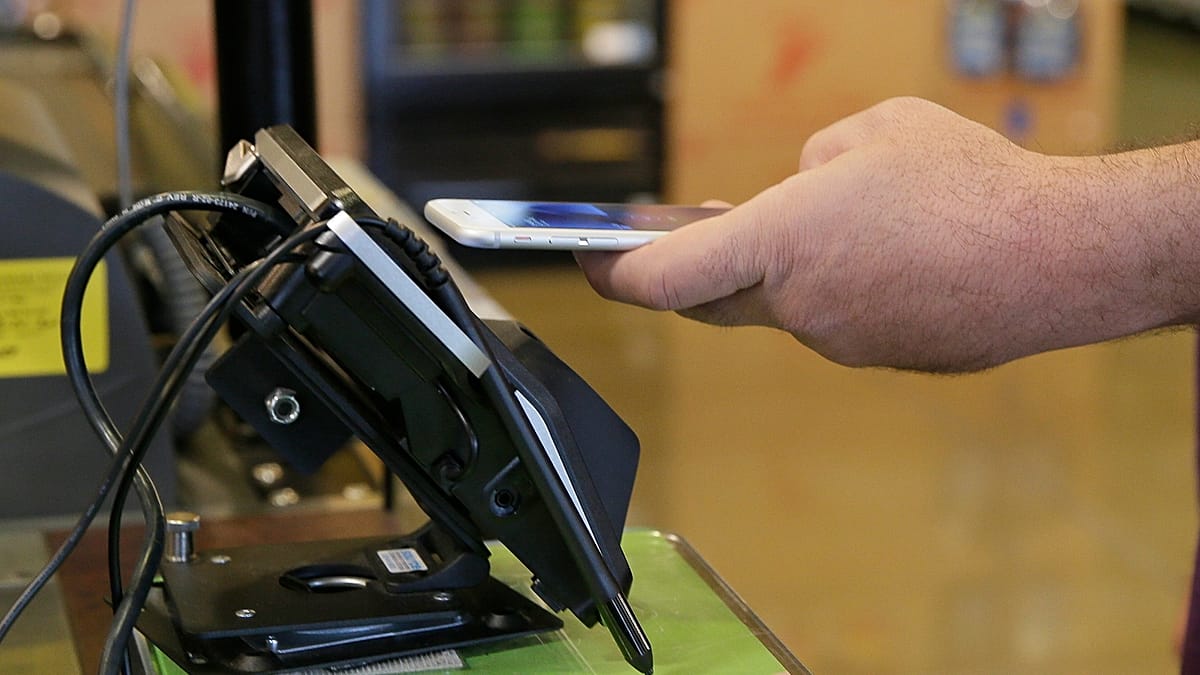
Bizum, the payment platform that has already transformed how Spaniards split restaurant bills and send pocket money, is preparing its most ambitious expansion yet: bringing account-to-account payments to physical retail terminals. From 18 May, the service will allow customers to pay by tapping their phones at checkout, routing money directly from their bank account to the merchant's via instant transfer — bypassing the traditional card networks entirely.
Until now, when a consumer in Madrid or Barcelona tapped a card or phone on a point-of-sale reader, the transaction travelled through Visa or Mastercard's infrastructure. Merchants paid interchange and service fees, and transaction data were processed on servers outside Europe. Bizum Pay changes that equation by using near-field communication (NFC) technology to settle payments in real time, keeping both the money and the data within Spain's banking system.
A Spanish success story with European ambitions
What began as a collaboration among Spanish banks to enable peer-to-peer transfers has grown into a payments ecosystem that now counts more than 30 million users — effectively the entire adult banking population of Spain. The platform is integrated with 111,000 businesses and 40 banking institutions, a level of interoperability that Germany and France have so far failed to replicate. In 2025, Bizum processed 3.4 million instant transfers per day, and its e-commerce channel closed the year with over 100 million payments.
The initial rollout in physical stores will be led by CaixaBank, Sabadell and Bankinter, with other banks expected to follow in stages. A full consumer push is anticipated in September or October. For merchants, the appeal is clear: Bizum's fees are significantly lower than the 0.2% to 2% charged by card networks, and settlement is instantaneous. For users, the app is already a default payment method for many everyday transactions.
Spain's success has not gone unnoticed in Brussels. The European Payments Initiative (EPI), which aims to create a pan-European payment system, is looking to the Spanish model as a template. Bizum is already leading the EuroPA Alliance, a group of national payment schemes working toward cross-border interoperability. The ambition is that a consumer from Seville could one day pay for a coffee in Milan or Lisbon as easily as they send €10 to a friend today.
What this means for Visa and Mastercard
When domestic payment systems such as Pix in Brazil or UPI in India have gained traction, the US card networks have typically responded with two strategies. The first is loyalty: cashback programmes, purchase insurance and rewards points that Bizum, as a direct transfer system, does not yet offer. The second is credit: deferred payment remains a stronghold for Visa and Mastercard. Bizum moves real money instantly, while the card networks sell time — and that time is valuable for big-ticket purchases.
Expect the US giants to defend the high-value segment aggressively while competing on micro-payments. For now, Bizum's advantage in Spain is its ubiquity and lower cost. If the in-store user experience matches the online one, local merchants will have a straightforward financial incentive to prefer the domestic rail over international aggregators such as Stripe, Adyen or PayPal.
The broader implications for Europe are significant. Fragmentation has long hindered the continent's ability to challenge US payment dominance. Spain's banks agreed on a single standard early, while other national systems remain divided. If Bizum's expansion into physical retail succeeds, it could accelerate the push for a truly European payment infrastructure — one that keeps transaction data within the EU and reduces dependence on foreign networks.
For now, the immediate test is whether Spanish consumers will embrace tapping their phones at the till as readily as they have sending money to friends. Given that Bizum is already the default for millions, the odds look favourable.