When you think of European powerhouses, you might picture the automotive giants of Stuttgart or the financial hubs of Frankfurt and Paris. But there's a quieter, more fundamental force driving the continent's economy: food. Europe's food and drink manufacturing sector is the largest of its kind in the region, employing nearly five million people and generating around €1.5 trillion in sales every year. That scale gives it an outsized role in everything from geopolitical security to the daily choices of consumers from Lisbon to Warsaw.
Why food is a security issue
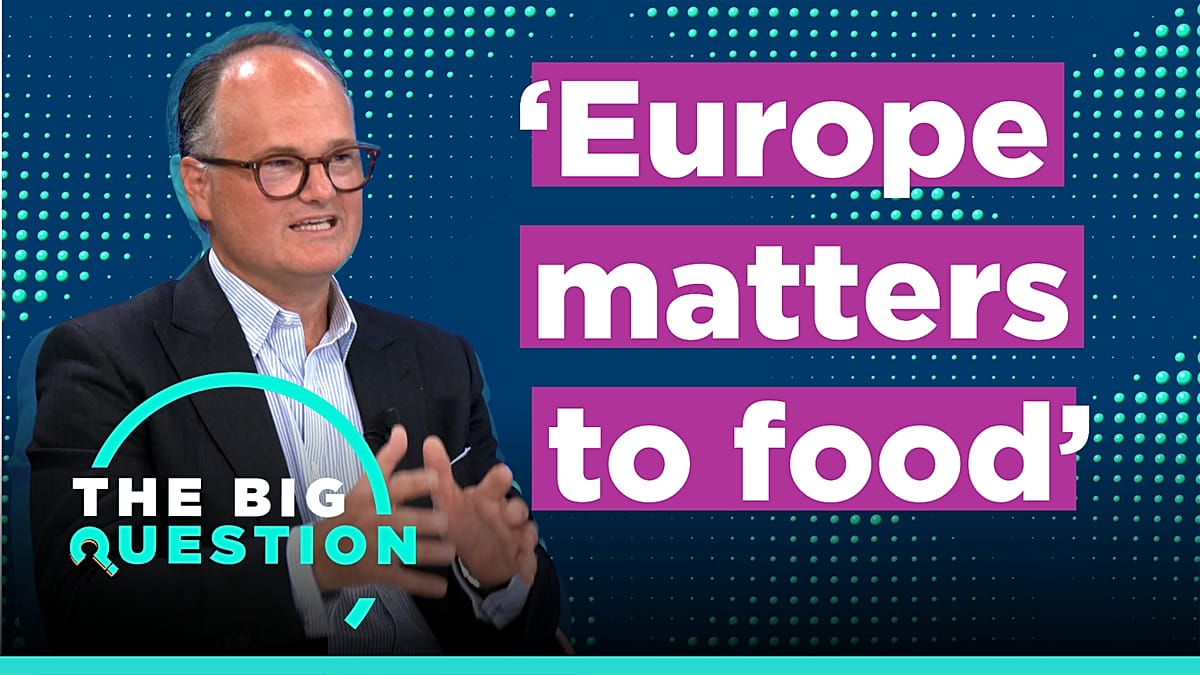
Willem Brandt, president for Europe and Pacific developed markets at Kraft Heinz, recently joined The Big Question to explain why the industry matters far beyond the supermarket shelf. He pointed to a famous—if apocryphal—quote: “You're only ever three missed meals away from a revolution.” While its origins are murky, the sentiment resonates in today's Europe, where policymakers are increasingly focused on resilience and strategic autonomy.
“If you look at the whole European geopolitical situation, you see that policymakers here really care about security and they really care a lot about competitiveness,” Brandt said. “And food sits right at the heart of both of those things in Europe if you ask me, because ultimately, we've got a very good and strong value chain with farmers and industry and retailers, but we've gotta keep it that way to make sure that we keep the food on our plates going forward as well.”
That value chain is a complex web that spans the EU's 27 member states and beyond, from the olive groves of Andalusia to the dairy farms of Normandy. It's also a source of leverage in international trade negotiations, making it a strategic asset for Brussels.
Fragmentation and fairness
To keep the industry thriving, Brandt urged policymakers to reduce fragmentation across the bloc. He argued that harmonising standards would benefit both consumers and producers, ensuring a level playing field. But he also called for the removal of a cap on the EU's directive on unfair trading practices, which currently protects only companies with turnovers below €350 million.
“Fairness should apply to all, regardless of size,” Brandt said. The directive, designed to shield small farmers from practices like short-notice cancellations on perishable goods and delayed payments, leaves larger suppliers exposed. Brandt's plea highlights a tension between protecting the little guy and ensuring that all players in the food chain are treated equitably—a debate that resonates in Brussels and beyond.
Europe as a trendsetter
Europe's food industry isn't just a passive player; it's a global trendsetter. Brandt explained that the continent often serves as a testing ground for new product categories before they roll out worldwide. Health is a major driver, with 40% of European consumers trying to cut back on sugar.
One of Kraft Heinz's biggest hits right now is ketchup with zero added salt and sugar, which has seen 26% growth—and over half of that comes from new customers who previously didn't buy ketchup at all. The product has since launched in Brazil, where 80% of buyers are new to the category. “That's really meeting the consumers where they are,” Brandt said.
This philosophy is central to the company's long-term success. As Heinz celebrates 150 years of its iconic tomato ketchup, Brandt attributes its enduring appeal to a balance between consistency and evolution. The familiar taste and identity remain, but the brand has adapted with organic, zero-sugar, and flavoured varieties over the years.
“There's still phenomenal growth for brands like that,” he said.
Quality and affordability under pressure
With household budgets squeezed across Europe, consumers are increasingly price-conscious but reluctant to compromise on quality. Brandt stressed the importance of controlling the entire supply chain to maintain that quality. “If you want that quality you've got to control the entire chain, which is why we have our own seeds department who really continuously work on the seeds that we use for our own tomatoes,” he explained.
Long-term partnerships with growers and farmers lead to better yields, and the proprietary recipe remains a closely guarded secret. “Doing the whole end-to-end chain is what makes Heinz ketchup so delicious and so good,” Brandt added.
The industry's influence extends beyond ketchup. As Europe grapples with questions of food security, climate change, and the push for sustainable agriculture, the choices made in boardrooms and on farms will shape the continent's future. The food sector is not just about what's on our plates—it's a cornerstone of European identity and power.
For more on how Europe's food industry is navigating these challenges, check out our analysis of the carbon math of Christmas trees and the broader environmental debates. And as the EU's political landscape shifts, the food industry's role in security and competitiveness will remain a key topic for policymakers in Berlin, Paris, and Brussels.