Europe is rearming at a pace not seen in decades, pouring billions into military capabilities as it confronts the most dangerous security environment since the Cold War. Yet four EU member states — Austria, Ireland, Malta and Cyprus — still hold to a defining principle: neutrality. Their interpretations differ sharply, and each is being tested by Russia's war in Ukraine and a less predictable United States.
For these countries, neutrality is a high-wire act. They must reconcile a deeply held principle with an EU that is rapidly reshaping its foreign and security policy. Under international law, neutrality generally means a state does not take part in an armed conflict between others, and it carries obligations toward belligerents. But the legal status of the four is far from uniform.
Austria and Malta have neutrality written into their constitutions. Ireland's military neutrality is a long-standing policy, though not constitutionally entrenched. Cyprus has historically pursued non-alignment, a stance increasingly strained by its growing defence cooperation with the West.
Austria: neutrality in the DNA
Austria's neutrality dates to 1955, when it was enshrined in constitutional law after the restoration of sovereignty following World War Two. Joining the EU in 1995 forced Vienna to engage with the bloc's common foreign and security policy, and the European Commission at the time warned that permanent neutrality could clash with treaty obligations. Today, the Commission takes a softer line, stating that security and defence choices remain a national competence.
Arnold Kammel, Secretary-General of Austria's Federal Ministry of Defence, says neutrality has shifted in meaning since EU accession. “The core substance of remaining neutral is heavily enshrined in the DNA of the Austrians,” he told Euronews, “and thus it seems also to continue in the future.”
Neutrality does not exempt Austria from the EU's mutual assistance clause, Article 42.7, which requires member states to provide aid “by all the means in their power” while respecting the specific character of national security policies. It does not automatically mean military help. When France invoked the clause after the 2015 Paris attacks, Austria cited neutrality and did not send troops, though it supported EU and UN missions elsewhere.
Vienna is nonetheless boosting defence spending, aiming for 2% of GDP by 2032. Kammel insists that staying outside NATO does not remove the duty to defend national territory, which is why Austria is investing across all military domains.
Cyprus: from non-alignment to NATO?
Cyprus has long pursued a policy of non-alignment, avoiding close attachment to any major power. But President Nikos Christodoulides has signalled a shift. In May, he said the divided island was ready to join NATO “when political conditions allow” — a move blocked by Turkey, which opposes Cypriot membership under NATO's consensus rule.
A month later, Cyprus became the first neutral or non-aligned EU state to receive funds under the bloc's Security Action for Europe (SAFE) programme, with up to €1.2 billion earmarked for defence investment, reportedly for drones, anti-tank missiles and ammunition. “Europe that does not invest in its defence and security is a Europe that is dependent,” Christodoulides said, “and dependence cannot be a strategic choice.”
Steven Everts, Director of the EU Institute for Security Studies, argues that most European neutrality is rooted in history, but all member states must reckon with today's realities. “The speed at which the world is changing requires everybody to assess whether the choices made decades ago — or 70 to 80 years ago — still apply to the world you live in today,” he told Euronews.
For Cyprus, the challenge is acute. The island remains divided, and although recent efforts show a desire to resolve the half-century-old partition, the security threat from the north persists. Closer defence ties with the West, including participation in the EU's frozen Russian assets scheme, are part of a broader realignment.
Ireland and Malta: different paths
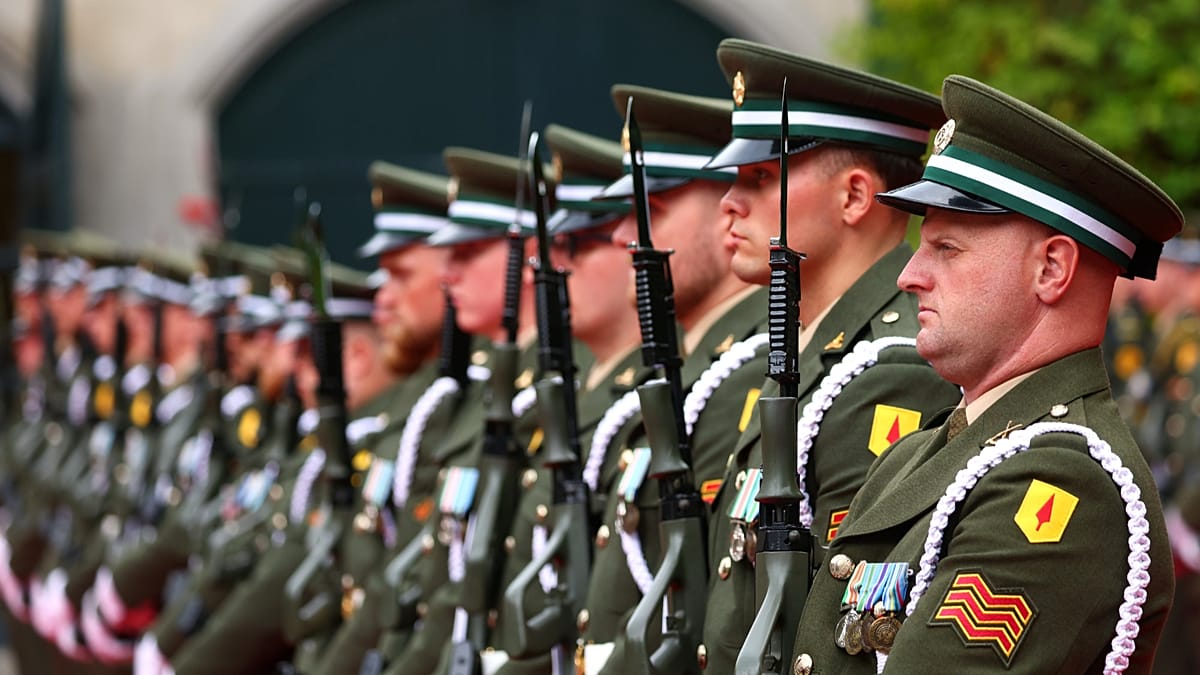
Ireland's military neutrality is a core part of its identity, though it has participated in EU crisis management missions and provides non-combat support. Dublin has also joined the Coalition of the Willing on Ukraine, while maintaining its traditional stance. Malta, the smallest of the four, has constitutional neutrality but has been less vocal in the defence debate.
All four countries support Ukraine through EU financial assistance, including the €90 billion loan, and have backed sanctions against Russia. They also remain subject to Article 42.7, though the clause preserves their right to decide on military aid. As Europe's security architecture shifts, these neutrals are finding that their principle is no longer a static shield but a flexible tool — one that must bend without breaking.