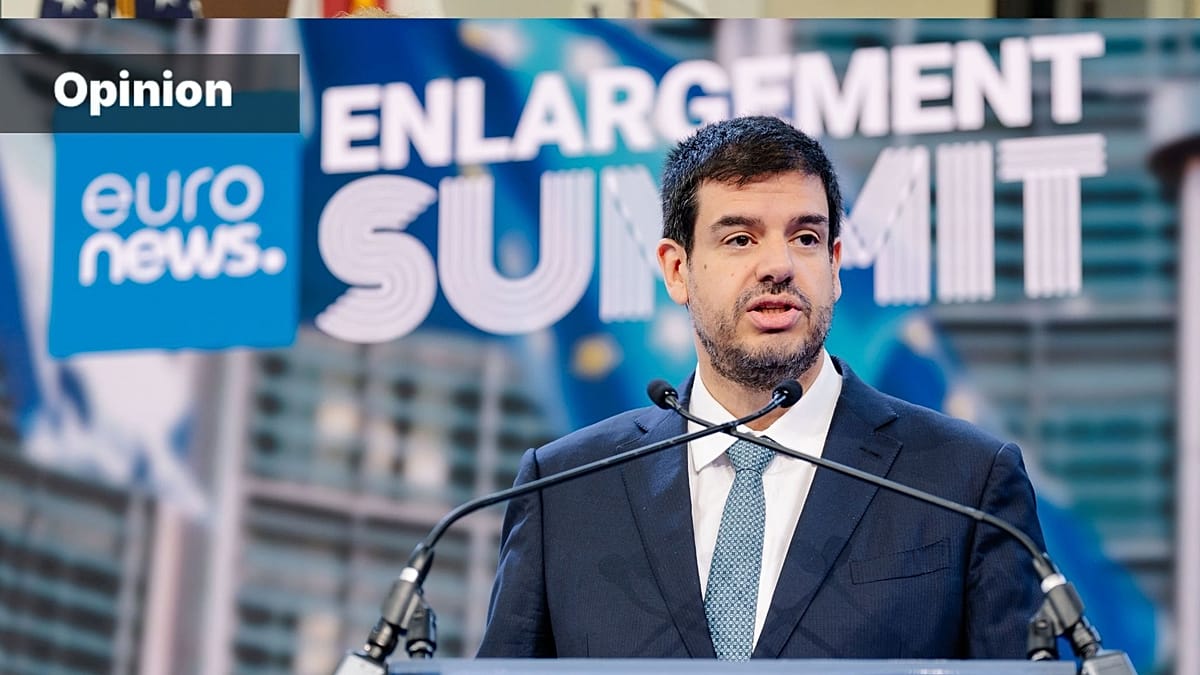
BRUSSELS — Europe stands at a crossroads, with more countries than ever seeking EU membership and war back on the continent. Yet public support for enlargement in the current member states remains uneven, and many citizens feel uninformed. At the Euronews Enlargement Summit in Brussels, chairman Pedro Vargas David made a forceful case for completing the European project — and doing it now.
“Citizens of the candidate countries are Europeans, in their hearts but also in their minds. Let us complete and reunite the continent,” Vargas David told an audience that included several heads of state and government, among them Albanian Prime Minister Edi Rama and Croatian Prime Minister Andrej Plenković.
Support is strong in the East, but fragile in the West
According to European Commission figures cited at the summit, 53% of EU citizens currently back enlargement, with support ranging from 79% in Sweden to just 35% in France. More tellingly, over two-thirds of Europeans say they do not know enough about the process and want better information. Vargas David argued that this openness to persuasion places a responsibility on political leaders and the media alike.
In the candidate countries, enthusiasm is often far higher. Albania leads with 92% support for EU accession, followed by Georgia at 71%. Ukraine, Montenegro, North Macedonia, and Bosnia and Herzegovina all register above 60%, while Moldova stands at 58%. Türkiye lags at 46%, and Serbia — according to the Commission’s report — at just 31%, though Vargas David noted that support among Serbians under 30 reaches 63%, and local polls suggest a referendum could see 50–55% in favour.
“In certain cases, like Albania and Georgia, the case is clear,” he said. “But in others, we must ask ourselves: aren’t these numbers too low? Are we doing all we can to counter the narratives of our opponents?” He questioned whether EU ambassadors in candidate countries are seen as promoters of the benefits of membership or merely as spokespeople for what is wrong.
Preparing Western Europe for a bigger Union
Vargas David also urged Western European societies to prepare for enlargement. He acknowledged that historical issues, such as those between Croatia and its neighbours, need to be resolved, and that the legitimate interests of current members must be discussed. But he insisted that the people of the Western Balkans and the Eastern Partnership are Europeans by culture, geography, and practice.
“They share our values, they share our traditions, they eat the same food, they in many cases even speak very similar languages,” he said. “Their place is here, with us.”
The summit also touched on the institutional framework of future accessions. Vargas David called for a debate in the Council and Parliament about potential changes to the rights and obligations of new member states, including limits on veto powers and access to certain programmes. He noted that candidate countries have shown significant flexibility, with a motto of “Let us in as fast as you can, we will show you once inside, we are worthy members of the EU.”
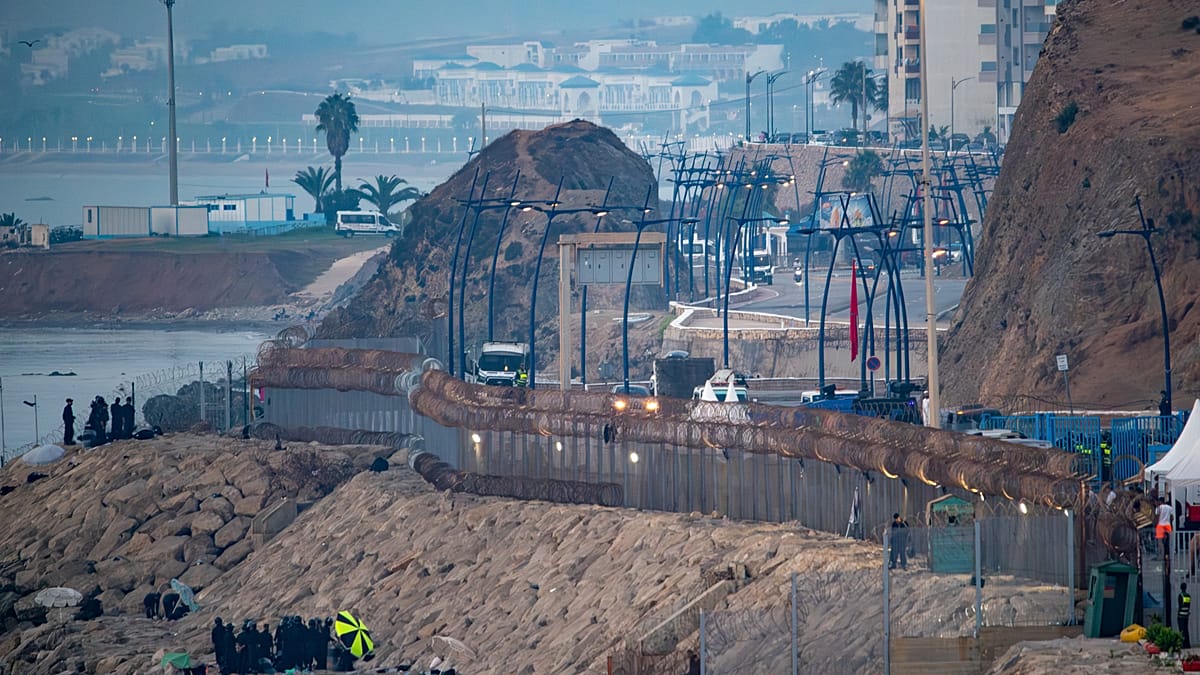
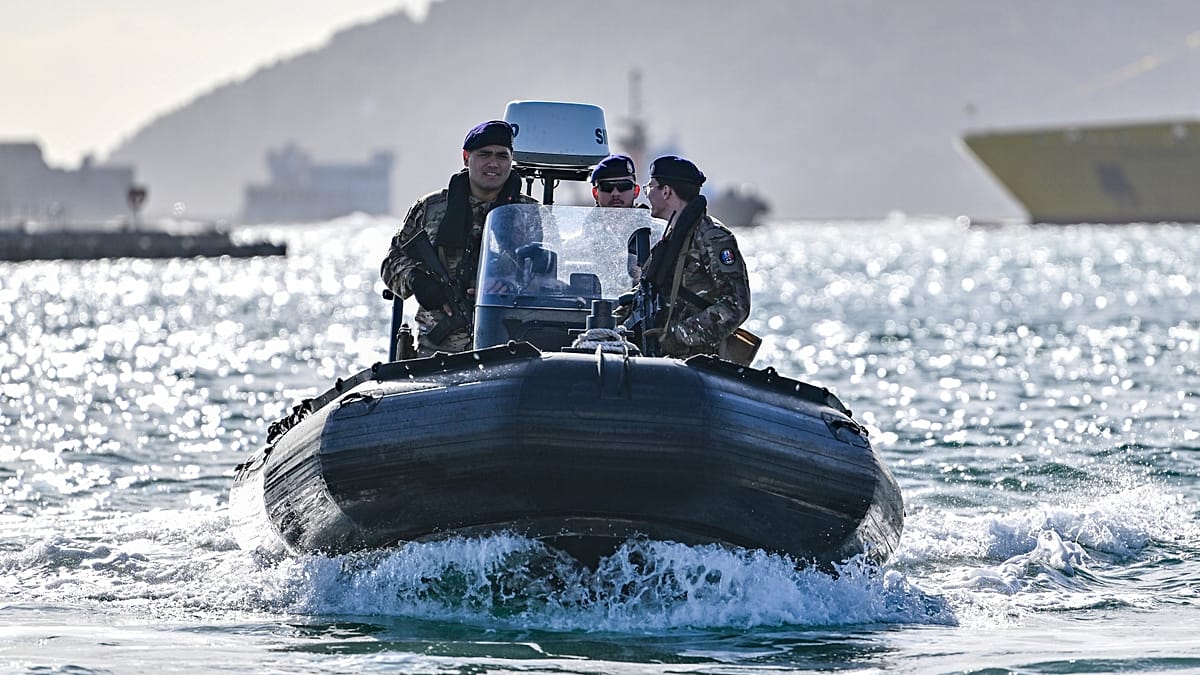
He proposed that the European Commission study all existing programmes that enlargement candidates could join before full accession, and floated a “Gibraltar model” for a swift application of the Schengen area to the Western Balkans, whose land borders are already entirely with EU and Schengen members. “Would that not be a symbol of our commitment to the people of these countries?” he asked.
The summit comes as the EU enters a decisive phase in its enlargement policy, with Brussels hosting its second such gathering and frontrunners like Montenegro and Albania pressing for entry. The debate is increasingly linked to broader strategic considerations, as the EU ties enlargement to alignment on foreign policy, squeezing countries like Serbia, Georgia, and Türkiye.
For Vargas David, the urgency is clear. “Are we letting our fate be dictated by others, who don’t want peace but thrive in chaos?” he asked. “Where are the EU flags when people take to the streets to ask for freedom or democracy?”
The summit’s message was unambiguous: enlargement is not a burden but an investment in a united and stable Europe. As EU Council President António Costa has argued, the cost of inaction may be far higher than the cost of expansion.