The far-right's strong showing in a German regional election this weekend has underscored how Europe's energy crisis is reshaping the political landscape ahead of crucial votes in France and Italy next year.
The Alternative for Germany (AfD) emerged as the leading party in Mecklenburg-Western Pomerania on Sunday, continuing a string of gains that has rattled Chancellor Friedrich Merz's coalition. Across the continent, nationalist and far-right parties are seizing on rising fuel and energy costs as a rallying cry, turning household budgets into a battleground for political influence.
The immediate threat now extends well beyond Germany. France, Italy, Spain, and Poland all face significant elections in the coming year, raising the stakes for governments trying to shield citizens from surging gas, diesel, and petrol prices without triggering another costly round of subsidies.
Despite relief measures announced by Merz and French President Emmanuel Macron, the renewed energy squeeze is giving populist parties an unusually potent mix of grievances: economic hardship, frustration over climate-related taxes and regulations, and opposition to Europe's efforts to reduce its reliance on Russian energy.
Germany as the early test
Germany has provided the clearest early warning. The AfD has campaigned aggressively against high living costs and fuel-price increases, framing them not merely as the result of geopolitical disruption but as deliberate choices made in Berlin and Brussels.
Energy is fertile ground for the AfD because it connects an immediate household concern with one of the party's core geopolitical arguments. The party has called for restoring cheap Russian gas and lifting sanctions on Russian energy, arguing that current policies have inflicted severe economic damage on Germany.
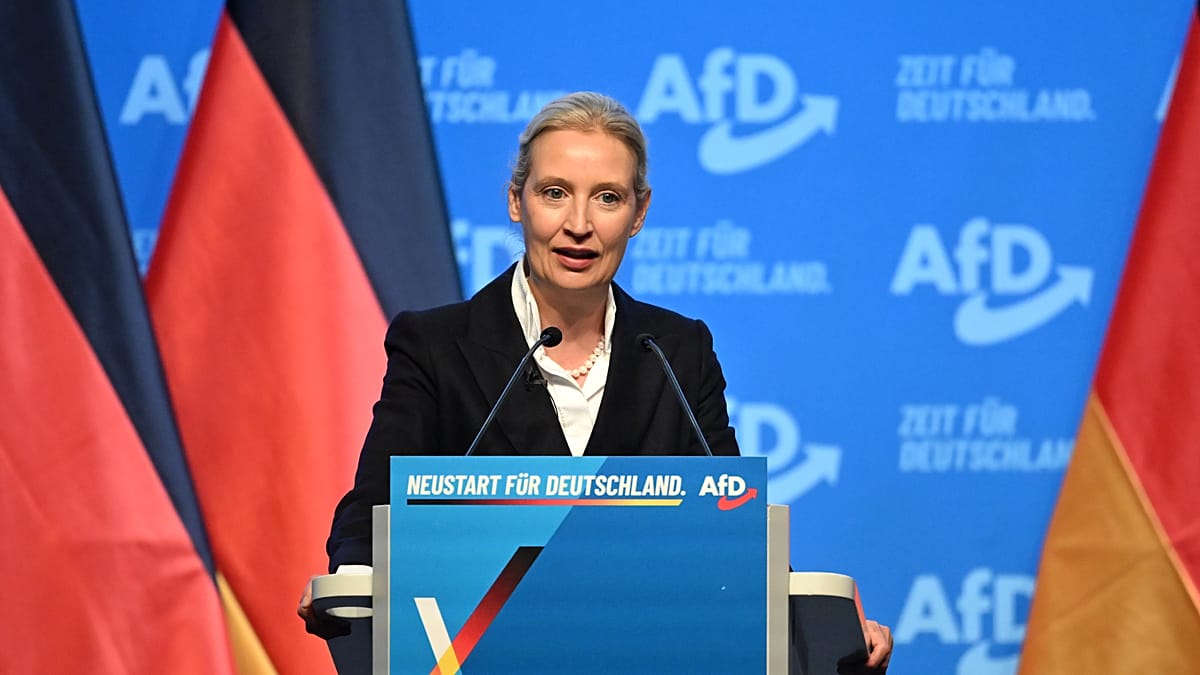
Alice Weidel, the AfD's co-leader, has described cheap Russian energy as vital to German industry's success. In a social media post ahead of the regional vote, she wrote: "The established parties want to take the money out of your pocket – fuel is being deliberately made so expensive. We want to lower fuel prices: scrap the CO2 levy, reduce VAT and the EU energy tax to a minimum."
Two days before the election, Merz announced fuel discounts and price caps in response to soaring prices following damage to a Saudi pipeline that had provided an alternative route to the besieged Strait of Hormuz. "Whether commuters, businesses, or regular car drivers – the high fuel prices are burdening our country. Together with the states, we are ensuring a tax cut of around 17 cents per litre of gasoline and diesel. This is to apply from 1 October until the end of 2026," Merz said.
But the German result suggests that emergency relief may not be enough to prevent the energy crisis from becoming a broader political liability. That prospect is particularly worrying for mainstream parties in France and Italy, where fuel costs have long proven capable of mobilizing voter anger, and where next year's elections could give energy policy a much larger national – and European – significance.
France fears fuel shortages
Macron has responded by convening an emergency security meeting with party leaders at the Élysée Palace on 18 September. He also announced an upcoming G7 energy meeting to discuss releasing a second batch of oil reserves, shifting the energy crisis from a pricing issue to a potential shortage concern.
"We have to be extremely vigilant, and we do not want to run short. We have rebuilt our gas stocks, and we are securing our supplies," Macron told reporters after the meeting. France consumes around 600,000 barrels of diesel per day and imports half of it, he noted, pointing to 300,000 barrels potentially at risk due to the Saudi pipeline damage.
"We should not frighten people. We have to tell the truth about geopolitical instability and what it creates in our country, and we have to prepare for it. That is exactly what France is doing and what it has accelerated in recent weeks," Macron added.
French far-right leader Marine Le Pen has called for tax cuts as the only way to bring down fuel prices at the pump. "The VAT must be lowered from 20% to 5.5% on fuel. The French need it to go to work, to do their shopping, and to pick up their children from school," she said.
In Italy, Giorgia Meloni's right-wing government has moved to scrap road tax for 14.5 million cars and motorcycles from next year, at a cost of more than €2 billion, on top of a diesel excise duty cut already costing about €2.8 billion. Rome has also asked the European Commission to relax fiscal rules for households and industries struggling with soaring energy costs, arguing that energy security should be treated with the same urgency as defence spending.
These measures are designed to relieve immediate pressure on consumers, but they also show how energy prices are forcing governments to spend heavily to neutralize a potential political issue. In Slovakia, populist Prime Minister Robert Fico has blamed Europe's war rhetoric against Russia for distracting from its own failures in tackling rising energy prices and fuel shortages, bluntly opposing military escalation.
As the continent heads into a series of elections, the energy crisis is proving to be a defining issue that could reshape the political map. Governments are walking a tightrope between fiscal prudence and the need to respond to public anger, while far-right parties stand ready to exploit any misstep.