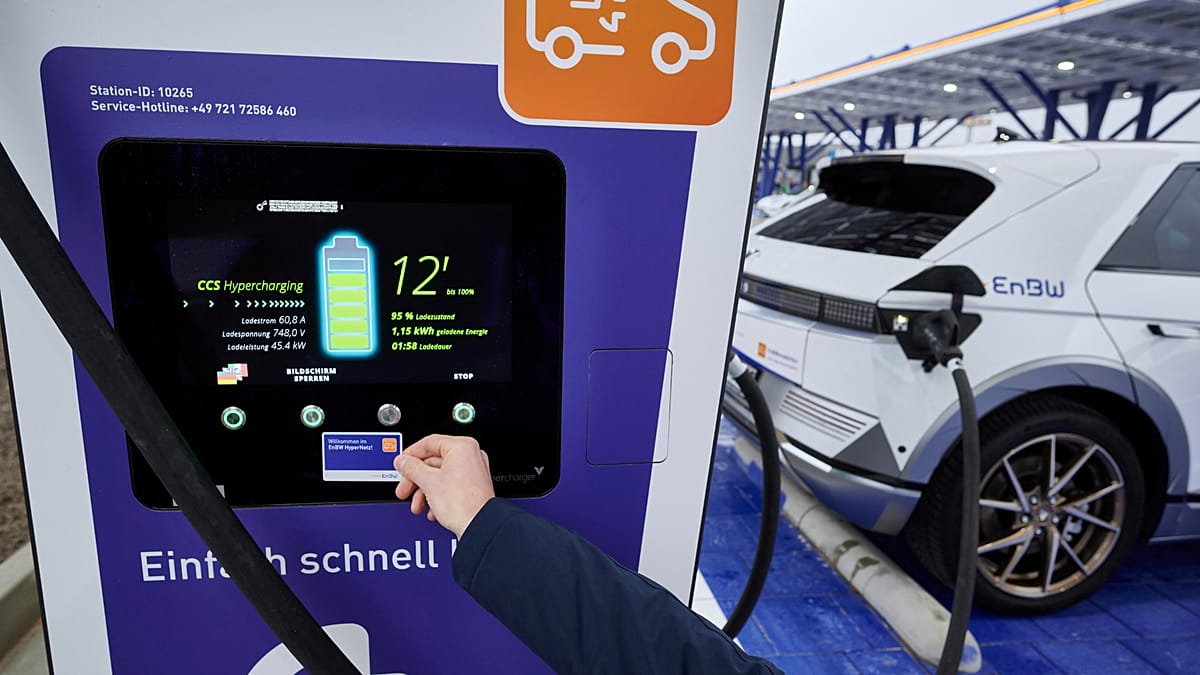
The shift towards battery-only electric vehicles (BEVs) is accelerating across Europe, but the pace varies dramatically from country to country. According to fresh data from Eurostat and the European Automobile Manufacturers’ Association (ACEA), nearly 1.9 million new battery-electric passenger cars were registered in the European Union in 2025, representing 17.3% of all new car registrations. That is a remarkable jump from just 0.4% in 2015 and 1.9% in 2019.
Yet the headline numbers mask a deeply uneven transition. While some nations are rapidly electrifying their roads, others—particularly in Southern and Eastern Europe—are lagging far behind. Moreover, even in the most advanced markets, battery-electric cars still represent only a small fraction of the total vehicles on the road.
Who is leading the charge?
Norway remains the undisputed frontrunner. In 2025, more than 95% of all newly registered passenger cars in the Nordic country were battery-only electric. Denmark follows at a distant second with 67.8%, while Iceland (41.2%), Malta (37.6%), Finland (37.2%), Sweden (36.4%), and Belgium (34.1%) all saw BEVs account for more than one in three new registrations.
Among Europe's largest economies, the UK leads with a 23.4% share of new registrations, ahead of France (19.6%) and Germany (19.1%). Spain (8.7%) and Italy (6.1%) remain well below the EU average, despite being among the continent's top five car markets. Italy, in particular, registered only around 95,000 battery-electric cars in 2025—fewer than Denmark, Belgium, or the Netherlands.
In absolute numbers, Germany recorded the highest volume of new BEV registrations in 2025, at roughly 545,000, followed by the UK (473,000), France (331,000), and Turkey (187,000). Norway added 173,000, the Netherlands 156,000, and Belgium 144,000. Denmark (126,000) and Spain (105,000) also crossed the six-figure mark.
Turkey stands out as an exception in the broader region, with battery-electric cars making up 16.7% of new registrations—a figure close to the EU average. In contrast, several EU candidate countries and Balkan states, including Croatia, Montenegro, Serbia, and Bosnia and Herzegovina, recorded shares below 2%.
The fleet picture: a long road ahead
While new registrations are a useful indicator of momentum, the share of BEVs in the total passenger car fleet reveals how far each country still has to go. Here, Norway again leads, with battery-electric cars accounting for 32% of all cars on its roads in 2025. Denmark follows at 17.9%, with Luxembourg (8.7%), Sweden (8.6%), and the Netherlands (7.2%) completing the top five.
Across the EU as a whole, however, battery-electric cars represent just 2.9% of the total fleet. Among the bloc's 'Big Four' economies, Germany has the highest share at 4.1%, closely followed by France at 3.9%. Spain (1.1%) and Italy (0.9%) trail significantly.
The slow fleet turnover is a reminder that even rapid growth in new EV sales takes years to reshape the overall car parc. As Volkswagen's biggest shareholder has recently urged, European automakers must accelerate their transition to remain competitive globally. But the data also suggests that consumer uptake is being held back by factors such as purchase prices, charging infrastructure, and model availability—issues that vary widely across the continent.
For now, the Nordic countries and a handful of Western European markets are setting the pace. Whether the rest of Europe can catch up will depend on policy support, investment in charging networks, and the affordability of electric models. As remote work trends and holiday affordability show, European lifestyles are evolving—and so is the way Europeans move.