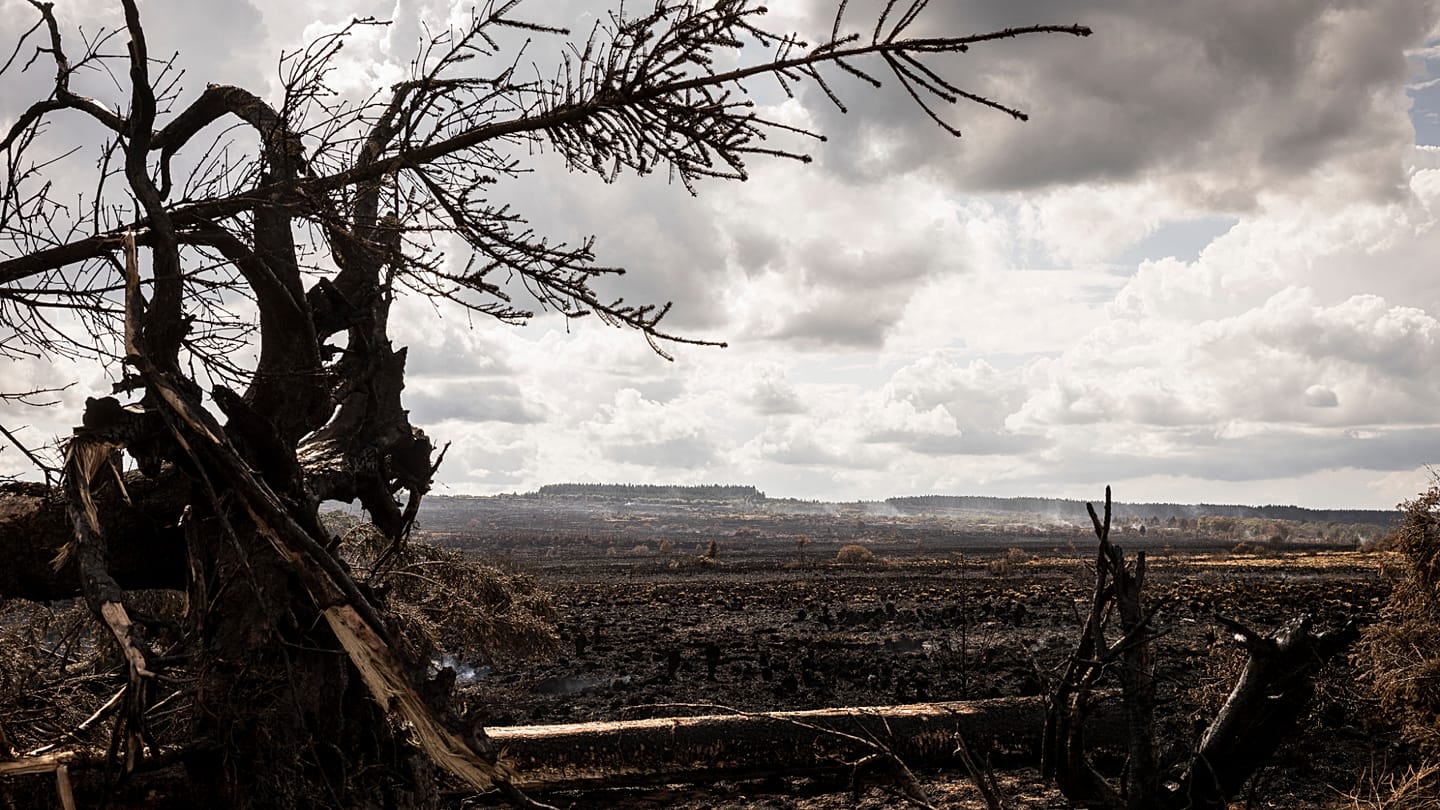
Another summer of record heat, drought, and wildfires is leaving European governments with a bill that will land months later in the form of emergency relief, farm compensation, infrastructure repairs, unpaid taxes, and food inflation. What begins as a climate emergency quickly becomes a fiscal one, and the strain is spreading unevenly across the continent.
From emergency response to budget line
In Italy, where temperatures have repeatedly topped 40°C and peaks near 45°C have been recorded, the government has already earmarked billions for drought relief and wildfire containment. But the real cost comes later: repairing cracked highways, replacing melted rail tracks, and compensating farmers for lost harvests. Similar scenes are playing out in Spain, Greece, and Portugal, where agricultural losses are driving up food prices across the EU.
France is also feeling the pinch. The Élysée has activated emergency funds for municipalities hit by wildfires, while the agriculture ministry is preparing a support package for vintners in the Rhône Valley and Provence. These outlays arrive just as Paris tries to rein in its deficit, forcing difficult trade-offs in the autumn budget.
The hidden fiscal drag
Beyond direct spending, heatwaves are eroding tax revenues. In southern Europe, outdoor industries such as construction and tourism slow down during extreme heat, reducing income tax and VAT receipts. In Greece, where tourism is a cornerstone of the economy, the summer season in places like Halkidiki has been disrupted by fires and heat advisories, hitting local businesses and their tax contributions.
Farmers are particularly exposed. In Spain's Andalusia, olive and citrus growers are reporting yield drops of up to 30%, and the government has had to activate EU crisis funds. These payments, while necessary, add to national debt and complicate the bloc's fiscal rules, which are already under strain.
Infrastructure is another silent cost. In Germany, the Rhine River's low water levels have forced barges to reduce cargo, disrupting supply chains and raising logistics costs. The federal government is now considering long-term investments in river dredging and cooling systems for rail networks—projects that run into billions of euros.
Political and social fallout
The fiscal pressure is also reshaping politics. In Sweden, where climate protests have intensified ahead of national elections, the government is caught between demands for green investment and the rising cost of heatwave response. Activists are pushing for more ambitious climate action, but finance ministers warn that budgets are already stretched.
In France, the summer recess has ended with politicians debating how to fund climate adaptation without raising taxes. The political class is regrouping with an eye on the 2027 presidential election, and heatwave costs are becoming a central campaign issue.
Economists argue that the true bill is even larger when accounting for lost productivity, health costs, and the long-term damage to agriculture. A recent study by the European Central Bank estimated that heatwaves could shave up to 0.5% off GDP annually in southern member states by 2030.
A continental challenge
The problem is not confined to the Mediterranean. Central and Eastern European countries, including Poland and Romania, are experiencing more frequent heatwaves, and their budgets are less equipped to handle the shock. The European Commission is under pressure to create a dedicated climate resilience fund, but member states remain divided over how to finance it.
For now, governments are improvising. Emergency decrees, supplementary budgets, and EU solidarity funds are being used to patch the holes. But as summers get hotter, the hidden bill will only grow, forcing a fundamental rethink of how Europe budgets for the climate crisis.