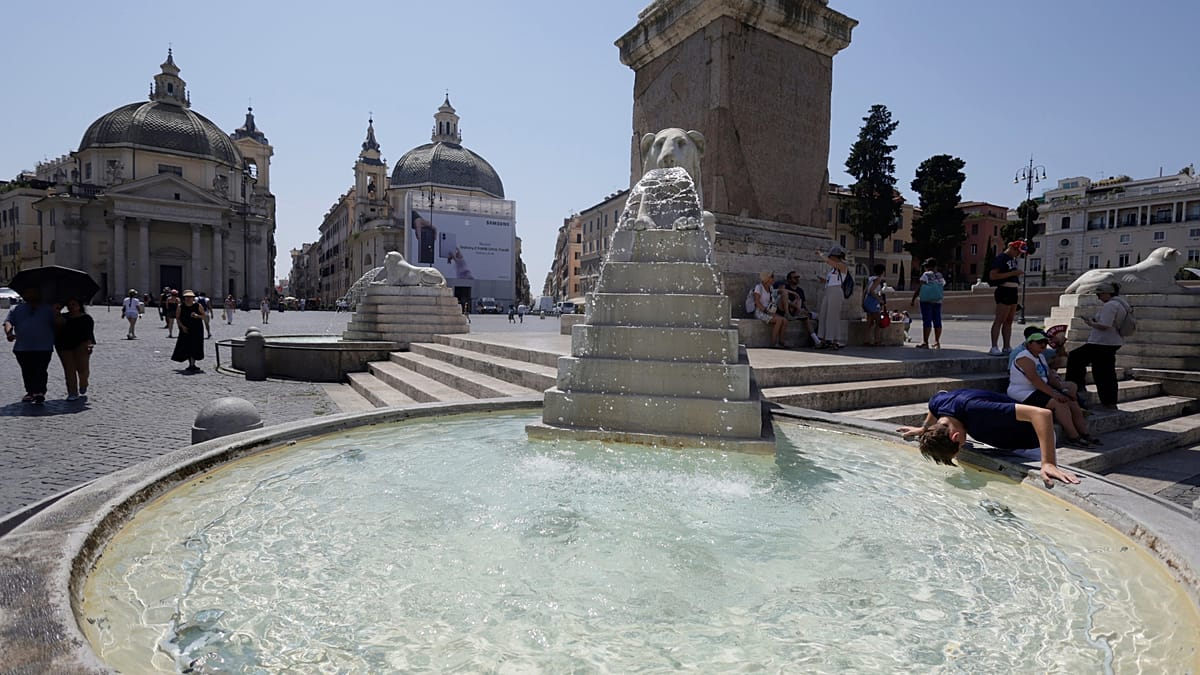
Italy is entering its most intense heatwave of the summer, with temperatures expected to reach 45°C in parts of the south. The fifth such event of the season arrives after a brief cooler spell, and forecasters say it will be short-lived but powerful, peaking between 27 and 29 August.
The heat is driven by an African anticyclone that is also likely to carry Saharan dust across the peninsula. Central and southern regions will bear the brunt, with temperatures running 8–10°C above the seasonal average.
Red alerts spread across the south
Italy's Health Ministry has issued red alerts for nine cities on Friday, including Bari, Palermo, Campobasso, Catania, Latina, Messina, Reggio Calabria, Rome, and Cagliari. On Thursday, three cities were already on red alert, with nine more on orange. The alerts reflect a serious risk to public health, particularly for the elderly and those with pre-existing conditions.
Friday is expected to be the hottest day of summer 2026. Eastern Sicily could see 45°C, Puglia 44°C, and inland areas of Calabria may reach 45–46°C. Sardinia is also bracing for 44°C, accompanied by so-called "super-tropical" nights, where overnight lows on the plains will not drop below 25°C.
In central Italy, Foggia is forecast to hit 42°C, Isernia 40°C, and Rome 38–39°C. The heat is a stark reminder of the broader energy and climate pressures Europe faces as summers grow more extreme.
North spared the worst, but storms loom
The north will largely escape the extreme heat. Milan may not even reach 30°C, and Turin is expected to stay between 27 and 28°C. The Veneto Plain could see a peak of 34°C. However, the north-west will face deteriorating conditions, with a risk of torrential rain, hail, and strong winds on Friday.
The contrast between scorching south and stormy north is typical of late-summer weather patterns, but the intensity of both extremes is notable. The storms could bring localised flooding and damage, particularly in areas already saturated by earlier rains.
This heatwave comes as Italy's economy shows mixed signals. While the country's GDP share has declined over two decades, as recent EU data shows, the immediate concern for many is coping with the heat and its impact on agriculture, tourism, and daily life.
Relief expected, but September may bring more
A general improvement is forecast for the weekend, with temperatures dropping across central and southern Italy. The start of September should remain summery, but a new unstable front could move into the north between Tuesday 1 and Wednesday 2 September, possibly later affecting parts of central Italy. The south will stay warmer.
Authorities advise residents and visitors to stay hydrated, avoid the sun during peak hours, and check on vulnerable neighbours. The red alerts are a reminder that heatwaves are not just a discomfort but a serious health risk, and one that is becoming more frequent across Europe.
For those planning travel, the cheapest city breaks might offer a cooler escape, but be sure to check local forecasts before heading out.