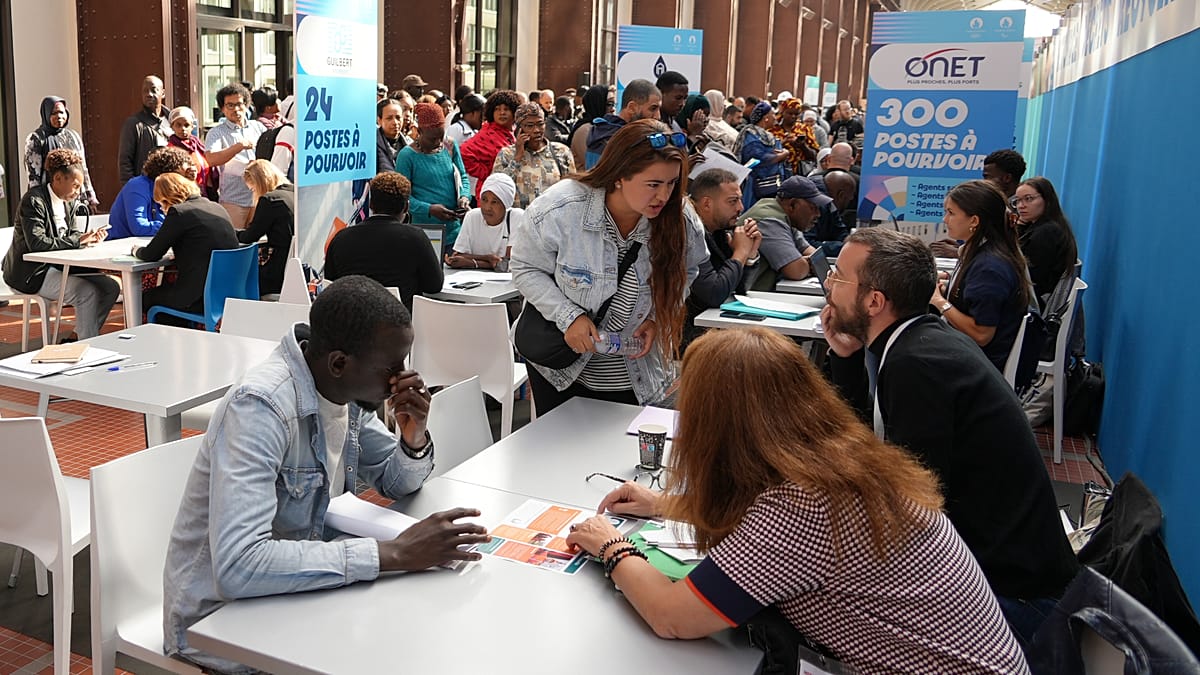
Across Europe, from Berlin to Barcelona, business leaders are voicing a familiar frustration: they cannot find the talent they need. Yet the number of applications per role has roughly doubled since 2022. Something is clearly out of sync.
The core issue is not a shortage of skilled people, but a mismatch between how companies hire and the labour market they actually face. Artificial intelligence is reshaping the skills required for many roles and lowering the barrier for candidates to apply. Meanwhile, many organisations continue to recruit and manage as if little has changed.
Two-thirds of recruiters now report that finding qualified talent is harder than it was a year ago, according to recent surveys. At the same time, individuals with the right abilities are being overlooked because their CVs do not follow conventional patterns. The result is a paradoxical talent crunch that demands a fundamental rethinking of hiring, leadership, and work organisation.
Hiring by the old rules
For decades, European employers have relied on a narrow set of signals: where a candidate studied, where they worked before, and who they know. People are still more than three times as likely to be hired at a company where they have an existing connection. This approach, while once practical, systematically excludes candidates with the right skills but unconventional backgrounds. It also forces recruiters to compete for a small, familiar pool of applicants.
Used thoughtfully, AI can widen human judgement rather than replace it. It can help employers look beyond the traditional CV to identify skills that are not obvious from a job title, degree, or previous employer. That means being explicit about the competencies a role truly requires and stripping away unnecessary degree or experience requirements. Candidates with less linear career paths—such as those who have switched industries or gained skills through vocational training—deserve a fairer chance to be seen. As recent polling shows, Europeans value general education but also recognise its job market relevance; employers should take note.
Yet hiring the right people is only half the battle. If the organisation they enter has not adapted, the outcome will not change.
Bolting AI onto old structures
Many companies are adding AI tools to existing workflows without altering job titles, hierarchies, or decision-making processes. They expect technology to transform the business, but the result is often a slightly faster version of an outdated way of working. Six in ten leaders say change is happening faster than their organisation can make decisions, and most respond by accelerating existing processes rather than questioning whether those processes still make sense.
Leaders need to stop treating AI as a bolt-on to existing jobs. Instead, they should examine the work itself: which tasks can be automated, which decisions still require human judgement, and which roles need to be rebuilt as a result. This shift is especially relevant as the EU carbon market expands to cover international flights from 2029, forcing companies across sectors to rethink operations and the skills needed to manage them.
Managers unprepared for the shift
As AI absorbs more routine tasks, managers will need to spend less time checking work and more time helping their teams adapt, learn, and make better decisions. They must develop their team's judgement, creativity, and empathy—precisely the capabilities AI cannot replicate. Yet half of leaders admit they do not yet know how AI will reshape roles inside their organisation, and eight in ten say their own role is being redefined in real time.
Some employers are beginning to respond. UNICEF UK, for example, uses AI-powered coaching to help managers practise difficult conversations, with the AI providing realistic scenarios and honest feedback. Other organisations are giving staff practical time to learn AI tools and creating safe spaces for teams to experiment with new skills.
Workers cannot be expected to adapt to a changing labour market if the people leading them have not been trained for it either. All three shifts—hiring, organisational structure, and management—are interconnected. You cannot hire skills-first into a structure that still rewards titles. You cannot tell people skills matter, then promote only those with the most familiar career paths. You cannot ask workers to embrace AI, then leave managers unclear on how roles are changing. And you cannot solve a skills shortage if your hiring process filters out people before their abilities are properly seen.
Employers across Europe need to stop hiring for the labour market they remember and start looking for the skills people actually have. The talent is there—it is the hiring lens that needs to change.