Europe is heating up faster than almost any other region, and the consequences are already visible in the scorched hillsides of Spain, France and Greece. But a new study from Vrije Universiteit Brussel warns that the true cost will be borne by the continent's youngest citizens, who will spend years more of their lives under extreme fire weather conditions than their grandparents ever did.
The research, published in Environmental Research Letters, projects that a child born in Europe in 2025 will experience more than three additional years of extreme fire weather over their lifetime compared with someone born in 1950, if current climate policies remain unchanged. That is an 84 per cent increase in exposure for today's babies.
“A child born in Europe now will spend years more of their life under extreme fire weather conditions, and across the Mediterranean that burden is especially heavy,” says Rosa Pietroiusti, the study's lead author. The team defines extreme fire weather as days when the fire weather index (FWI) exceeds the top five per cent of historical readings for each country between 1985 and 2014.
Mediterranean children face the heaviest toll
The projections are starkest in southern Europe. In Portugal, which has already seen the highest proportion of its territory burned in recent decades, extreme fire weather days are expected to more than double, from 14 days per year in the 1950-1970 period to 32 days per year by 2100 under current policies. A child born in Lisbon or Porto today would spend roughly 6.5 years of their life under such conditions.
Across the Mediterranean as a whole, children born in 2025 could face up to 2.5 times the exposure of those born in 1950, equivalent to more than five additional years of extreme fire weather if global warming reaches 2.6°C by the end of the century. Each extra degree of warming adds around 272 days of extreme fire weather to the life of a Portuguese child born this year, the researchers calculate.
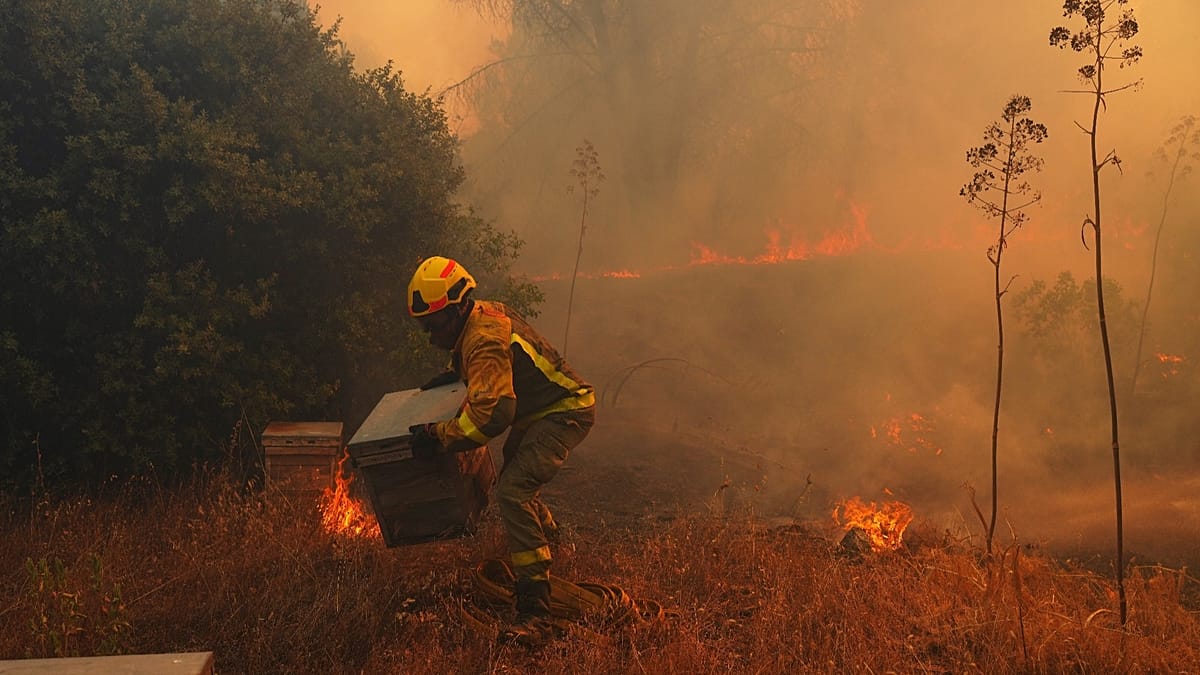
These numbers are not abstract. The summer of 2022 saw back-to-back heatwaves and prolonged drought that turned forests into tinderboxes, forcing one of the largest evacuations in Europe since World War II. The fires that tore through the Iberian Peninsula and the Greek islands destroyed hundreds of thousands of hectares and claimed dozens of lives.
Pietroiusti argues that this generational injustice is driving youth-led climate movements and legal challenges across the continent. “Young people are starting to demand more ambitious climate action from governments and companies, so that the worst impacts of future climate-related hazards in their future can be avoided,” she says.
Cutting emissions can still change the picture
The study offers a clear path forward. If the world rapidly phases out fossil fuels and meets the Paris Agreement target of limiting warming to 1.5°C, lifetime exposure to extreme fire weather for a child born in 2025 would drop by an average of 1.3 years across Europe, and by more than two years in the most affected southern regions.
Wim Thiery, senior author of the study, stresses that this goal is within reach. “As the costs of wind and solar continue to fall, hitting this target is absolutely feasible,” he says. “Every fraction of a degree of warming we avoid translates directly into less fire weather over a child's lifetime, giving them a chance at a full and healthier life and an education. That's fewer lives cut cruelly short, fewer homes and dreams burned by the flames, and fewer people traumatised by injury and grief.”
The urgency is underscored by a recent UN Environment Programme report, which concluded that keeping global warming below 1.5°C is no longer realistic. The best-case scenario now involves a temporary overshoot to around 1.8°C, with some pathways exceeding 2°C. The report calls for a rapid scale-up of renewable energy from nearly 34 per cent of global electricity in 2025 to 60-70 per cent by 2030 to keep the overshoot as small and short as possible.
For Europe, the choice is stark. The continent that industrialized first and benefited most from fossil fuels now has a moral and practical obligation to lead the transition. As Thiery puts it, the decisions made in the next decade will determine whether today's children inherit a continent of ash or one of resilience.