When did you last experience true silence? For most of us, the constant background hum of traffic, neighbours, and urban life has become so normal that we barely notice it—until we step into a place where it's absent. That moment of quiet can be surprisingly restorative, and a growing number of travellers are seeking it out.
A new ranking, the Noise-Free Nations Index, compiled by the travel operator Go2Africa, aims to identify the countries where you can genuinely switch off. The index scores nations based on population density, tourist numbers, rural land coverage, protected areas, and the density of vehicles, airports, and railways. Each country receives a score out of 100, which is then combined into an overall quiet score.
Global leaders in silence
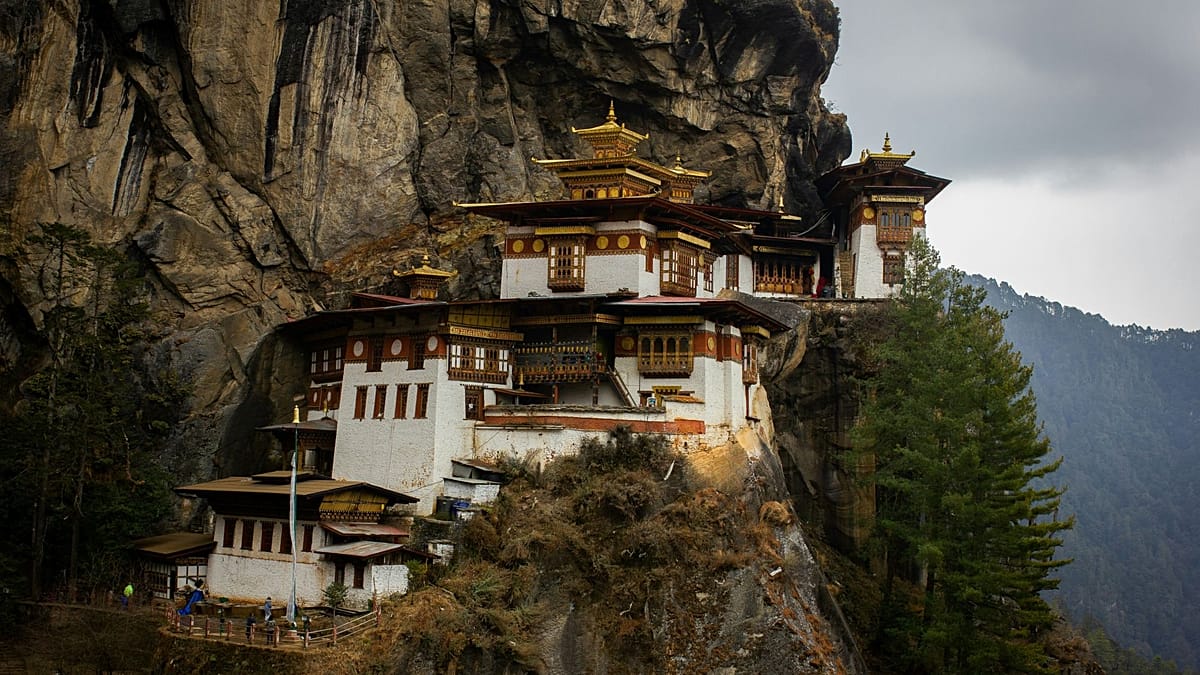
Bhutan tops the list with a score of 89.44. The Himalayan kingdom's vast expanses of forested mountains and terraced valleys—over 39,000 square kilometres of rural land—contribute to its serene atmosphere. Bhutan also limits tourist numbers through a high Sustainable Development Fee, making it one of the world's most exclusive destinations.
Africa dominates the upper ranks, with more than half of the top 25 countries on the continent. Namibia comes second, with just 3.83 people per square kilometre and the ancient Namib desert as a backdrop. Botswana takes third, thanks to its low-volume, high-value tourism strategy. Zambia and Gabon round out the top five, with Zambia boasting one of the highest proportions of protected land globally and Gabon known for its pristine rainforest.
The top ten also includes Venezuela, Chad, the Central African Republic, Mongolia, and Bolivia—all places where human presence is sparse and nature dominates.
Europe's quietest corners
For Europeans, the search for silence often means looking closer to home. The index reveals that no European country cracks the top 25, largely due to the continent's dense populations, high tourist inflows, and extensive infrastructure networks. The quietest European nation is Estonia, which ranks 34th overall. Finland follows at 39th, and Sweden at 40th.
These Nordic and Baltic countries offer vast forests, thousands of lakes, and low population densities—particularly in their rural regions. Estonia, with its bogs and islands, and Finland's Lapland, where the midnight sun and aurora borealis draw visitors seeking solitude, are prime spots for a digital detox. For those interested in remote work or slow travel, these destinations are increasingly popular, as highlighted in our guide to Europe's best countries for remote workers.
If you're looking for a 'stillcation'—a holiday focused on stillness and nature—Europe has plenty to offer. From the Scottish Highlands to the Carpathian Mountains, the continent is dotted with places where you can escape the noise. Our feature on Europe's top stillcation spots explores some of these hidden gems.
The loudest countries
At the other end of the spectrum, the index identifies the world's noisiest countries. Singapore takes the top spot, with rural land covering just 30% of its territory and a staggering 23,609 tourists per square kilometre. The Maldives comes second—surprising given its reputation for tranquil resorts, but the capital Malé is one of the most densely populated places on Earth. Barbados ranks third, with two airports serving a small area and frequent cruise ship traffic.
For Europeans, the findings are a reminder that peace and quiet are precious commodities. While no European country makes the global top 25, the continent still offers plenty of opportunities to escape the din—if you know where to look. Whether it's the new 3,500km wolf trail linking Poland to Italy, or the remote islands of the Baltic, Europe's quieter corners are waiting to be discovered.
As the index shows, true silence is increasingly rare. But with a bit of planning, you can still find it—even in Europe.