Climate change is making storms more intense, more dangerous, and more unpredictable, according to the latest WorldRiskReport. The annual analysis, compiled by the German NGO alliance Bündnis Entwicklung Hilft and the Institute for International Law of Peace and Armed Conflict (IFHV) at Ruhr University Bochum, focuses this year on storms as one of the most destructive natural hazards worldwide.
Storms cause greater economic damage than any other extreme natural event, the report finds, and they rank third in terms of fatalities, behind earthquakes and extreme temperatures. Poorer economies are hit disproportionately harder than wealthy industrialised nations, often lacking the infrastructure and resources to recover quickly.
How climate change fuels stronger storms
Dr Friederike Otto, climate scientist and co-founder of World Weather Attribution (WWA), explains that human-induced climate change—driven by the burning of fossil fuels—is warming both the atmosphere and the oceans. “When a tropical cyclone develops under these warmer conditions, it has access to more energy, increasing the intensity of its wind speeds and associated rainfall,” she says.
Warmer ocean waters are also enabling tropical cyclones to spread into previously storm-free regions, shifting towards the poles. This was evident when Hurricane Ophelia struck the Iberian Peninsula and Ireland in 2017. Rapid intensification—when a storm's wind speeds surge quickly—is becoming more common, making it harder to issue timely warnings.
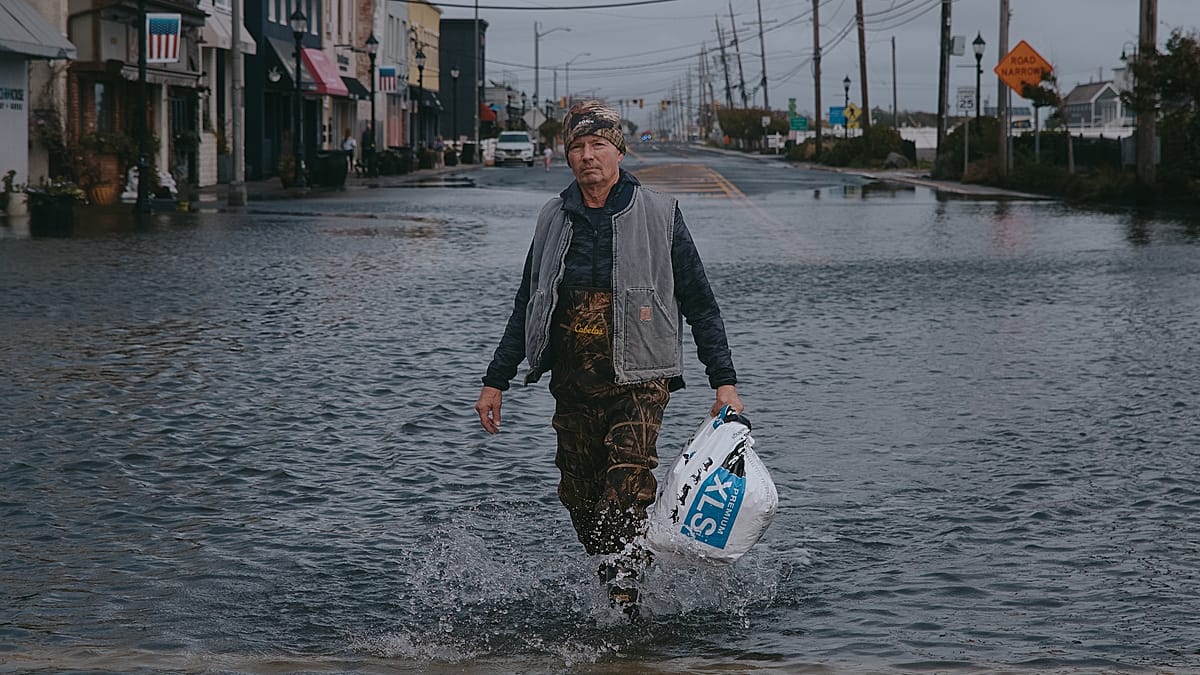
Beyond stronger winds, rising temperatures add new dangers: sea-level rise amplifies coastal flooding, erosion, and landslides. Convective storm systems, from thunderstorms to long-lived supercells, are producing heavier rainfall because warmer air holds more moisture.
Which countries are most at risk?
The report's Storm Risk Index, which assessed 193 countries, finds that just ten nations bear the majority of global storm exposure: the Philippines, Mexico, Madagascar, Mauritius, Japan, China, Micronesia, the US, South Korea, and Australia. Only two European countries rank within the top 100 for physical exposure and societal vulnerability: Portugal (69th) and Ukraine (96th).
While tropical cyclones are rare in Europe, extratropical cyclones are more common. These develop over the sea but are much weaker, yet they still shape weather on land. “Especially in Northern Europe we see an increase in the number of these storms, which means that winters have become much wetter,” says Dr Otto.
The wider World Risk Index, which measures overall disaster risk from all natural hazards, places 13 European countries in the top 100. Türkiye leads the continent at 38th, followed by Italy (51st), Greece (56th), Spain (58th), France (78th), Albania (81st), Poland (82nd), Portugal (86th), the UK (89th), Croatia (92nd), Belgium (94th), the Netherlands (96th), and Germany (99th). Coastal cities and islands are particularly vulnerable, with Dr Otto noting that “cities like New York and Boston, or Beijing and Tokyo will see tropical cyclones in the future.”
Rethinking early warning systems
Effective warnings must do more than track hazards—they must reduce vulnerabilities. The report urges the adoption of All-Vulnerability Warning Systems (AVWS) that “consider all hazards, all time scales, and all people.” This means accounting for factors such as reduced mobility due to societal clothing mandates for women, or the risk of map misreading due to colour blindness.
Traditional warning systems often focus on wind, missing the greatest dangers to life: flooding and storm surges. Multi-hazard early warning systems (MHEWS), which incorporate air temperature, precipitation type and amount, wind speed and direction, iciness, lightning, and tornadoes, can provide a more complete picture.
Community-based disaster preparedness is also essential, especially for people without access to radio or mobile phones. Insurance plays a crucial role in recovery: while it covers about half of storm damage in the Global North, it is often unavailable or unaffordable in the Global South, slowing reconstruction and potentially leading to a “spiral of poverty” that lasts generations.
Ultimately, reducing greenhouse gas emissions would slow the intensification of storms. As Dr Otto puts it, “The future significance [of storms] lies not only in their physical intensity, but also in how well societies adapt, through resilient infrastructure, improved forecasting, early warning systems, and climate mitigation efforts.”
For Europe, the message is clear: even if the continent avoids the worst tropical cyclones, the increasing frequency of extratropical storms and the broader risks of flooding and sea-level rise demand urgent adaptation. As Portugal braces for extreme heat and Spain ties its September heat record, the continent is already feeling the effects of a changing climate.