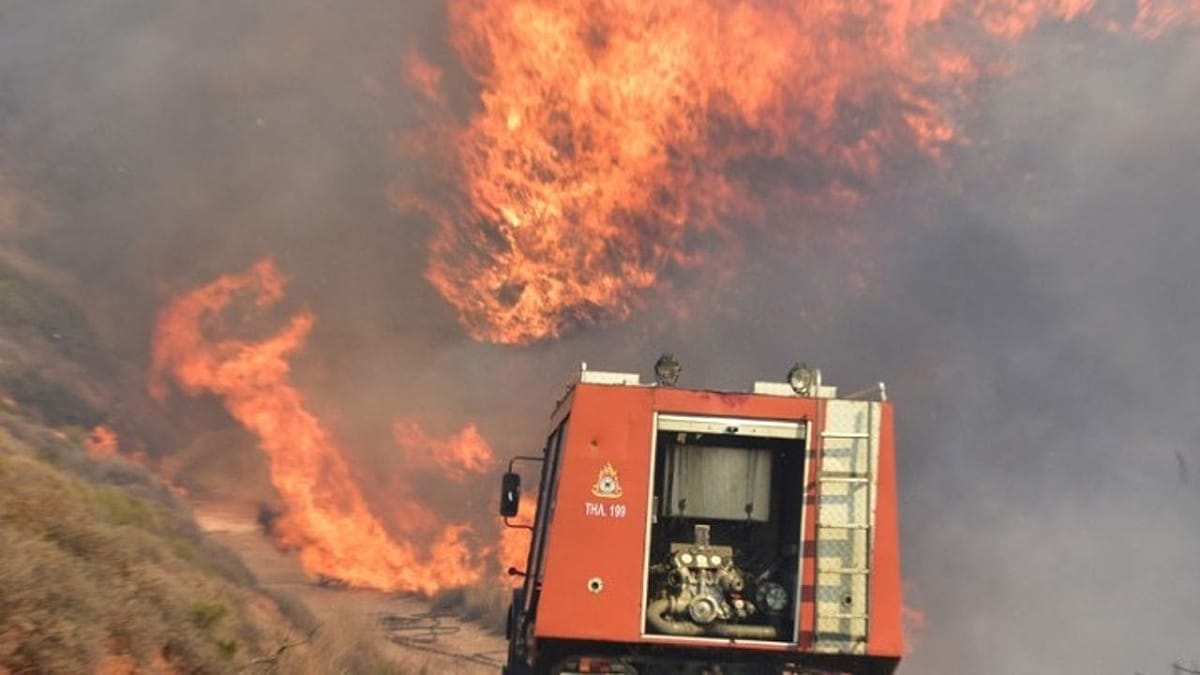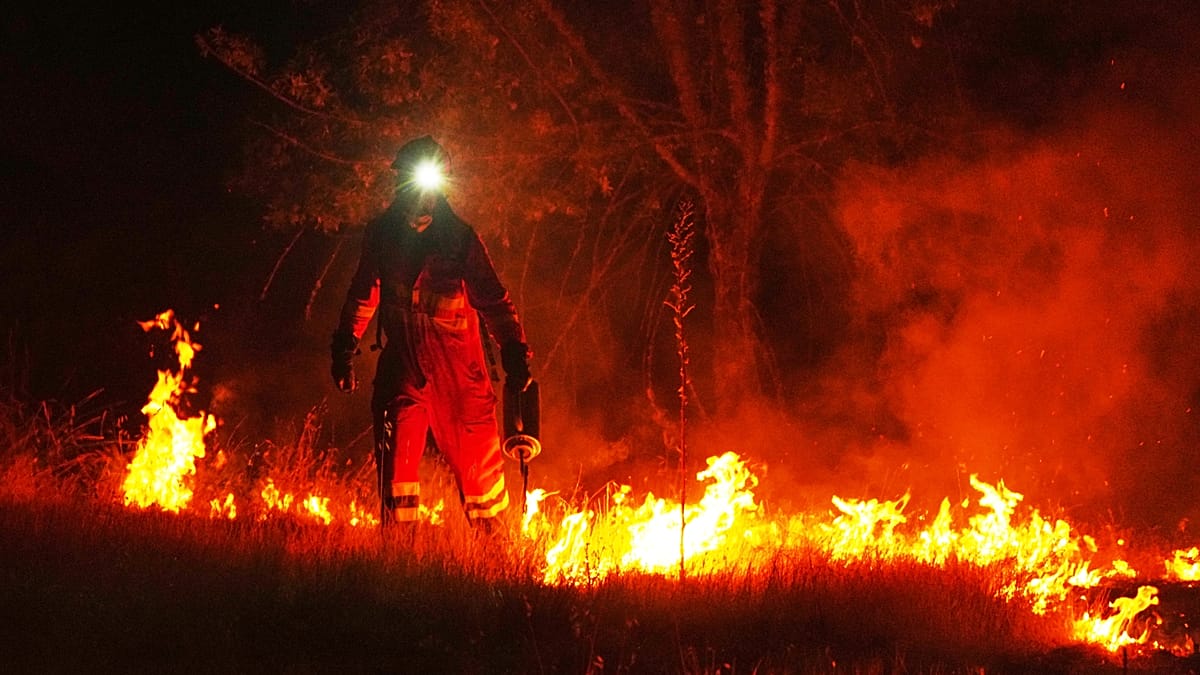
Europe is confronting one of its most severe wildfire seasons in recent memory, with France and Spain bearing the brunt of fast-moving blazes fueled by repeated heatwaves, drought, and strong winds. Thousands of firefighters are battling fires that have forced mass evacuations, destroyed tens of thousands of hectares of forest, and disrupted tourism during the peak summer season. Portugal, Greece, Italy, Turkey, and parts of the Western Balkans are also at risk as temperatures are forecast to rise further.
Where the fires are hitting hardest
Since 22 July, wildfires have been concentrated in southwestern France, particularly the Gironde region around Bordeaux, and in central and eastern Spain. In Spain, the worst-affected areas include western Madrid, where authorities are tackling one of the region's largest fires on record, as well as Ávila, Toledo, and Castellón on the eastern coast, where an uncontrolled blaze continues to burn. Spanish Prime Minister Pedro Sánchez described the situation as a disaster of immense scale. In France, President Emmanuel Macron called the Gironde fires the worst since World War II, noting that while the fire has been stabilized, it remains very intense.
The destruction has been extensive. At least 80,000 hectares have been lost in Spain and 42,000 in France. Two firefighters died in France and another in Italy while tackling the blazes. Near Bordeaux, in the commune of Le Porge, at least 240 homes have been completely destroyed, with many more damaged. More than 320,000 people have been evacuated across both countries. In France, authorities ordered nearly 4,000 additional residents and tourists to leave coastal areas along the Atlantic as a precautionary measure.
EU response and coordination
The European Union has activated its Civil Protection Mechanism (EUCPM), a solidarity system through which member states and participating countries share firefighting resources when national capacities are overwhelmed. The European Commission's Emergency Response Coordination Centre (ERCCC) coordinates the deployment of aircraft, helicopters, and firefighting teams from across Europe, co-financing transport and operational costs. For this wildfire season, the Commission maintains a transitional rescEU fleet of 22 aircraft and five helicopters, which can be deployed to countries facing major fires.
So far, the EU has supported France with two small Air Tractor firefighting planes from Portugal, one Black Hawk helicopter from Slovakia, and another from Czechia, which arrived at Bordeaux-Mérignac airport on 24 July. One Croatian Canadair firefighting plane arrived in Nîmes on 24 July, followed by two Swedish water-scooping planes and a technical team in Bordeaux-Mérignac. A Commission liaison officer was deployed to Bordeaux. Spain received two Greek and two Italian Canadair planes in Torrejón de Ardoz, along with two Turkish Air Tractor planes and three Portuguese ground teams (134 personnel, 41 vehicles) in Burgohondo. Two helicopters from Germany and two additional planes from Türkiye were due to be deployed. The EU's Copernicus service is providing emergency satellite maps of the affected areas.
However, Commission officials have warned that emergency response alone will not suffice as climate change makes wildfires larger and more intense. They argue that Europe needs an integrated management approach, combining firefighting with prevention measures such as better forest management and reducing combustible vegetation. Scientists say the combination of prolonged heat and drought has created ideal wildfire conditions across southern Europe.
While extreme weather conditions driving the fires are strongly linked to climate change, many individual wildfires are still started by human activity. According to the Commission, around 96% of wildfires in Europe are caused by human activity, either accidentally or deliberately—from discarded cigarettes and barbecues to sparks from machinery. The economic toll is staggering: Spain's wildfire season costs up to €3.275 billion in firefighting alone, and the EU has warned that its response capacity is stretched to breaking point.
As another spell of high temperatures is forecast this week, concerns are rising that new fires could ignite and existing ones could spread rapidly. Authorities in Gironde and Nouvelle-Aquitaine said the wildfire, which has ravaged 42,000 hectares in less than a week, remained contained but warned that weather conditions were expected to remain unfavourable. The crisis underscores the urgent need for Europe to adapt its fire management strategies to a warming climate.