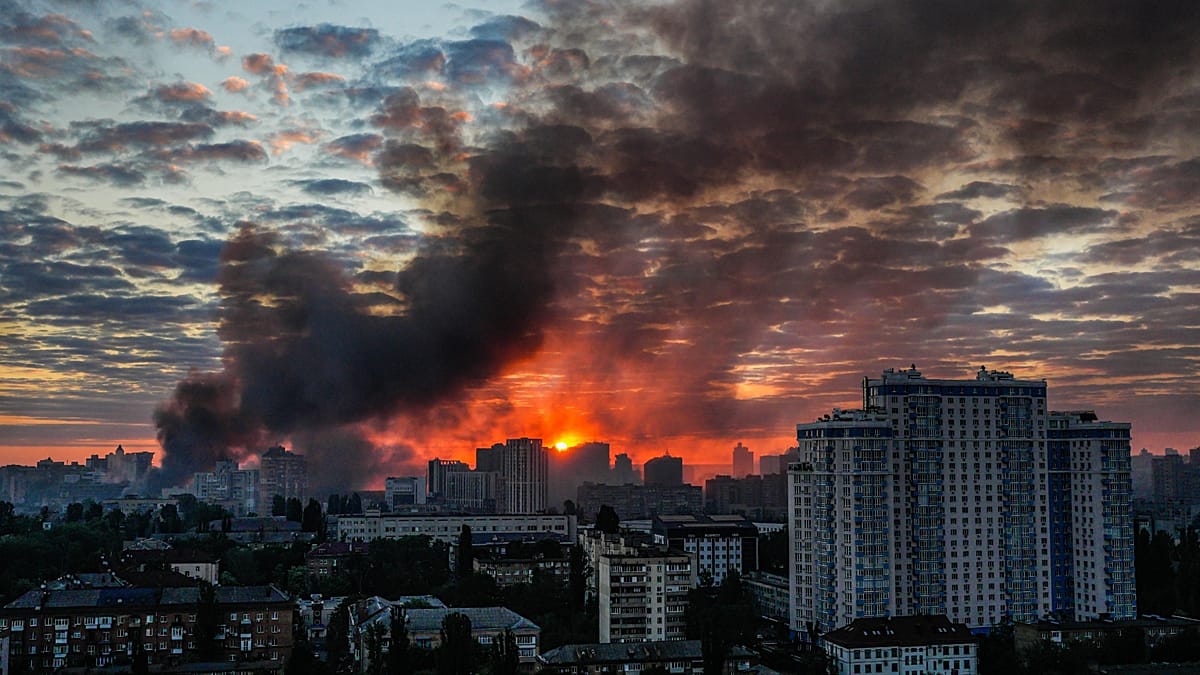
On Sunday, Ukrainian President Volodymyr Zelenskyy reported that Russia had once again deployed its "Oreshnik" intermediate-range ballistic missile, this time targeting the Kyiv region. The Russian Defence Ministry confirmed the launch, framing it as retaliation for Ukrainian strikes against what Moscow termed "civilian targets"—a claim Kyiv has denied.
The use of the Oreshnik missile has drawn sharp condemnation from across Europe. German Chancellor Friedrich Merz described the attack as a "reckless escalation" in a post on X, reiterating Berlin's steadfast support for Ukraine. French President Emmanuel Macron also condemned the strikes, noting that civilian infrastructure in Ukraine had again been hit. Macron characterized the reported deployment of the nuclear-capable Oreshnik as a sign of both Russia's military deadlock and a dangerous escalation of the conflict. He affirmed that France would continue backing Ukraine and efforts toward a just and lasting peace.
European Commission President Ursula von der Leyen said the massive Russian assault demonstrated "the Kremlin's brutality and disregard for both human life and peace negotiations." She added that terror against civilians was "not strength" but "desperation," and pledged continued EU support, particularly in strengthening Ukraine's air defence systems.
EU foreign policy chief Kaja Kallas described the attacks as "abhorrent acts of terror" against the Ukrainian civilian population. She argued that Russia had reached a military dead end and was deliberately targeting city centres. Kallas called the reported use of the Oreshnik missile particularly alarming, labeling it "reckless nuclear brinkmanship." EU foreign ministers are expected to discuss further pressure on Russia next week.
The Oreshnik Missile: A New Threat to European Security
The Oreshnik missile first came to public attention in 2024 during an attack on the Ukrainian city of Dnipro. Since then, it has become one of the Kremlin's most closely watched military projects. Russian President Vladimir Putin has described the ballistic missile as "state-of-the-art." Moscow claims it is an intermediate-range ballistic missile capable of hitting targets between 3,000 and 5,500 kilometres away, which would put large parts of Europe within range. Belarus is also believed to possess the missile system.
The deployment of the Oreshnik missile was part of a large-scale Russian offensive overnight into Sunday. According to the Ukrainian Air Force, Moscow launched 90 missiles and cruise missiles as well as around 600 drones. Although many targets were intercepted, dozens of hits were still reported. Among the sites damaged was the centrally located studio of German public broadcaster ARD, which was heavily damaged and partially destroyed. The broadcaster reported that a massive blast wave likely caused the destruction, shattering windows and devastating parts of the studio.
This latest escalation underscores the ongoing threat to European security. For a deeper analysis of the Oreshnik missile's capabilities and its implications for the continent, read our explainer: Russia's Oreshnik Missile: Hypersonic Threat to European Security. The attacks also come amid intensified Russian drone strikes on Ukrainian cities, as detailed in our report: Russian Drone Barrage Hits Kharkiv Residential Area as Attacks Intensify.
European leaders remain united in their condemnation and support for Ukraine, but the repeated use of such advanced weaponry raises urgent questions about the continent's defence preparedness and the need for continued diplomatic and military assistance to Kyiv.