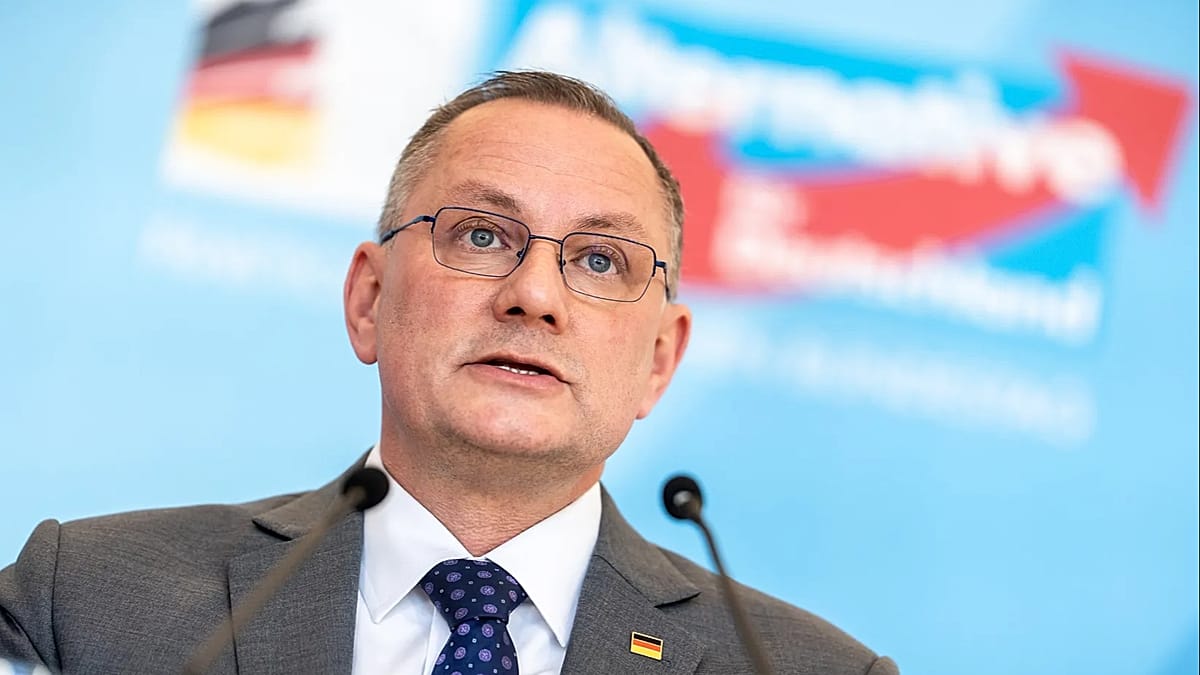
The European Parliament is poised to initiate a formal procedure against the Europe of Sovereign Nations (ESN) party, the EU-level political alliance that includes Germany's Alternative für Deutschland (AfD) and other far-right parties from across the continent. If the process concludes that ESN has failed to uphold the European Union's foundational values, the party could lose its registered status as a European political party and the public funding that comes with it.
More than 180 Members of the European Parliament have signed a request to activate a verification mechanism. This will task the Authority for European Political Parties and Foundations (APPF) with assessing whether ESN complies with the EU's core principles, which include respect for human dignity, freedom, democracy, equality, the rule of law, and human rights, including the rights of minorities.
The Parliament is expected to confirm the decision in a plenary vote scheduled for next Tuesday in Strasbourg. According to multiple Parliament officials, the three largest political groups — the centre-right European People's Party, the Socialists and Democrats, and the liberal Renew Europe — are all in favour, making approval all but certain.
What Is at Stake for ESN?
ESN was founded in August 2024 by eight far‑right European parties, with the AfD as its leading force. Other members include Poland's Confederation and France's Reconquête. It is important to note that ESN is a separate legal entity from the ESN political group inside the European Parliament, which is composed of the same political forces and currently has 27 MEPs. Political groups are factions within the Parliament, while European political parties are alliances of national parties at EU level, funded through the EU budget. Neither the parliamentary group nor individual MEPs would face any direct consequences if ESN loses its status as a European party.
Last May, APPF Director Pascal Shonard sent a letter to the European Commission, the Council, and the Parliament, highlighting “facts casting doubt on compliance” by ESN with EU values. The APPF's 294‑page dossier, seen by Euronews, includes court rulings, public statements, and social media posts by ESN members that could constitute evidence of violations.
The dossier documents antisemitic, anti‑LGBT, and anti‑migrant rhetoric, including calls for the remigration of European citizens with foreign roots and the equation of homosexuality with paedophilia. Other reported incidents include racist banners displayed by Czechia's SPD party, an action by Bulgaria's Revival party to stop the broadcast of a film featuring scenes of homosexuality, and a German court ruling that considered the AfD's policy programme “contrary to human dignity and freedom of religion”.
An ESN spokesperson defended the party, stating: “The ESN Party is accused of not respecting ‘European values’ simply because it speaks about real problems affecting Europeans. Freedom of expression is a fundamental EU value. Political disagreement should be met with debates.”
Once the Parliament triggers the procedure, the APPF will send its observations to ESN, which will then have the opportunity to take corrective measures. The authority must ultimately decide whether to deregister ESN as a European political party. The process underscores the EU's ongoing struggle to balance its commitment to free speech with the need to defend its core values against what it sees as illiberal political forces.
This move comes amid broader debates about the rise of far‑right parties across Europe and the EU's ability to enforce its principles. For context, the European People's Party recently granted observer status to Montenegro's Europe Now! party, a step seen as bolstering the country's EU path. Meanwhile, in Germany, the AfD's domestic influence continues to stir controversy, as seen in recent debates over infrastructure and climate adaptation during record heatwaves.