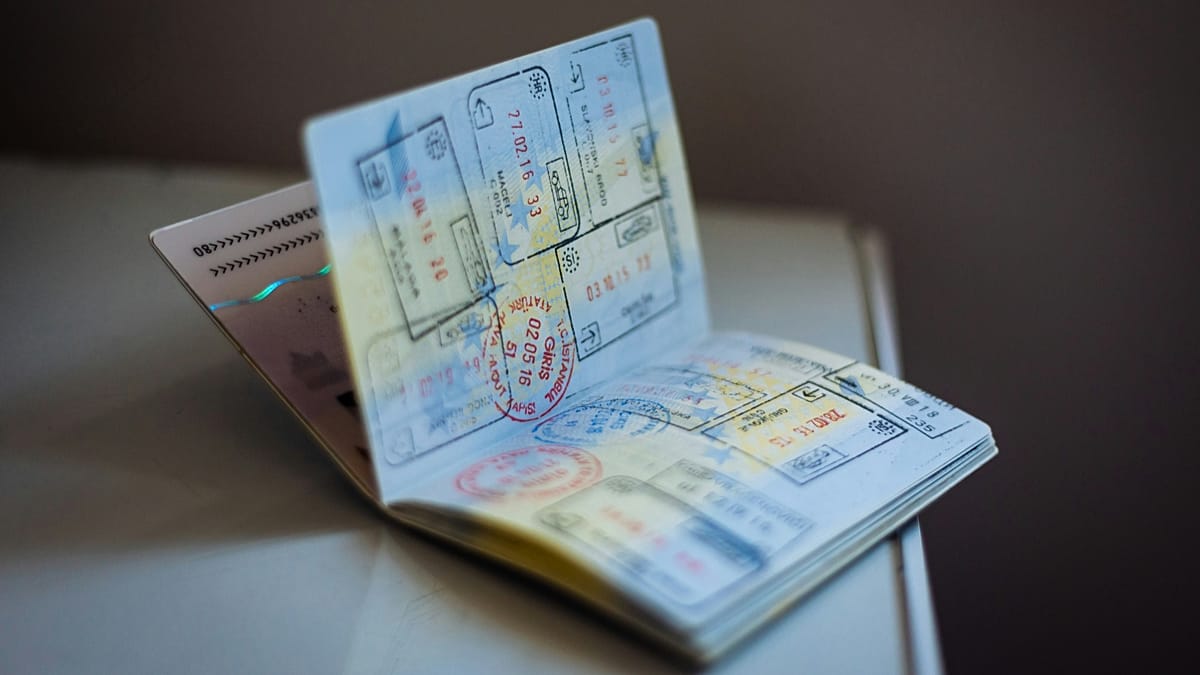
The fifth edition of the Global Passport Index (GPI), published by Global Citizen Solutions (GCS), confirms Europe's continued dominance in passport strength. Nine of the ten most powerful passports in the world are European, with Singapore the sole exception, ranking tenth.
Unlike the widely cited Henley Passport Index, which focuses exclusively on visa-free travel, the GPI takes a broader approach. It combines a Mobility Index (visa-free access), an Investment Index (tax environment, innovation, economic competitiveness), and a Quality of Life Index (healthcare, safety, climate, social infrastructure). This three-pillar methodology gives a more holistic picture of what a passport offers its holder.
Europe's Balanced Strength
Patricia Casaburi, CEO of Global Citizen Solutions, explained the secret behind Europe's success: “Europe’s dominance of the Global Passport Index is total at the top, and it is built on balance, not on any single strength. The nine most powerful passports in the world in 2026 are all European, led by Sweden, Switzerland and Finland. What is striking is how they win.”
She added: “On pure travel freedom Singapore beats every one of them, and on raw investment pull several Gulf and Asian states rival them. Europe’s edge lies elsewhere: it is the only region that pairs near-maximum global access with the world’s highest quality of life, the one dimension no government can create through treaties or tax incentives.”
The Top Five
Sweden leads the ranking, placing 11th on mobility, 9th on investment, and 2nd on quality of life. Switzerland follows in second, with a 7th-place mobility score, 2nd in investment, and 36th in quality of life. Finland takes third, ranking 4th for mobility, 28th for investment, and 1st for quality of life. Germany is fourth, with positions of 15th in mobility, 20th in investment, and 3rd in quality of life. The Netherlands and Denmark share fifth place.
The remainder of the top ten includes Ireland (7th), the United Kingdom (8th), Norway (9th), and Singapore (10th).
Brexit's Quiet Signature
The GPI highlights the lasting impact of Brexit on the British passport. While the UK ranks 8th overall, its mobility score sits around 30th—well below the elite tier. Casaburi noted: “The United Kingdom passport held firm in the global top ten throughout the period, ranked 8th overall in 2026, anchored by a quality-of-life score that sits among the world’s very best. Yet for a passport of such standing, its mobility rank is conspicuously modest, around 30th, well adrift of the elite tier it otherwise occupies. That gap is the quiet signature of Brexit.”
She continued: “The index measures visa-free travel, where the British passport remains strong, but it cannot capture what was actually lost: the automatic right of UK citizens to live, work and settle across twenty-seven European states.”
US Decline
The United States has experienced the steepest five-year decline of any G7 country. After topping the index in 2021 with the highest composite score in GPI history (96.45), it fell to 14th in 2025 before recovering slightly to 12th in 2026. The drop is attributed to a series of bilateral visa re-impositions, including Brazil reinstating visa requirements for American citizens in April 2025.
The 2026 GPI underscores that Europe's passport strength is not about any single metric but a combination of global mobility, economic openness, and high living standards. For European citizens, this means not just ease of travel but also access to some of the world's best healthcare, safety, and social infrastructure.