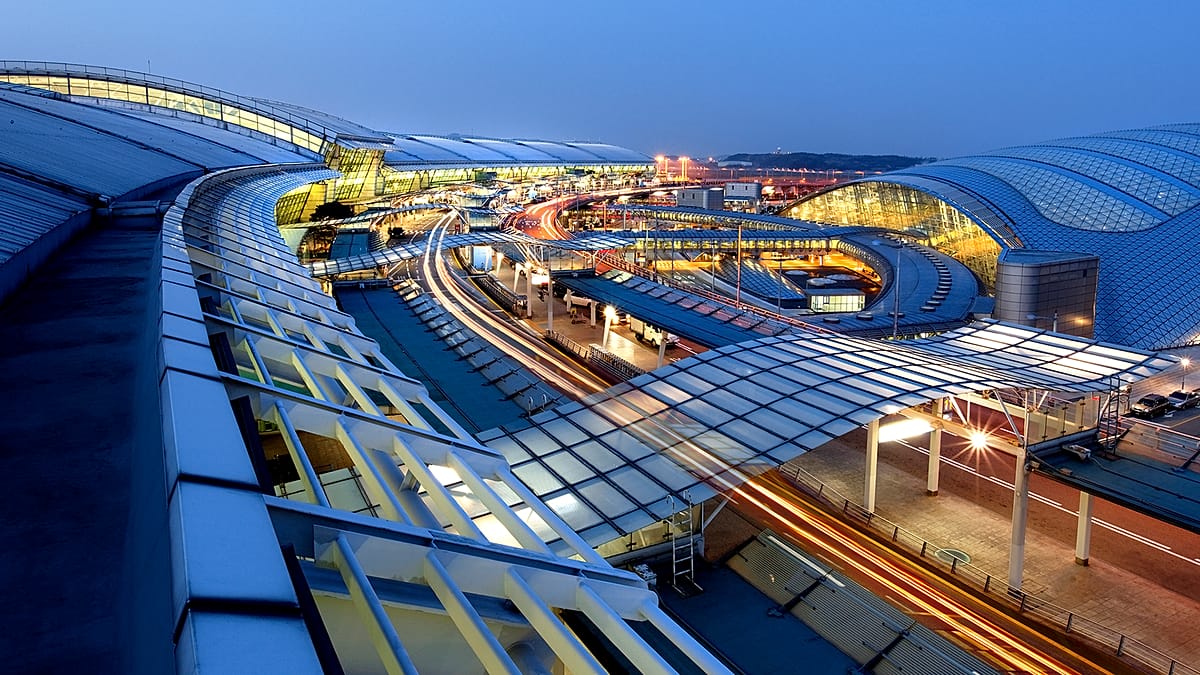
Incheon International Airport, South Korea's primary gateway, has for the first time become the world's busiest airport for international passenger traffic, according to preliminary data from the Airports Council International (ACI). The airport, located roughly 48 kilometres from Seoul, handled 38.39 million international passengers in the first six months of 2026.
London Heathrow Airport in the United Kingdom followed closely with 37.79 million passengers, while Singapore's Changi Airport ranked third with 34.53 million. The figures mark a significant shift in global aviation patterns, with East Asian hubs gaining ground amid geopolitical turbulence.
Middle East conflict reshapes travel routes
The rise in Incheon's traffic is largely attributed to the ongoing US-Iran war, which has disrupted travel in the Middle East and redirected passengers away from traditional hubs such as Dubai. Incheon International Airport Corporation (IIAC) told the Yonhap news agency that the conflict has boosted passenger numbers on routes through East Asia.
Transfer passengers at Incheon increased by 18.1% year-on-year to 4.24 million in the first half of the year. Notably, the number of transfer passengers with final destinations in Europe surged by 63.2% to 210,000, reflecting a growing preference for Asian transfer points over Middle Eastern ones.
Incheon, which opened in 2001, now serves 101 airlines flying to 183 cities, including 158 international destinations. An expansion project completed in 2024 raised the airport's annual capacity to 106 million passengers, positioning it to handle continued growth.
This is the first time Incheon has topped the global rankings for international traffic. The airport was tenth in 2002, climbed to fifth in 2018, and ranked third in both 2024 and 2025. Dubai International Airport, which held the second spot in 2024 and 2025 based on full-year statistics, is forecast to fall outside the top five this year.
The shift in rankings also reflects broader changes in European aviation. Istanbul Airport has overtaken Heathrow as Europe's busiest airport by total passenger numbers, with 8.15 million passengers in July compared to Heathrow's 7.9 million. This development underscores the growing importance of Turkey as a transit hub, partly due to its geographic position and expanding network.
For European travellers, the rise of Incheon and other Asian hubs may offer more options for connecting flights, particularly to destinations in Asia and the Pacific. However, it also highlights the fragility of global air travel, where geopolitical events can rapidly alter traffic flows. As the US-Iran conflict continues, airlines and passengers alike are adapting to a new map of air connectivity.
The ACI data, while preliminary, signals a lasting change in the hierarchy of global airports. Incheon's success is not merely a temporary blip but a reflection of South Korea's strategic investments in aviation infrastructure and its position as a key player in East Asian trade and tourism.
For now, Incheon's achievement stands as a testament to the resilience of the aviation industry in the face of conflict, and a reminder that Europe's airports must remain competitive in an increasingly dynamic global market.