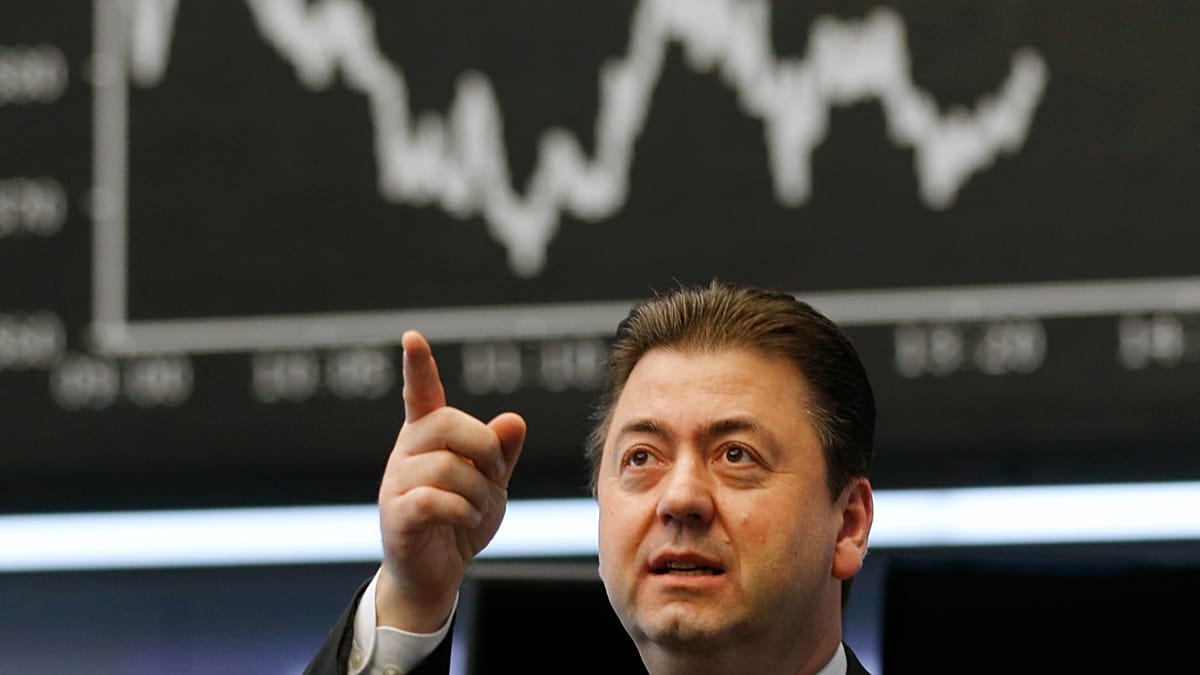
European stock markets have had a turbulent start to 2026, with the Euro STOXX 600 index up 3.5% year-to-date—lagging behind the S&P 500's 8% gain. Yet beneath the surface, a handful of companies have posted extraordinary returns, some surging by several hundred percent. The drivers are familiar: the artificial intelligence boom, geopolitical tensions in the Middle East, renewed demand for energy infrastructure, and a growing appetite for defense and strategic technologies.
Technology: AI Infrastructure Powers Chip Stocks
Swedish chipmaker Sivers Semiconductors has become Europe's biggest stock market winner of the year, with shares soaring 947%. The company develops photonics and semiconductor components used in AI data centers and 5G networks. Investors have piled in as demand grows for optical technologies that can handle the vast computing requirements of AI systems. Revenue remains modest—SEK 304.1 million (about €27 million) in 2025, up 25% year-on-year—but the company reported that potential future business opportunities increased 64% to $453 million (€385 million), with the bulk tied to AI photonics. The rally was turbocharged by Sivers' April announcement of a secondary listing on the Nasdaq in New York.
French semiconductor materials company Soitec has also surged, rising 639% despite weaker recent earnings. Third-quarter 2026 revenue of €160 million was down 22% year-on-year on weak mobile and automotive demand. What changed the narrative is that investors have focused on the company's position in the AI supply chain. Soitec engineers the thin silicon-on-insulator (SOI) wafers used by chipmakers for smartphone radio-frequency components, automotive radar, and increasingly for co-packaged optics in AI data centers. The company holds a near-monopoly in SOI substrates for photonics, which could become essential for next-generation AI infrastructure, particularly in optical interconnects used by hyperscale data centers.
Industrials: Hydrogen and Fuel Cells Back in Fashion
In the industrial sector, investors have rediscovered hydrogen and fuel-cell companies. UK-listed Ceres Power, which develops solid oxide fuel-cell technology, has climbed 237% this year. Ceres licenses its technology rather than building its own systems, and has benefited from growing interest in alternative power systems for AI data centers, particularly after US group Bloom Energy signed a major fuel-cell deal with Oracle.
Another British hydrogen company, ITM Power, has risen 173%. The Sheffield-based group makes electrolysers used to produce green hydrogen. Investors have welcomed stronger revenues, improving profitability, and a partnership with German defense giant Rheinmetall on synthetic fuel projects linked to NATO supply chains. Another development attracting interest is ITM's planned Chronos production line, targeting one gigawatt of capacity by 2028. Financing rests on a £46.5 million (€53.7 million) UK government grant pending approval from the Competition and Markets Authority in June.
Healthcare: Clinical Milestones and Weight-Loss Drugs
French biotech company Nanobiotix has climbed 89% year-to-date after progress in a late-stage cancer trial backed by Johnson & Johnson improved investor confidence in future milestone payments. On 4 May, the FDA accepted a protocol amendment to the pivotal NANORAY-312 Phase 3 trial in head and neck cancer. The change removes a planned interim analysis and reduces the number of events required for the final readout, potentially bringing future payments forward. Nanobiotix is eligible to receive "hundreds of millions" in milestone payments under its 2023 licence agreement with Janssen. Since the FDA announcement, the stock has already surged 44%.
Healthcare companies linked to the booming market for GLP-1 obesity and diabetes drugs have also seen strong gains. Swiss manufacturer PolyPeptide has risen 51% this year as pharmaceutical companies race to secure production capacity for peptide-based medicines. The company produces ingredients used in weight-loss and diabetes drugs made by some of the world's biggest pharmaceutical firms. Revenue rose 15.6% in 2025 to €389 million, while profitability also improved. The company says it remains on track to double revenue from 2023 levels by 2028. Demand has been boosted by the rapid growth of GLP-1 obesity drugs, with the market expected to grow at a 12.7% CAGR through 2034.
Communication Services: Satellites and the AI Search Beneficiary
French satellite operator Eutelsat has emerged as one of the year's major geopolitical winners. Shares are up 64% as European governments increasingly look for alternatives to Elon Musk's Starlink network amid concerns over technological sovereignty and communications security. The company's low Earth orbit OneWeb satellite network has attracted growing strategic interest from European policymakers, while demand for satellite connectivity has also increased during ongoing geopolitical tensions. This trend echoes broader European efforts to secure digital independence, as seen in recent debates over algorithmic accountability—such as the case of French families suing TikTok for algorithmic 'abuse of weakness'.
At the same time, the Copenhagen-based review platform Trustpilot Group has become one of the most unexpected beneficiaries of the generative AI boom. Its London-listed shares have gained 57% year-to-date. Operating profit for 2025 quadrupled to $16 million (€14.7 million), driven by a 1,490% year-on-year surge in click-throughs from AI search engines. Trustpilot ranked as the fifth most-cited domain globally on ChatGPT in January, according to Promptwatch data. AI chatbots increasingly rely on large databases of human-generated reviews, making Trustpilot a key data source for training models.
These gains come against a backdrop of broader market volatility, with geopolitical developments such as hopes for a reopening of the Strait of Hormuz lifting global stocks while oil remains above $100. For European investors, the standout performers of 2026 reflect a continent pivoting toward AI, energy independence, and strategic technologies—sectors that may define the next phase of growth.