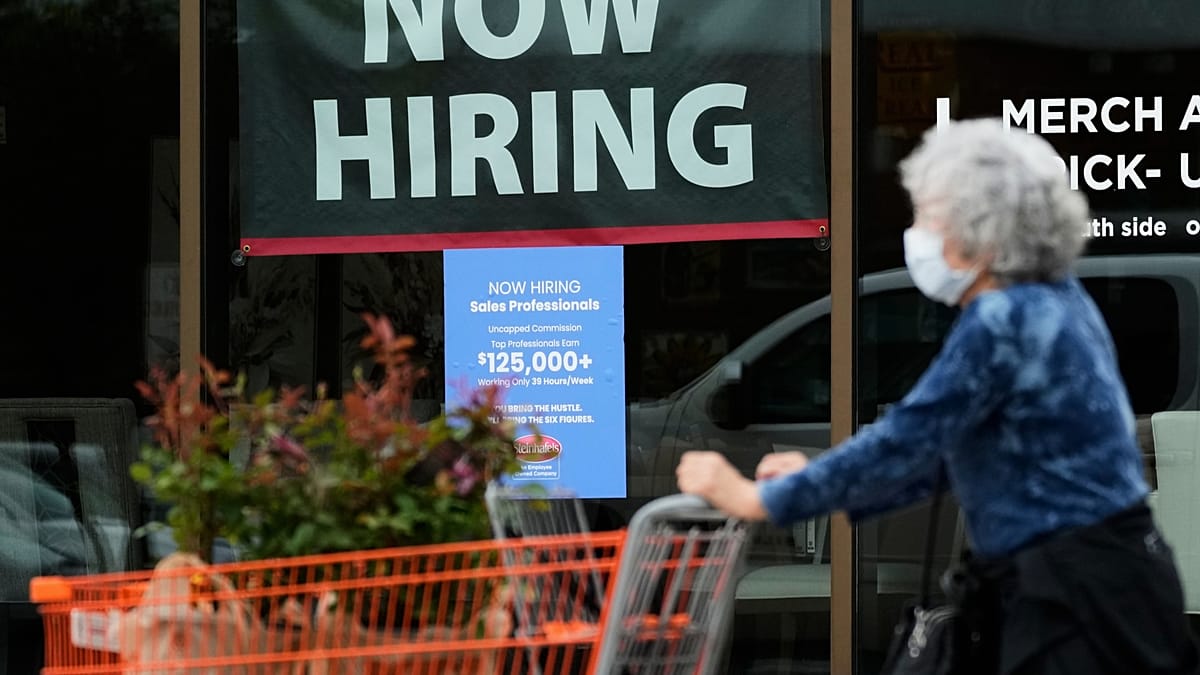
The American labor market delivered a surprise contraction in July, with employers cutting 23,000 jobs, according to the Bureau of Labor Statistics. The figure stands in stark contrast to analyst forecasts of a near 100,000 gain, and downward revisions to May and June data removed a further 103,000 positions. The unemployment rate, however, eased to 4.1% from 4.2% in June, largely because 264,000 people exited the labor force entirely.
This reversal marks a political setback for President Donald Trump less than three months before the midterm elections, where Republicans aim to retain control of Congress. The Trump administration has championed tariffs as a tool to revive manufacturing, and indeed construction added 22,000 jobs and factories 5,000. Yet these gains were overwhelmed by losses in public schools (50,000), restaurants and bars (26,000), and retail (19,000).
White House spokesman Kush Desai framed the data optimistically: “The Trump industrial resurgence is on schedule. Manufacturing and factory construction jobs grew again in July even as government payrolls continued to significantly shrink.”
The 'no hire, no fire' economy
Economists describe the current climate as a “no hire, no fire” economy. Layoffs remain historically low as companies cling to workers they struggled to find after the pandemic. But those seeking jobs—whether new entrants or the recently unemployed—face a tough slog. Monthly hiring has averaged just 61,000 this year, up from a dismal 9,700 in 2025, yet still far below the 155,000 break-even rate of 2023–2024.
That break-even threshold has plummeted, possibly to near zero, according to a Federal Reserve study. The reason: Trump’s immigration crackdown and the retirement of baby boomers have shrunk the pool of available workers. “There are just fewer people available to hire,” said Sal Guatieri, senior economist at BMO Capital Markets. For those who do switch jobs, wages are rising—ADP reported a 7% year-over-year increase for job changers in July, versus 4.4% for stayers.
Productivity gains are also suppressing hiring demand. “We are seeing companies produce more with their current staff,” Guatieri noted, “so there’s less need to take on new workers.” This trend, combined with labor shortages, will likely keep monthly job growth subdued.
The outlook is further clouded by the ongoing conflict in the Persian Gulf, which has driven up energy prices and squeezed household budgets, and by the rise of artificial intelligence—a double-edged sword that could either enhance worker efficiency or displace jobs. These dynamics echo challenges seen across Europe, where employers struggle to find the right talent in an AI-driven market.
Researchers at the Federal Reserve Bank of San Francisco—Ingrid Chen, Marianna Kudlyak, and Riva Mikhlin—found that landing a job has become surprisingly harder in the past two years. Even prime-age workers (25–54) with college degrees, typically the quickest to rebound, are finding the search arduous. “Instead of being pulled in, the pipeline into employment is shrinking such that the recovery is no longer reaching workers at the margins,” they write.
The reasons for this difficulty remain unclear, but the implications are significant. With fewer people in the labor force and productivity rising, the US economy may be entering a new phase where job growth is no longer the primary indicator of health. For Europe, watching these trends offers lessons as the continent navigates its own labor market transformations, particularly in the face of climate-related disruptions and geopolitical tensions.