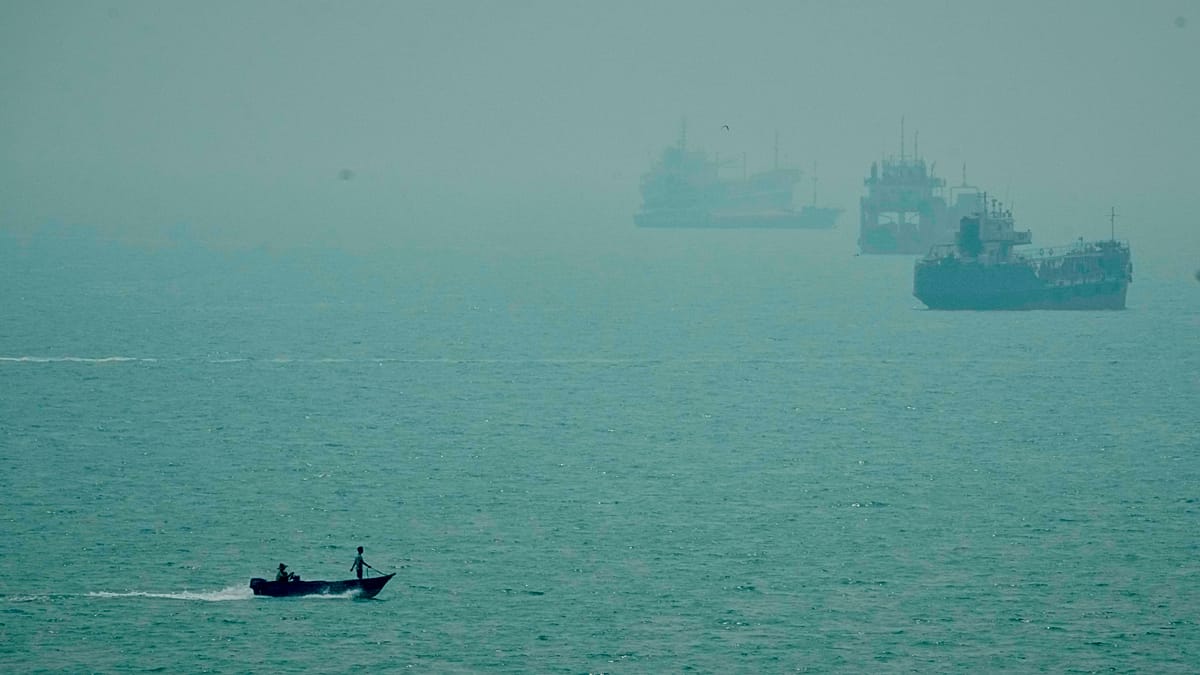
Qatar has firmly ruled out building a natural gas pipeline to circumvent the Strait of Hormuz, arguing that the alternative would require costly new liquefaction facilities outside its borders. Saad Sherida Al-Kaabi, the Minister of State for Energy Affairs and chief executive of QatarEnergy, said neighbouring countries had offered transit routes, but the economics do not add up.
Speaking at the Qatar Economic Forum in New York, Al-Kaabi explained that LNG cannot simply flow through a conventional pipeline. Any bypass would mean sending natural gas through a pipeline and constructing new liquefaction plants at the other end—an expensive duplication of the massive infrastructure already under construction in Qatar as part of the North Field expansion. "It makes no economic sense," he said, citing commercial and technical grounds for the decision.
The minister also pushed back against US Treasury Secretary Scott Bessent's prediction that the Strait of Hormuz could become "worthless" within two years as Gulf states develop alternative routes. Al-Kaabi called that assessment "completely wrong," noting that the strait carries a vast range of trade, not just oil and gas.
North Field expansion and production delays
The North Field expansion is central to Qatar's ambition to raise LNG production capacity from 77 million tonnes per year to 142 million tonnes by 2030. However, the timeline has slipped: the first production unit at the North Field East project is now expected to start in the first half of 2027, a year later than originally planned. Al-Kaabi warned that further delays could occur if supply chain disruptions prevent equipment from reaching Qatar. The North Field South project is slated to begin production in 2028.
Qatar currently exports only a small volume of LNG through the strait. Al-Kaabi said that undamaged units at Ras Laffan could return to normal operations within weeks of the strait reopening. Attacks on Ras Laffan in March damaged two LNG production units, cutting export capacity by around 17%. Repairs to those units are expected to take three years, while a damaged gas-to-liquids unit should be fixed by the first quarter of 2027.
Outside the Gulf, the first production unit at the Golden Pass LNG project in the United States has begun shipping cargoes, with the second and third units expected to be fully operational next year. Al-Kaabi also expressed confidence that QatarEnergy would soon become the world's largest LNG trader.
The disruption has taken a toll on Qatar's economy, with GDP falling 7% year-on-year in the first quarter of 2026, according to official figures. The broader energy crisis has also rattled European markets, as Europe scrambles to shield motorists from higher prices.
Doha Investment and the $60bn opportunity
At the same forum, Qatar's Prime Minister and Foreign Minister, Sheikh Mohammed bin Abdulrahman Al Thani, launched Doha Investment, a new platform designed to manage and grow the domestic portfolio of the Qatar Investment Authority (QIA). The platform will oversee 45 companies, representing roughly one-third of QIA's assets, including Qatar Airways Group, QNB Group, Ooredoo Group, Qatari Diar, Katara Hospitality, and Hassad Food.
Sheikh Mohammed also unveiled more than $60bn (around €52bn) in projects and investment opportunities over the next five years. This includes approximately $38.5bn (€33.5bn) in new infrastructure projects, with the first tenders to be issued immediately, and a separate $22.5bn (€19.6bn) in real estate and hospitality projects expected to attract private investment.
Qatar's Minister of Commerce and Industry, Sheikh Faisal bin Thani Al Thani, will serve as Doha Investment's managing director and vice-chairman. He said the platform would work with existing companies and help establish new businesses in advanced technology, manufacturing, supply chains, and healthcare. The portfolio spans financial services, transport and logistics, telecommunications, technology, property, hospitality, and food and agriculture, with more than 20 companies generating annual revenue exceeding 1bn riyals (€232m) in 2025.
The move is part of a broader reshaping of Qatar's sovereign wealth strategy, as the country seeks to diversify its economy beyond hydrocarbons. The announcement comes amid heightened geopolitical tensions in the Gulf, which have already had ripple effects across Europe, as seen in Ireland's finance minister attributing the energy crisis to the Hormuz closure rather than the war in Ukraine.
Qatar's investment push also aligns with its efforts to boost tourism, with a 560-event calendar through 2027 designed to attract visitors. For European investors and policymakers, the developments signal both opportunities and risks, as the continent's energy security remains tied to the stability of Gulf shipping lanes.