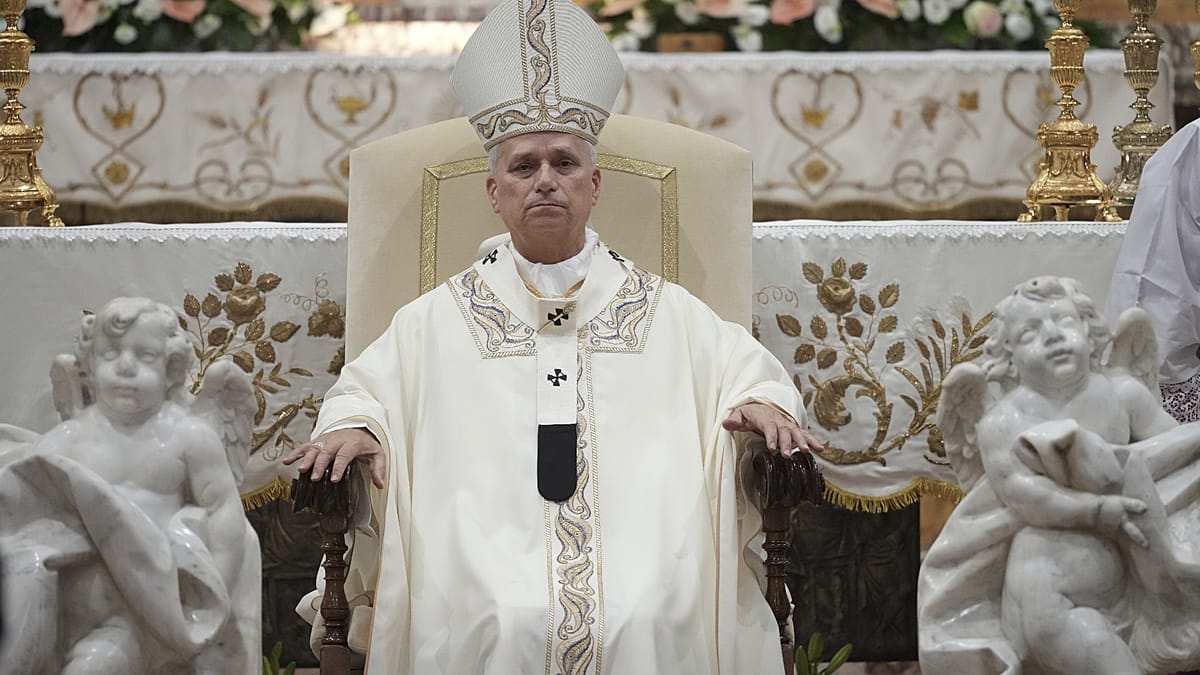
Pope Leo XIV is set to make his first official visit to France from 25 to 28 September, a trip that is already generating significant excitement across the capital. The police prefecture anticipates that up to 250,000 people will gather along the route of his procession through Paris, while around 80,000 tickets have been sold for a youth mass at the Stade de France in Saint-Denis, north of the city.
This will be the first papal visit to Paris since Benedict XVI in 2008. While Pope Francis made several trips to France, he never visited the capital, instead choosing Strasbourg, Marseille, and Corsica. Charles Mercier, director of studies in the history and sociology of Catholicism at the École pratique des hautes études (EPHE) in Paris, noted that "coming to the capital is a big event because it hasn’t happened in a long time. It fuels people’s enthusiasm, and I think that’s one of the reasons for the success of this visit."
A pope for everyone
Another factor behind the enthusiasm is the pontiff’s broad popularity, which extends well beyond practicing Catholics. Elected in May 2025, Leo XIV has cultivated an image of a pope who is connected and attentive to all, a message that resonates in a country where secularism is a core principle.
During his two days in Paris and the wider Île-de-France region, Leo XIV is scheduled to meet President Emmanuel Macron at the Élysée palace on Friday. He will also address "the authorities, civil society and the diplomatic corps" before heading to UNESCO. On Sunday, he is expected in Lourdes, where he will meet with seven victims of sexual abuse within the Church, a gesture that underscores his commitment to confronting past failures.
The visit comes at a time when France is grappling with significant challenges, including rising public debt and tensions with allies over trade and security. The pope’s presence offers a moment of reflection and unity, even as political debates continue.
For many Parisians, the papal visit is a rare opportunity to see a global spiritual leader up close. The city has been preparing for weeks, with security measures and logistical arrangements in place to accommodate the massive crowds. Local businesses, especially those along the procession route, are expecting a boost from the influx of visitors.
Leo XIV’s itinerary also includes a stop at UNESCO, where he is likely to address themes of education, culture, and global solidarity. His engagement with international institutions reflects his broader vision of the Church as a player in global affairs, a stance that has drawn both praise and criticism.
The youth mass at the Stade de France is expected to be a highlight, drawing young Catholics from across Europe and beyond. Organizers have planned a vibrant celebration, with music, prayer, and a message tailored to younger generations. The choice of Saint-Denis, a multicultural and often marginalized suburb, is seen as a deliberate signal of the pope’s focus on social inclusion.
As the visit unfolds, all eyes will be on the interactions between the pope and French leaders, as well as his words in Lourdes. The meeting with abuse survivors is particularly significant, as the Church continues to grapple with the legacy of clerical sexual abuse across Europe. Leo XIV has promised transparency and accountability, and his actions in Lourdes will be closely scrutinized.
Beyond the immediate events, the visit is likely to have lasting implications for the Catholic Church in France, where attendance has been declining for decades. The pope’s ability to draw such large crowds may signal a renewed interest in faith, or at least a curiosity about this particular pontiff. Either way, the scenes in Paris this weekend will be a testament to the enduring presence of the Vatican in European public life.