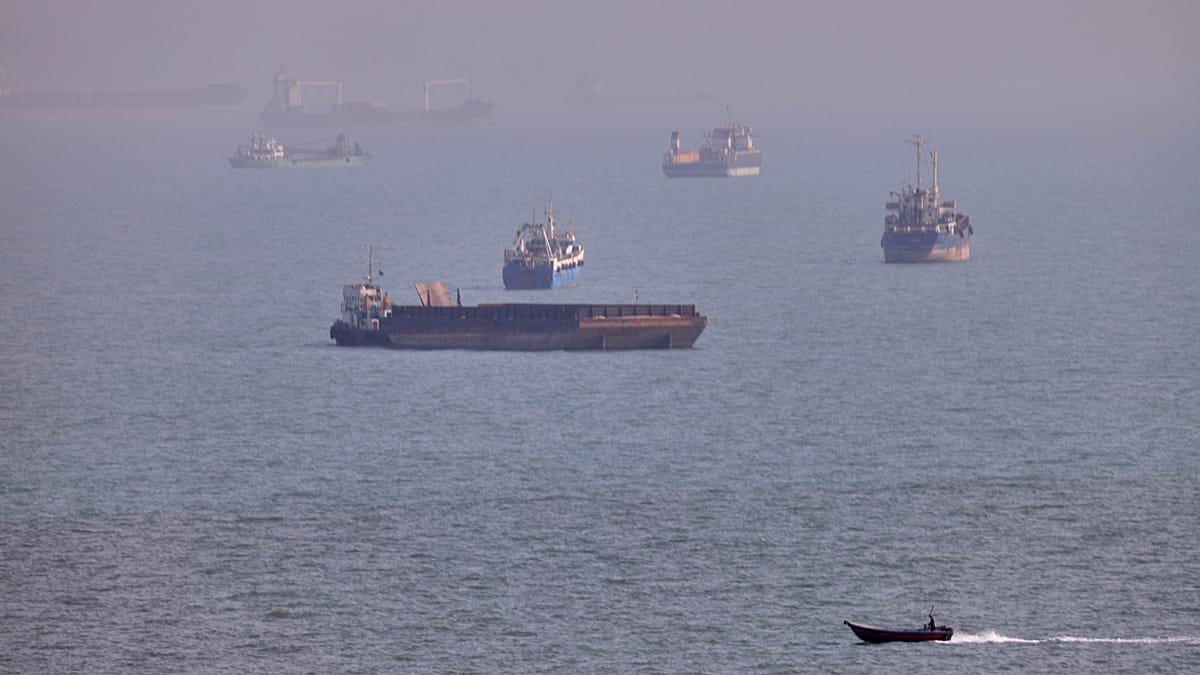
Oil prices edged higher in early trading on Monday as market participants digested conflicting signals from Washington and Tehran over the future of the Strait of Hormuz, a waterway that carries roughly a fifth of the world's oil and liquefied natural gas.
Brent crude futures for October delivery rose 1.04% to $84.42 a barrel, while US West Texas Intermediate for September advanced 0.83% to $78.83. The gains reflect growing uncertainty about whether a deal to reopen the strait will be reached soon, with Iran's Revolutionary Guards insisting on Sunday that passage would remain blocked until a list of demands is met.
Tehran's conditions
Iran's state-linked Tasnim news agency reported on Saturday that Tehran had set out a series of conditions for reopening the strait, including an end to the war on all fronts, the lifting of a US counterblockade of Iranian ports, the removal of sanctions, the release of frozen assets, and compensation for wartime damage. These demands echo the terms of a June memorandum that mediators hoped would pave the way for peace talks.
The Revolutionary Guards, who control the strait, framed their stance in stark terms. "Our strategy is to maintain the blockade until the enemy accepts all our conditions," a Guards spokesman said. "The strait is now actually a theatre of war for us and not just a waterway."
Washington, for its part, has pushed back against Tehran's insistence on retaining control and charging tolls for passage. US President Donald Trump downplayed the negotiations in an interview, saying: "We are low-keying it. We are only semi-negotiating with them. We are just watching Iran with its huge inflation and the fact they have no money."
The standoff has direct implications for European energy security and prices. European Union member states, particularly those in the Mediterranean, rely heavily on Gulf oil and LNG routed through Hormuz. Any prolonged closure would likely push fuel costs higher across the continent, affecting households and industries from Lisbon to Warsaw.
Analysts note that the collapse of an April ceasefire, triggered by attacks in the strait, has complicated diplomatic efforts. Mediators, including Qatar and Oman, have been shuttling between the parties, but the gap between Iran's demands and Washington's position remains wide. A draft shipping plan floated by Iran and Oman has yet to gain traction, with Trump rejecting the idea of tolls.
Meanwhile, European consumers are already feeling the pinch. In Portugal, for example, fuel prices are set for a sharp drop from Monday, but that relief could be short-lived if the Hormuz crisis deepens. The broader European economic picture is also fragile, as EU budget talks struggle to find new revenue sources to fund the bloc's priorities.
Some observers point to the potential for a breakthrough, noting that the June agreement included a provision for a $300 billion reconstruction fund for Iran. But the Revolutionary Guards' insistence on linking the strait's reopening to a comprehensive settlement suggests that any deal will require significant concessions from both sides.
For now, traders are bracing for volatility. "The market is caught between hopes for a diplomatic solution and the reality of a hardline Iranian position," said one London-based oil analyst. "Every statement from Tehran or Washington moves prices."
As the standoff continues, European governments are watching closely, aware that the cost of inaction could be measured not only in barrels but in the stability of their own energy markets.