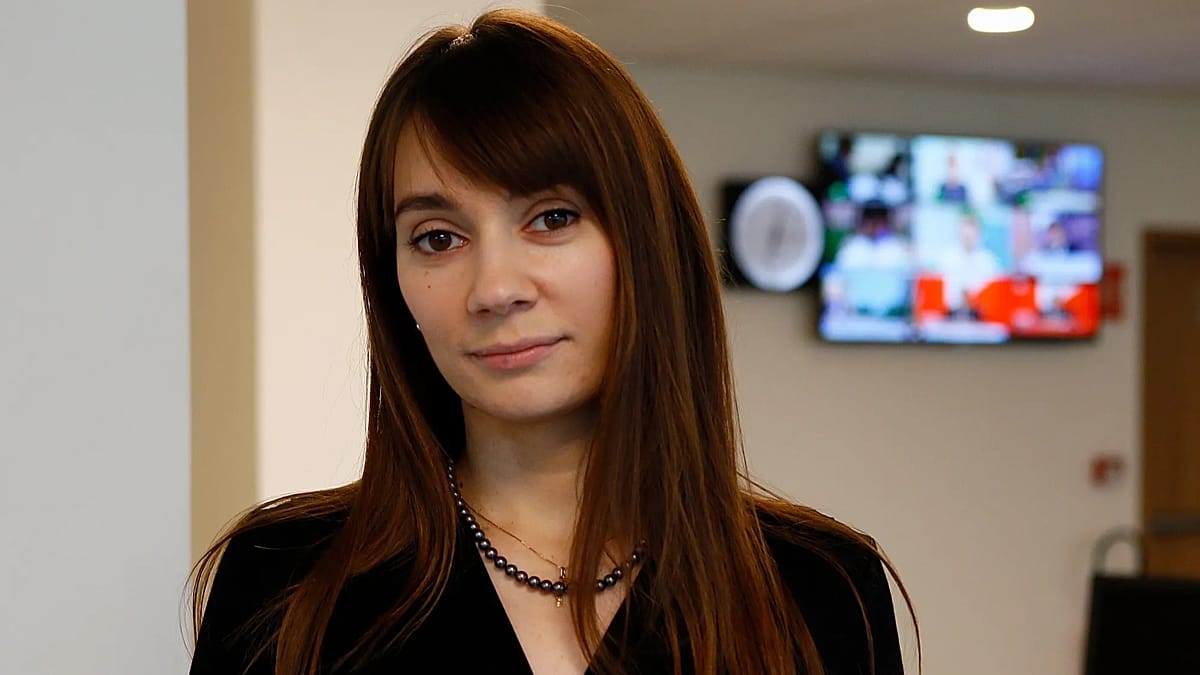
The Council of the European Union has added Xenia Fedorova, the former head of RT France, to its sanctions list, accusing her of playing a central role in disseminating pro-Kremlin propaganda across the bloc. The decision, published in the EU's Official Journal on Thursday, extends measures already imposed by France and marks a coordinated effort to curb Russian influence operations.
Fedorova, a Russian commentator who has become a prominent figure on French media outlets linked to conservative billionaire Vincent Bolloré, now faces an asset freeze in all 27 member states. EU individuals and entities are barred from making funds available to her, which effectively prevents her from receiving a salary or other payments. She is also subject to a travel ban, preventing her from entering or transiting through EU territory.
The EU's official document states that Fedorova has relayed "narratives aligned with those promoted by the Russian authorities." Specifically, it accuses her of portraying Western and European support for Ukraine as prolonging the war, presenting Russia as seeking peace while depicting Europe as confrontational, questioning established accounts of the unlawful transfer and deportation of Ukrainian children, and framing European and NATO policies as threats to European security.
Following the suspension of RT's broadcasting activities in the EU, Fedorova regularly appeared on French channels such as CNews, Europe 1, and Le Journal du Dimanche (JDD), according to the Council. These appearances, the EU argues, allowed her to continue spreading pro-Russian narratives to a wide audience in France.
France and Germany lead the push
The French Foreign Ministry confirmed that France and Germany jointly proposed Fedorova's inclusion on the sanctions list, describing her as an "active Russian influence agent in France." French Foreign Minister Jean-Noël Barrot welcomed the decision during a press briefing at the United Nations in New York, a day before the formal announcement. He said France and the EU would continue to counter Russia's destabilisation activities.
"France, like the European Union, will continue to thwart the destabilisation activities carried out by Russia on our soil," Barrot said. "Our determination is absolute: those who think they can conduct hostile operations against our democracy with impunity will face the consequences."
The move comes amid broader European concerns about Russian interference. Danish intelligence has warned that while a Russian attack on NATO is unlikely, the threat of hybrid warfare remains significant. The EU has also been grappling with how to counter disinformation, with defence officials exploring new technologies to bolster security.
Fedorova's legal battles in France
Fedorova has been subject to a French deportation order and asset freeze since late July. At the time, French Interior Minister Laurent Nuñez said her behaviour undermined France's fundamental interests and that her presence constituted a serious and immediate threat to public order. Fedorova's lawyer said she was abroad on holiday when she learned of the measures, and she has not returned to France since.
There were indications that Bolloré-associated outlets were exploring ways for her to resume appearances from outside France. On 10 September, Nuñez warned CNews that it could face "criminal sanctions" if Fedorova returned to its broadcasts remotely. In a letter to French audiovisual regulator Arcom, reported by Le Monde and AFP, the minister argued that allowing her to appear remotely could "facilitate the interference operations she is accused of."
The EU sanctions now add a layer of legal restriction that complicates any such arrangements. Fedorova's ability to earn a living from media work within the bloc is severely curtailed, and her travel options are limited to non-EU countries.
The decision reflects a broader EU strategy to target individuals involved in information manipulation. The bloc has also been urged to protect international institutions from external pressure, and intelligence warnings about Russian activities have heightened vigilance. As the war in Ukraine continues, with recent strikes causing casualties, the EU is increasingly using sanctions to counter Moscow's influence operations.