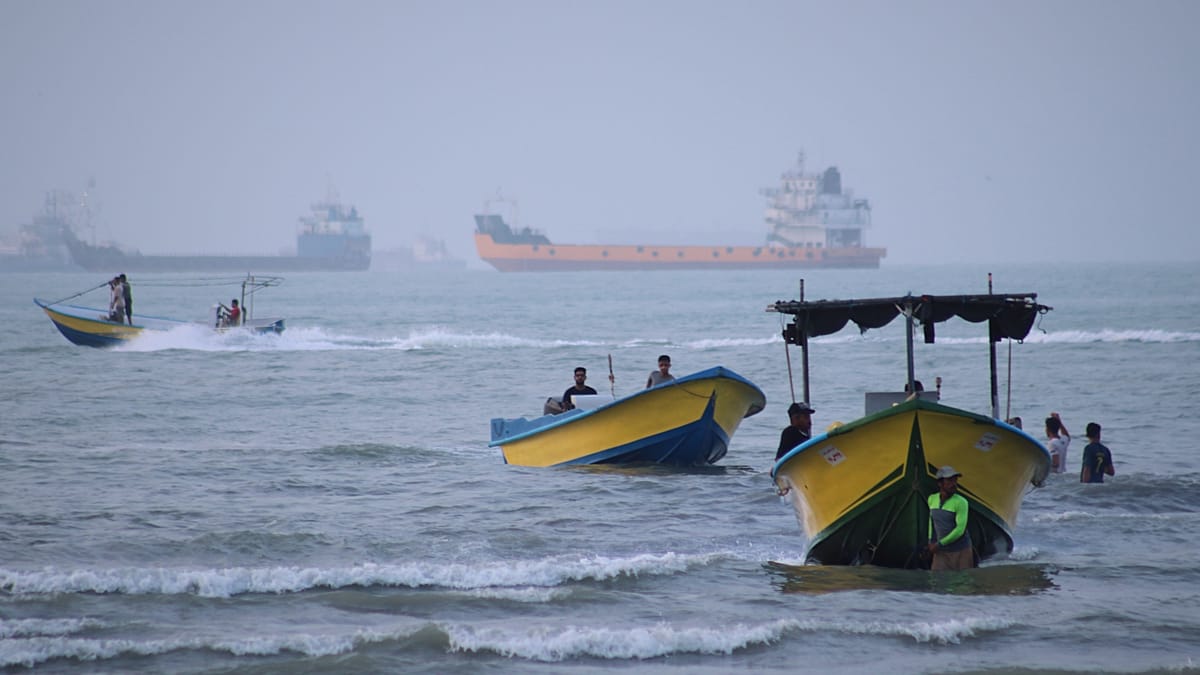
Tehran and Muscat are moving ahead with talks to restore commercial shipping through the Strait of Hormuz, a waterway that has been effectively closed since late February when the United States and Israel launched strikes on Iranian targets. The proposed arrangement, still under negotiation, would see vessels enter the Persian Gulf via an Iranian-managed corridor and exit through an Omani-managed one, with fees levied to cover security and environmental protection.
Iranian Foreign Ministry spokesman Esmail Baghaei confirmed the bilateral discussions, saying they focus on “establishing safe inbound and outbound shipping lanes” that “uphold sovereign rights while also addressing the national security considerations of both Iran and Oman.” He added that the final results would be announced once concluded, in remarks carried by the state-run IRNA news agency.
Two regional officials, speaking on condition of anonymity, told The Associated Press that the emerging agreement would charge service fees for the provision of security and the preservation of the marine environment. They cautioned that negotiations are ongoing and the final shape of the deal could change. However, any implementation appears contingent on Washington lifting its naval blockade of Iranian ports—a step the Trump administration has so far refused to consider.
Strategic stakes for Tehran and Washington
Formalising Iranian control over any part of the strait would represent a significant strategic victory for Tehran, which has long sought recognition of its maritime rights in the region. For that reason, the United States may seek to block the deal by maintaining the blockade. Before the February 28 attacks, the strait was an open international waterway, and Washington has repeatedly stated its intention to restore that status quo.
A US official, who was not authorised to speak publicly, said the administration remains committed to ensuring that “no party controls the lanes or the ability to transit through them.” President Trump reiterated his opposition to any tolling regime during an exchange with reporters on Monday. “I’m not going to let them charge,” he said. “Anybody’s going to charge, we’ll charge.”
The standoff has broader implications for global energy markets and for European economies that rely on Gulf oil and gas. The Strait of Hormuz is a chokepoint for roughly a fifth of the world’s petroleum consumption, and any prolonged closure would hit European ports from Rotterdam to Trieste. The European Union has so far avoided direct involvement in the dispute, but Brussels is watching the negotiations closely, as a return to normal shipping would ease supply chain pressures that have contributed to inflation across the continent.
Trump’s hardline stance on Iran has already influenced transatlantic relations, with Washington pressing European allies to adopt tougher sanctions and border controls. In a separate development, European Commission President Ursula von der Leyen has urged tighter EU border controls following a migrant surge in Ceuta, a sign of how security concerns are rippling across the Mediterranean.
For now, the Iran-Oman initiative remains a diplomatic work in progress. Analysts note that Oman has historically served as a mediator between Tehran and the West, and its role in this negotiation could provide a face-saving path for all sides. But without a lifting of US sanctions and a clear commitment from Washington to respect the agreement, the strait is likely to remain closed, with consequences for global trade and regional stability.
As the talks continue, European policymakers are weighing their options. Some EU member states, particularly those with strong commercial ties to the Gulf, are quietly urging Washington to show flexibility. Others are preparing contingency plans for a prolonged disruption, including rerouting energy supplies and accelerating the transition to alternative sources.
The coming weeks will be critical. If the US and Iran can reach a broader understanding—perhaps through the newly announced talks scheduled for Monday—the Hormuz deal could become a cornerstone of a wider détente. If not, the region may face a protracted standoff with no easy exit.