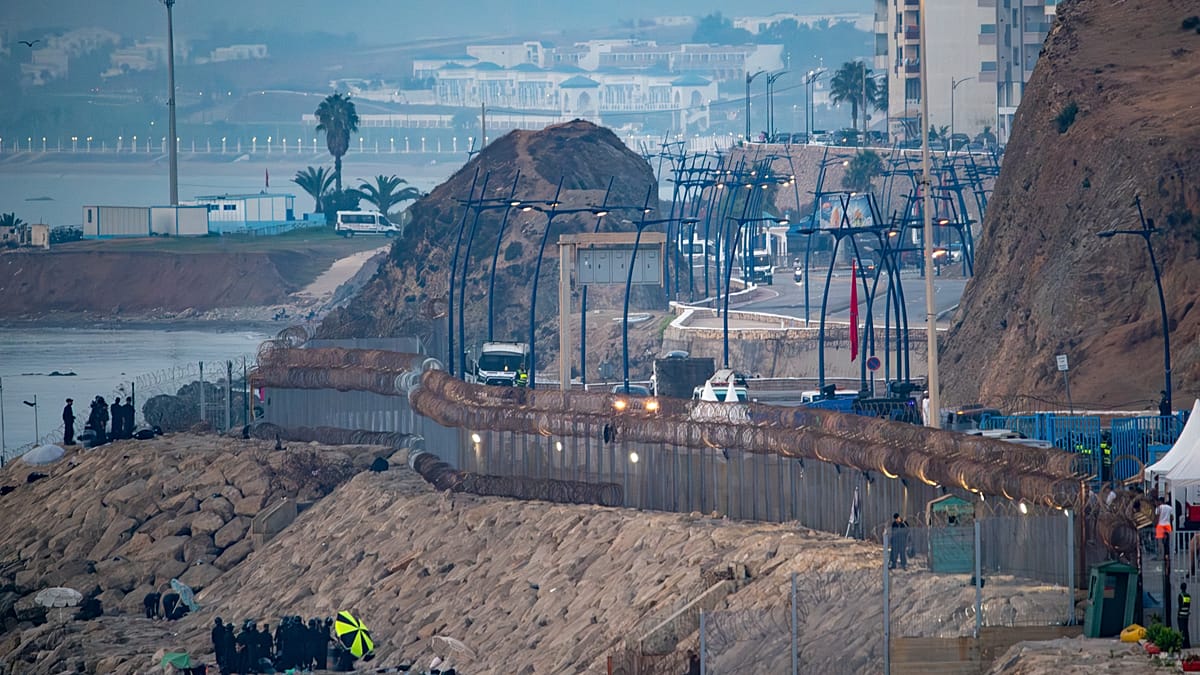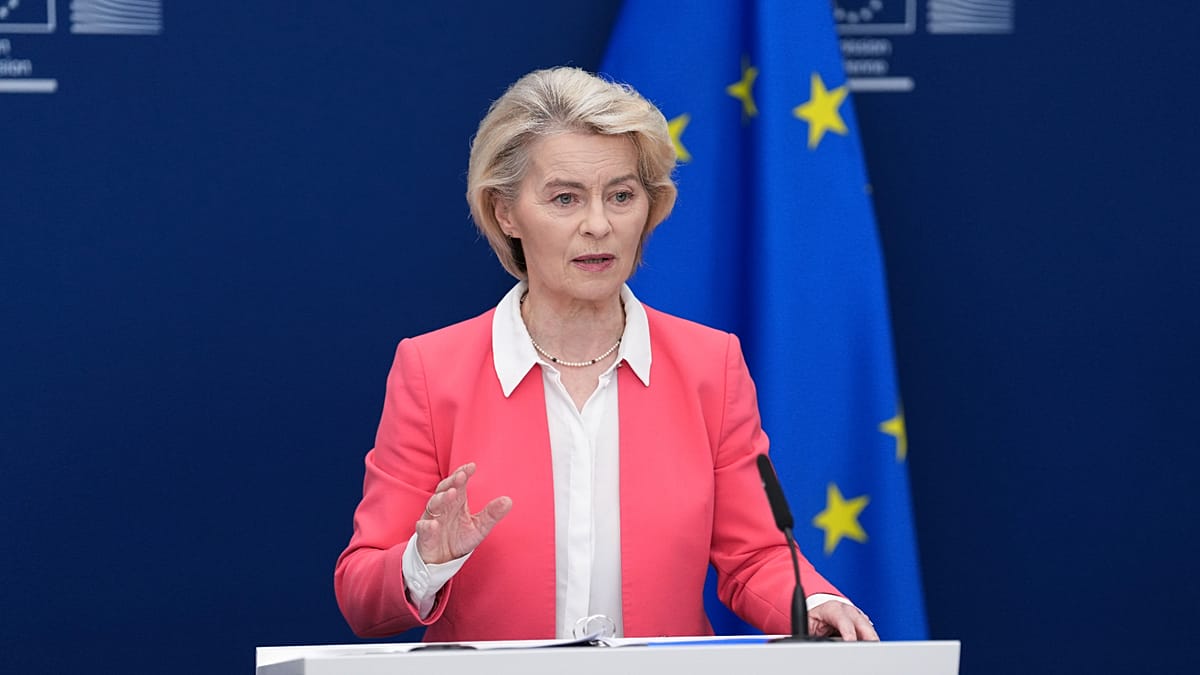
European Commission President Ursula von der Leyen has called for stronger border controls and the use of physical barriers at critical points along the EU's external borders, following the migrant surge in the Spanish enclave of Ceuta. In a letter to Spanish Prime Minister Pedro Sánchez, seen by Euronews, she sought to ease tensions after Sánchez accused several EU leaders of exploiting the crisis to attack his government.
A record-breaking border crossing
Last Friday, around 60,000 non-EU nationals entered Ceuta, marking the largest border crossing ever recorded in Europe over such a short period. Most have since returned to Morocco, and the enclave has returned to relative calm. However, at least 72 people died during the attempt, according to local authorities in Ceuta.
Although Ceuta lies on the African continent and none of the migrants reached mainland Europe, the images of people swimming and wading across the border sparked strong reactions from European governments and the European Commission.
Sánchez has been criticised by other European governments for mishandling the crisis, while the Spanish leader has accused his counterparts of being "selfish, polarising and unlawful."
Von der Leyen's call for action
In her letter, von der Leyen wrote: "From this incident, it is clear that we must do more to further strengthen our borders at critical points, both with vigilant monitoring and the use of physical barriers where needed."
The Commission president also referred to an ongoing EU-Morocco deal on migration, saying: "We are already working with the Moroccan authorities on a more structured and forward-looking partnership with the EU." She added that, in cooperation with Spain, especially on anything related to Ceuta and Melilla, the EU could enhance border management early-warning systems and improve technical and financial support to Morocco.
The EU has reached a wide range of bilateral agreements with African countries, partly aimed at preventing irregular departures and the transit of migrants who may eventually seek to reach Europe.
EU interior ministers to meet
Following the incident, 22 EU governments wrote to EU institutions on Saturday calling for an extraordinary video meeting of interior ministers, which will take place on Tuesday. Among the proposals to be assessed is the reintroduction of border controls within the EU's Schengen area.
The crisis has also had ripple effects beyond the immediate border. Italy has reinstated border checks on arrivals from Spain, and the EU is weighing new border measures. Meanwhile, Spain has demanded EU solidarity as the crisis tests the bloc's unity.
The death toll has also become a point of contention, with Morocco reporting a much lower figure than Spain's count of 72. The discrepancy has added to the diplomatic friction between Madrid and Rabat.
As the situation in Ceuta stabilises, the political fallout continues. The far-right party Vox has blamed Sánchez for the surge, while the Spanish government has defended its response. The upcoming meeting of interior ministers will be a key test of whether the EU can find a common approach to migration management, balancing security concerns with humanitarian obligations.