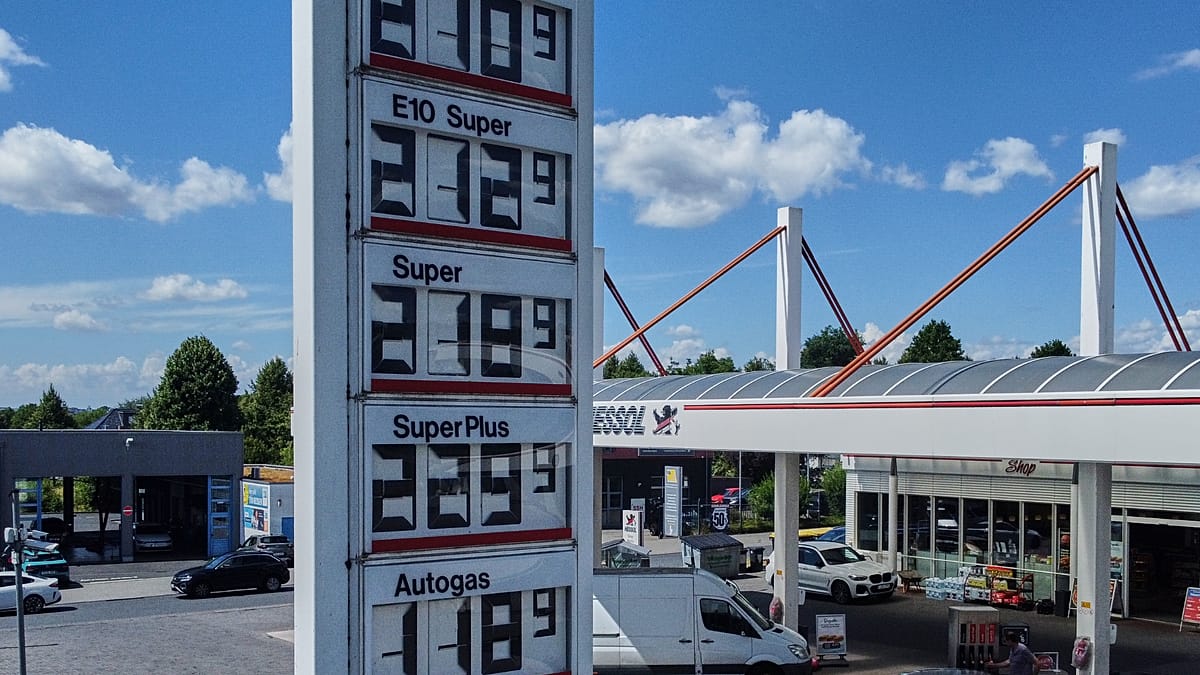
The brief respite from rising prices in the eurozone came to an end in July. According to Eurostat's flash estimate, annual consumer price inflation across the currency bloc climbed to 2.9%, up from 2.8% in June, matching economists' forecasts. The renewed conflict in the Middle East pushed energy costs sharply higher, reversing the easing trend seen earlier in the summer.
Core inflation, which excludes volatile food and energy prices, also edged up to 2.5% from 2.4%. Energy prices recorded the steepest annual jump, rising 10% year-on-year, while services inflation stood at 3.3%. The data came just a day after the eurozone reported stronger-than-expected GDP growth for the second quarter, reinforcing the view that the region's economy is more resilient than many had feared.
Diverging price pressures across the bloc
Beneath the headline figure, inflation trends varied sharply from one member state to another. Lithuania remained the eurozone's inflation hotspot, with prices rising 5.6% year-on-year in July. Bulgaria followed at 4.1%, Cyprus at 4.0%, Spain at 3.8%, and Croatia at 3.6%. At the other end of the spectrum, Estonia recorded the lowest annual inflation rate at 2.0%, ahead of Malta (2.1%), France (2.4%), Latvia (2.5%), Austria (2.6%), and Finland (2.6%).
Germany, the bloc's largest economy, saw inflation accelerate to 2.8%, while Italy matched the eurozone average at 2.9%. The divergence was also evident in month-on-month changes. The Netherlands saw the sharpest monthly increase, with consumer prices rising 1.5% from June, followed by Germany (+0.9%), France (+0.6%), Croatia (+0.6%), Malta (+0.6%), Estonia (+0.5%), and Bulgaria (+0.4%). In contrast, prices fell most sharply in Greece (-1.4%), Italy (-1.0%), Latvia (-0.7%), Belgium (-0.6%), Luxembourg (-0.6%), Austria (-0.4%), Portugal (-0.3%), and Slovenia (-0.3%).
The surge in Spanish inflation was driven by higher fuel and electricity costs, a pattern echoed across the continent.
Energy costs remain a key risk
Analysts warn that the ongoing conflict and the associated spike in energy costs pose significant risks to growth, given that the eurozone is a net importer of energy. "While oil prices have eased from their highs, they remain elevated, and the rise in natural gas prices to multi-year highs is adding to concerns," said Matthew Ryan, head of market strategy at Ebury.
Pantheon Economics' economist Claus Vistesen commented on the data, saying: "We think headline inflation will remain sticky at just above 2.5% for the Eurozone." The firm expects the European Central Bank to deliver another 25-basis-point rate hike before pausing. The renewed tensions in the Strait of Hormuz have reignited fuel prices across Europe, adding to the inflationary pressure.
Markets shrug off inflation, rally on earnings
Despite the uptick in inflation, risk appetite remained strong across European markets. The euro strengthened modestly against the US dollar to 1.1520 immediately after the inflation figures, while European equities extended Thursday's rally. Germany's DAX 40 climbed about 0.8% to a fresh record high above 25,800, the Euro Stoxx 50 gained more than 1% to an all-time high, France's CAC 40 advanced around 0.9%, and Italy's FTSE MIB outperformed with a gain approaching 1%.
Technology shares again led the advance. Infineon Technologies jumped more than 6%, extending the AI-driven rebound across global semiconductor stocks. STMicroelectronics gained more than 4%, while Siemens Energy climbed around 3.5%. Corporate earnings continued to reinforce sentiment, with strong results from major companies underpinning the rally.
The stronger-than-expected growth in the second quarter has provided some comfort, but the divergence between member states remains a concern. As the ECB navigates its next moves, the persistence of inflation and the uneven recovery across the bloc will be key factors to watch.