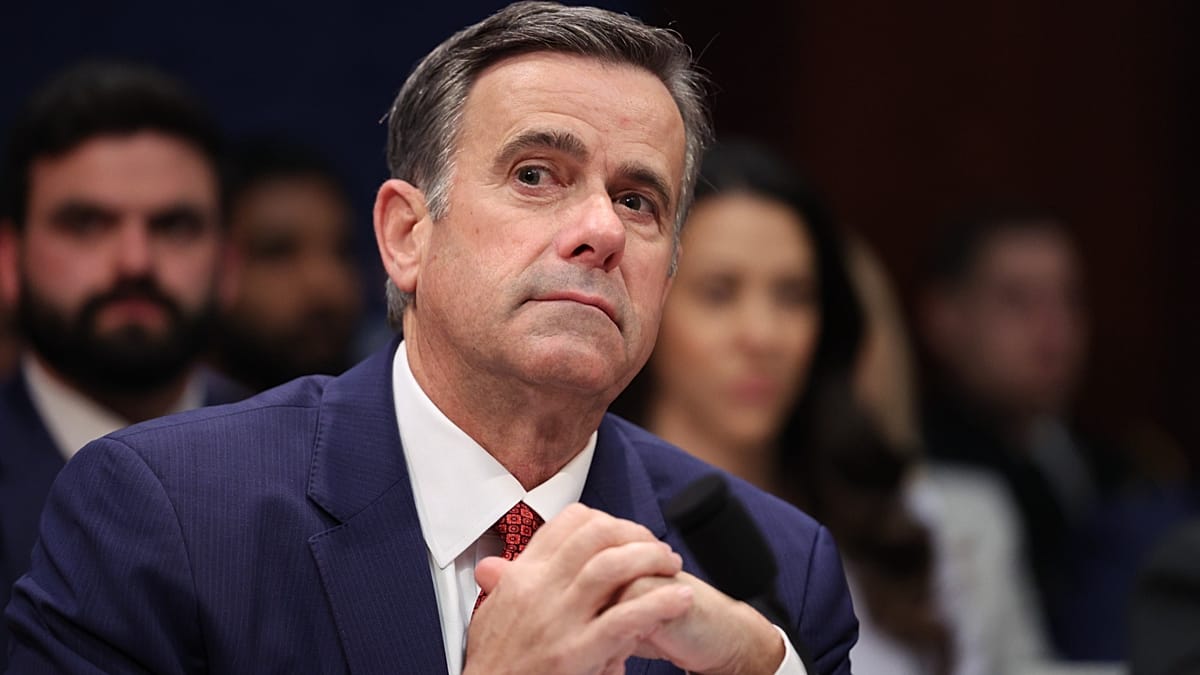
Toomas Hendrik Ilves, the former Estonian president and a respected voice on European security, has cast doubt on the idea that CIA Director John Ratcliffe's recent visit to Moscow was meant to deter Russian aggression against the Baltic states. In an interview with Euronews, Ilves said he has “severe doubts” about that explanation, arguing that Washington's primary worry is Iran, not the Baltics.
“What is the real problem for the United States right now? The real problem is Iran, the fact that the Russians are giving targeting information to the Iranians,” Ilves said. “Those are real problems for the United States, and that would be sufficient to warrant the director of the CIA to go to Moscow to tell them to back off.”
US media had reported that Ratcliffe's unannounced trip was intended to warn Moscow against attacking NATO members, amid concerns that Russia might test the alliance, possibly by targeting Estonia, Latvia, or Lithuania. But Ilves questioned that narrative, noting that there has been “no change in the US's threat assessment for the Baltic states.” He added: “If the purpose was to go and genuinely tell the Russians not to do anything in the Baltic states, as was claimed, then there would be some kind of activity here.”
Estonian Foreign Minister Margus Tsahkna echoed that view on Thursday, saying the country's threat assessment has “not changed,” while stressing that the possibility of Russian provocations against NATO should be taken seriously. “We remain vigilant, but Estonia's threat assessment has not changed,” Tsahkna said.
A diversion from the real issue?
Ratcliffe met with Sergei Naryshkin, the head of Russia's Foreign Intelligence Service (SVR), but did not see President Vladimir Putin. Ilves suggested that framing the visit as a Baltic warning could be a deliberate distraction. “I don't think it's a false flag, but rather just kind of make something up to divert attention from what is the real problem that the US faces right now,” he said.
The former president was equally dismissive of recent warnings about an increased Russian military threat to the Baltic states. Asked about those reports, he said: “I think that's all spin. Why would they do anything in the Baltic states at this time?”
Ilves argued that Russia has little strategic reason to risk a direct clash with NATO while it remains bogged down in its war against Ukraine. “Why would you divert that and risk NATO, risk a war with NATO, when you have a stalemate in Ukraine?” he asked. If Moscow wanted to open another front, he noted, there are plenty of non-NATO, non-EU neighbours along Russia's southern flank where intervention would carry far less risk. “They can do all kinds of things, from Armenia to Tajikistan.”
He also pointed out that any attack on the Baltics would quickly draw in other allies. “Finland will immediately be pulled into it. If Finland does anything, Sweden will be in, Denmark will be in, Poland would be in,” he said, highlighting Poland's large military and its border with Lithuania.
What was the message?
If Iran was indeed the focus of Ratcliffe's talks, Ilves expects the CIA director delivered a firm warning. “I'm sure the message was something à la, 'If you keep doing that, we will do X,'” he said. “Ratcliffe is far too smart to say, 'Oh, please, please, don't do anything,' or, 'Please stop sending them satellite information.'”
Ilves was sceptical that Ukraine could be part of any bargain between Washington and Moscow over Russia's involvement with Iran. “Given how little the United States is actually doing in Ukraine at the moment, I don't see it,” he said. “What are you going to say? 'We'll give you this if you give us Iran?' What do they have to give in Ukraine?”
He argued that Europe now carries much of the burden of supporting Ukraine, including paying for US-made weapons delivered to Kyiv. “There hasn't been any really substantial assistance to Ukraine since January of 2025. It's all on the shoulders of the Europeans,” he said, leaving Washington with little leverage. “I can't really see much that the US has.”
Ilves's comments come amid broader questions about US-Russia relations and the future of European security. For more on the CIA chief's trip, see our earlier report on Ratcliffe's unannounced Moscow visit. And for context on Russia's influence in the South Caucasus, read about Armenia's move toward EU membership.