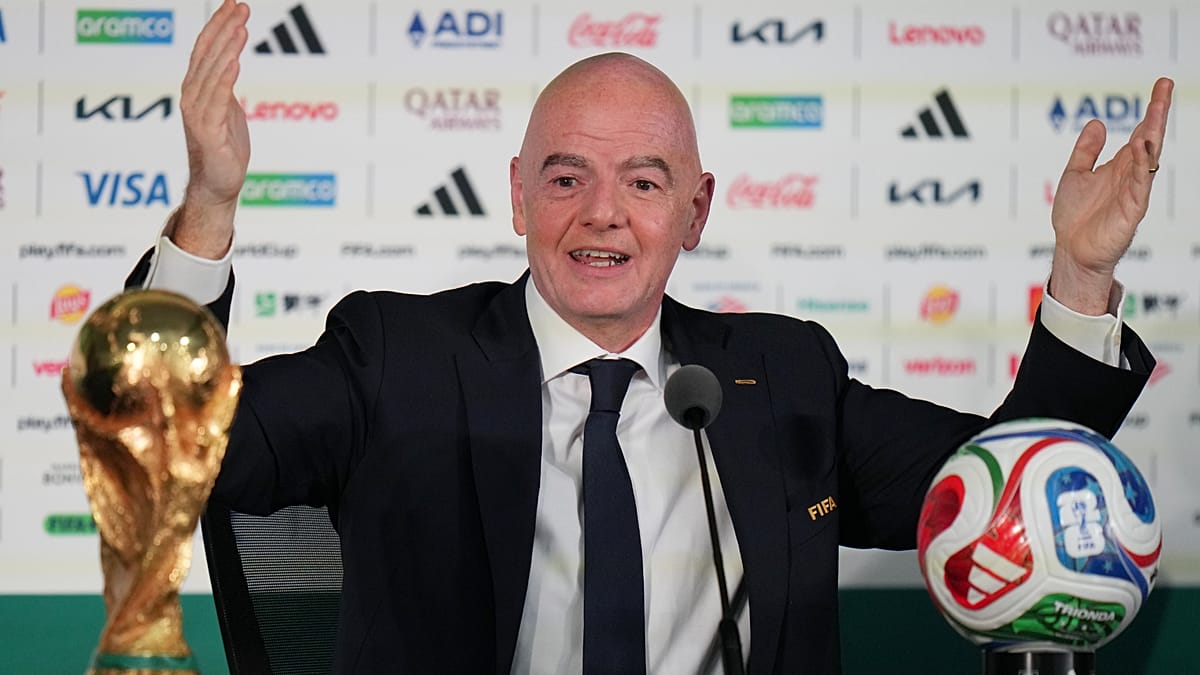
A post on X claiming that the European Parliament has called for an investigation into FIFA President Gianni Infantino has been viewed more than 6 million times. The claim, however, is misleading. While 72 members of the European Parliament (MEPs) have signed a letter urging FIFA's Ethics Committee to look into Infantino's conduct, the European Parliament itself has not taken an official stance.
What sparked the controversy?
The letter, dated 8 July, stems from FIFA's decision to suspend an automatic one-match ban for US striker Folarin Balogun, who was sent off during the US's round-of-32 victory over Bosnia and Herzegovina. US President Donald Trump publicly acknowledged asking FIFA to review the case, telling reporters, "All I did was ask for a review because I didn't think it was a foul." The decision provoked outrage among Belgian fans and football coaches, with the Belgian Football Association calling it "astonishing" and demanding an explanation from FIFA.
The MEPs' letter, addressed to the presidents of the 27 national football associations in EU member states, does not call on the European Parliament to investigate. Instead, it urges the football associations to ask FIFA's independent Ethics Committee to examine whether political pressure influenced the disciplinary process and whether Infantino complied with FIFA's rules on political neutrality. The lawmakers argue that FIFA's own statutes and Code of Ethics require political neutrality and that member associations have a responsibility to hold senior FIFA officials accountable if those rules are breached.
The MEPs stress that their concerns are not about Balogun himself, writing that they are "not motivated by any desire to see any individual football player sanctioned" but instead want to "ensure that rules are applied in a way to protect the integrity of the game."
Why the viral claim is wrong
Unlike what the viral post suggests, the letter is not the official position of the European Parliament. It is an initiative by individual MEPs. The European Parliament has not adopted a resolution calling for an investigation, nor has it voted to endorse the letter. This distinction is crucial: the European Parliament, as an institution, speaks through resolutions and votes, not through letters signed by a minority of its members.
Neither FIFA nor Infantino have publicly responded to the letter. Both previously rejected suggestions that Balogun's case was influenced by political considerations, with FIFA saying the decision to lift the suspension was made by its independent disciplinary committee. Infantino confirmed that the call with Trump took place but said he explained to the US president that there was an ongoing legal process involving FIFA's judicial bodies and that the "case would be decided in due course by the competent bodies," which he argued were independent.
This episode echoes other instances where viral claims have misrepresented EU institutions' actions. For example, Ukraine's parliament recently ousted its prime minister, a move that was widely misreported as a sign of instability rather than a routine political reshuffle. Similarly, Hungary's parliament removed its president after a constitutional amendment, a story that was often distorted in international media.
For readers following European politics, it is worth remembering that the European Parliament is a complex body with 705 MEPs from 27 member states. A letter signed by 72 of them—roughly 10%—does not constitute an institutional position. The viral claim, while attention-grabbing, is a textbook example of how a grain of truth can be amplified into a misleading narrative.