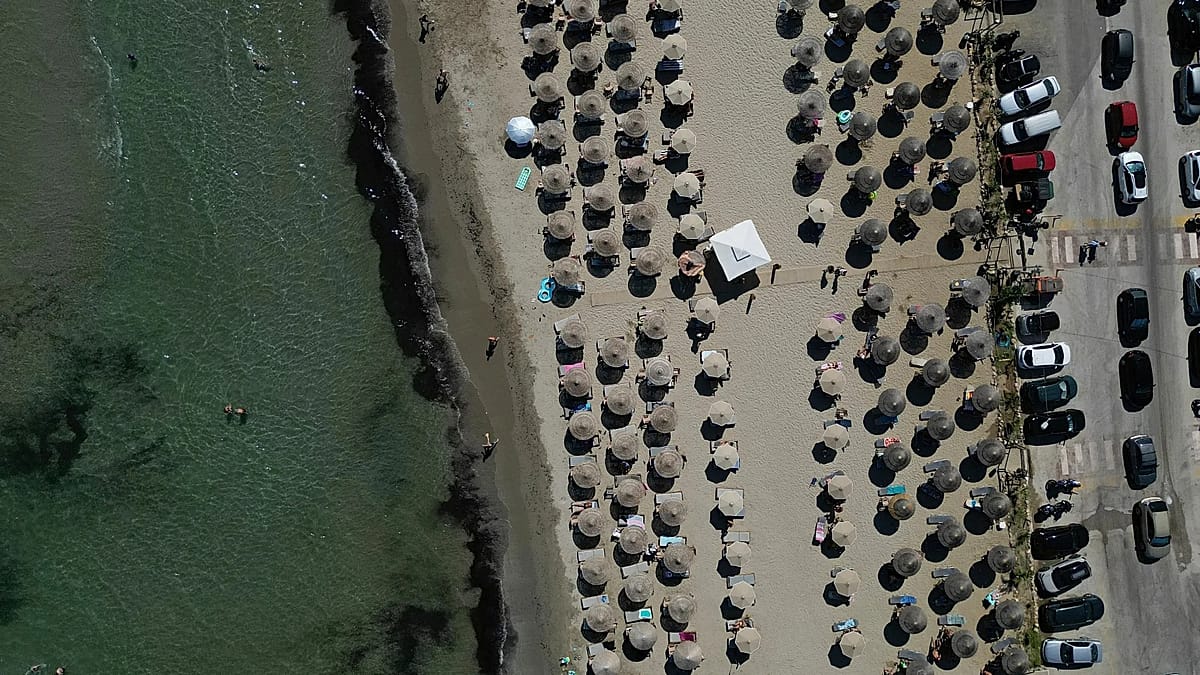
An argument over a sunbed on a crowded beach in the Athens Riviera turned fatal on Sunday morning, leaving an 82-year-old man dead and a 76-year-old suspect under arrest. The incident occurred at Akti Vouliagmenis, a popular stretch of sand in the southern suburbs of the Greek capital, shortly before 10:00 am.
According to initial reports from Greek authorities, the two elderly men became involved in a heated exchange over a spot on the beach. The confrontation escalated into a physical altercation, during which the older man collapsed. A nurse on duty at the beach attempted to revive him with CPR and a defibrillator, but he was later pronounced dead at a hospital. The cause of death was reported as cardiac arrest.
The 76-year-old man, who was accompanied by a 21-year-old woman at the time, was arrested on suspicion of causing fatal bodily injury. The woman was released after questioning.
Beach access under strain
The tragedy has cast a spotlight on a simmering issue across Greece: the rapid commercialization of public beaches. In recent years, as tourism has boomed, private businesses have increasingly occupied large stretches of coastline, filling them with sunbeds and umbrellas. Critics argue that many of these operations exceed the limits of their permits, effectively privatizing public space and shutting out locals and visitors who simply want to lay down a towel.
The problem is particularly acute in Attica, where demand for beach access is high and prices for sunbeds have soared. Reports of sunbeds costing €50 or more for a day have fueled public anger, especially in popular destinations like Vouliagmeni, Glyfada, and Saronida.
In response, a grassroots movement known as the "towel movement" has gained traction across the country. It began on the island of Paros, where residents protested against the overdevelopment of beaches by placing towels on sand that had been occupied by sunbeds. The movement quickly spread to other islands and mainland coastal areas, drawing attention to the need for free and unhindered access to Greece's natural shoreline.
The fatal incident at Akti Vouliagmenis is a stark reminder of the tensions that can arise when public space becomes a commodity. While the specific circumstances of the fight remain under investigation, the broader issue of beach management is likely to remain a contentious topic as Greece continues to rely heavily on tourism for its economy.
Local authorities have pledged to review permits and enforce regulations more strictly, but enforcement has been inconsistent. Meanwhile, the tourism sector, which has seen a strong rebound in recent years, faces a delicate balancing act between economic growth and preserving the very assets that attract visitors.
As the summer season reaches its peak, the debate over who owns the beach—and at what cost—shows no signs of abating. For now, the focus is on the family of the deceased, who are left to mourn a life cut short by a dispute over a simple sunbed.