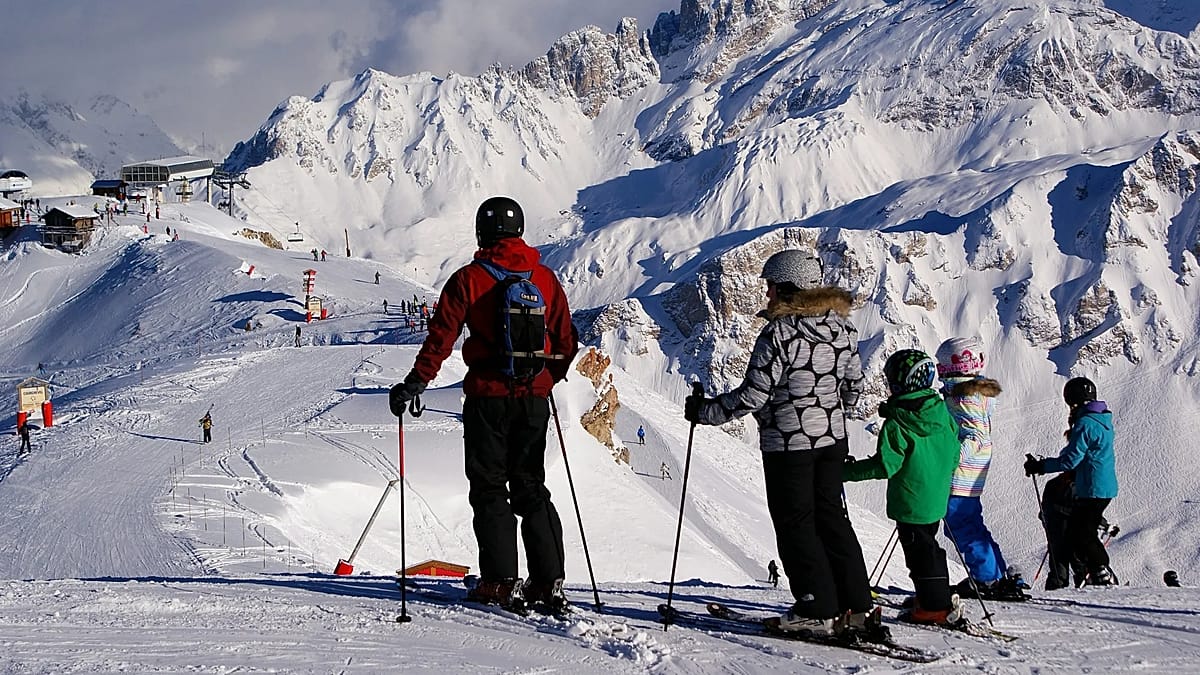
The Alps in winter are a magnet for more than just skiers. Snow-dusted villages, wood-panelled restaurants, and trails that wind through silent forests offer their own kind of pull. And this season, getting there by rail is becoming noticeably easier, with new direct links, upgraded overnight services, and the return of a popular cross-border train.
For travellers weighing up their carbon footprint, the choice is clear: rail journeys produce a fraction of the emissions of short-haul flights. The experts at Rail Europe have picked out five destinations that are now better connected than ever, from hardcore ski resorts to towns where the mountains are a backdrop to city life.
The French Alps: Eurostar Snow is back
The French Alps are a winter staple, and this year they are more accessible by train. From 19 December, Eurostar Snow will run from Amsterdam, Schiphol, Rotterdam, Antwerp, and Brussels to six stations in the Alps, including Moûtiers, Aime-la-Plagne, and Bourg-Saint-Maurice. Additional TGV INOUI services will operate from Paris, with up to seven special trains on peak days to Bourg-Saint-Maurice, plus direct Saturday connections from northern France towards the Chamonix Valley.
Once there, resorts like Courchevel, La Plagne, and Les Arcs are within easy reach. Beyond the pistes, there are snowshoeing excursions, winter walks, sledging for families, spa afternoons, and long lunches in mountain huts. In Bourg-Saint-Maurice, a seven-minute funicular ride takes you up to Arc 1600, a car-free village that is particularly family-friendly.
Innsbruck: a city break with the Alps on your doorstep
Innsbruck has long been a favourite for those who want culture and mountains in one trip. From 13 December, a new daily direct ICE service from Hanover via Kassel and Würzburg will make the journey simpler. The city’s medieval Old Town, with its Golden Roof and traditional Tyrolean cafés, is a draw in itself. From mid-November to the end of December, the Christmas markets add a festive glow.
But the real bonus is the Nordkette cable car, designed by Zaha Hadid, which lifts you to around 2,300 metres in about 30 minutes. There, you’ll find slopes for all abilities, soaking up the sun, and panoramic views over the city and the surrounding Austrian Alps.
St. Anton am Arlberg: serious skiing, easier access
St. Anton is one of Austria’s most storied winter resorts, known for challenging runs and a lively après-ski scene. This season, a seasonal ICE connection from Frankfurt will run on Saturdays and Sundays from 13 December to 4 April, making the trip more straightforward. The route follows the scenic Arlberg railway to Landeck, opening up more of western Tyrol. Off the slopes, there are winter walking trails, hearty Tyrolean food, and mountain bars where you can watch the sun dip behind the peaks.
Switzerland: upgraded Nightjet sleepers
Switzerland is synonymous with mountains, and now it’s more comfortable to reach by rail. From 13 December, Nightjet sleeper trains from Amsterdam to Basel and Zurich will feature upgraded sleeping compartments and private mini-cabins, making the overnight journey a restful start to a mountain holiday. From Basel or Zurich, you can continue by train into the Swiss Alps, with no airport in sight.
Kitzbühel: history and slopes in the Tyrol
Austria is seeing a particular boom in new rail routes this winter, and Kitzbühel is a prime example. The town, famous for the Hahnenkamm ski race, offers more than just adrenaline. Its medieval centre, with gabled houses and cobbled streets dating back 750 years, is packed with restaurants, cafés, and shops. Winter walking routes provide a chance to soak in the mountain scenery.
Getting there is easier too: the seasonal ICE Großglockner will run direct services from Hamburg and Hanover on selected weekends between 18 December 2026 and 4 April 2027.
For those planning a winter escape, these new connections are part of a broader trend. A recent survey found that most Europeans are still keen to travel this season, and rail is increasingly the mode of choice for shorter trips. As more people look to cut their carbon footprint, the Alps are becoming more accessible than ever by train.