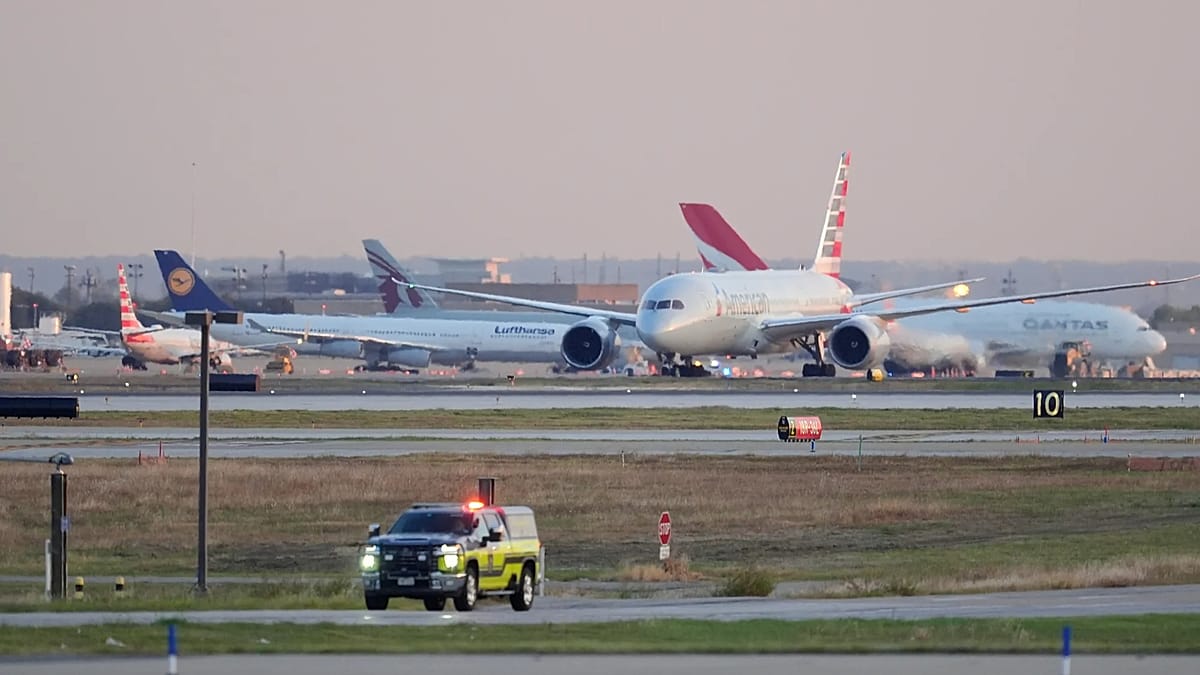
Passengers flying to or from the United States are still experiencing significant delays and cancellations on Saturday, a day after the Federal Aviation Administration (FAA) imposed a rare nationwide ground stop. The order, triggered by a telecommunications outage, halted all departures across the country on Friday evening.
The FAA lifted the ground stop late Friday, stating that it had thoroughly tested its systems before clearing flights to resume. However, the agency cautioned that travellers should check with their airlines for the latest updates, as disruptions are expected to persist.
Outdated infrastructure under scrutiny
US Transport Secretary Sean Duffy attributed the outage to what he described as an "incredibly old" air traffic control system. Speaking to reporters, he warned that a full recovery would take time. "At 8:15 pm eastern time, we've opened up the airspace. Now does that mean every flight is going to fly? Right now, it's going to be slow," he said. "It depends on do we have crews available, do we have pilots and flight attendants available to fly your flight. We're going to try to move as many of those as we can tonight." He added, "But it's going to take us some time to unwind what's happened."
The scale of the disruption is evident in data from flight-tracking services. Flightradar24's airport disruption map shows major problems at airports across the US on Saturday morning. FlightAware reports that more than 8,860 flights to or from the US were cancelled on Friday, with an additional 2,650 cancellations recorded so far on Saturday.
Major carriers, including United Airlines, Delta Air Lines, and American Airlines, have announced that they are resuming operations. American Airlines said in a statement late Friday: "We're focused on operating as many remaining flights as possible this evening while positioning the airline for the strongest possible recovery in the days ahead."
For European travellers, the knock-on effects are being felt across the Atlantic. Flights between major European hubs—such as London Heathrow, Frankfurt, Paris Charles de Gaulle, and Amsterdam Schiphol—and US cities have been subject to delays and cancellations. Passengers are advised to monitor their flight status and consider alternative arrangements if their travel plans are flexible.
The incident raises broader questions about the resilience of critical infrastructure, not only in the US but also in Europe. European air traffic control systems, while generally more modern, have faced their own challenges in recent years, from staffing shortages to system upgrades. The episode serves as a reminder of the fragility of the global aviation network, where a single point of failure can ripple across continents.
As the US works to restore normal operations, the focus will be on minimising further disruption and ensuring that passengers are accommodated. For now, the advice remains the same: check with your airline before heading to the airport, and be prepared for potential delays.