Interior ministers from Denmark, Austria, Germany, the Netherlands and Greece met in Copenhagen on Friday and agreed on a joint approach to establishing so-called return hubs — facilities outside the European Union where migrants whose asylum claims have been rejected can be sent. The group aims to have the first transfers operational by 2027.
The five governments are currently negotiating with one or more partner countries, whose identities have not been disclosed. According to several press reports, Uganda and Rwanda are the most likely candidates. Danish Migration Minister Morten Bødskov said the agreement provides a clear path forward, with the goal of transferring the first irregular migrants to a partner country outside the EU in 2027.
Bødskov stressed that the hubs are not prisons or detention camps, but places where partner countries can offer migrants a fresh start. The five states plan to fully finance the facilities and may provide additional funding, commercial partnerships, or other incentives to the host governments. A guiding principles document states that the scheme will be built on equal and mutually beneficial partnerships with non-EU countries.
Austrian Interior Minister Gerhard Karner said the shared objective is to push illegal migration toward zero. Greek Minister Thanos Plevris reported that talks with potential partners are progressing and becoming more substantive, expressing hope that an agreement could be announced soon. The ministers are scheduled to meet again in Munich at the end of September.
Legal framework and international cooperation
The agreements with non-EU countries will specify the procedures for migrants in the hubs, the conditions of their stay, and the responsibilities of the participating EU states. The project is intended to be carried out in cooperation with international organisations such as the UN Refugee Agency (UNHCR) and the International Organization for Migration (IOM), and in line with EU law and international obligations.
In June, the European Parliament approved what has been described as the strictest migration law to date, allowing member states to set up return hubs through bilateral agreements with non-EU countries. The final adoption of the so-called return regulation is expected in the autumn, pending approval by EU member states, according to an EU official. Nineteen EU governments have expressed interest in the concept, calling it an innovative solution for migration management in a joint letter to EU leaders last June.
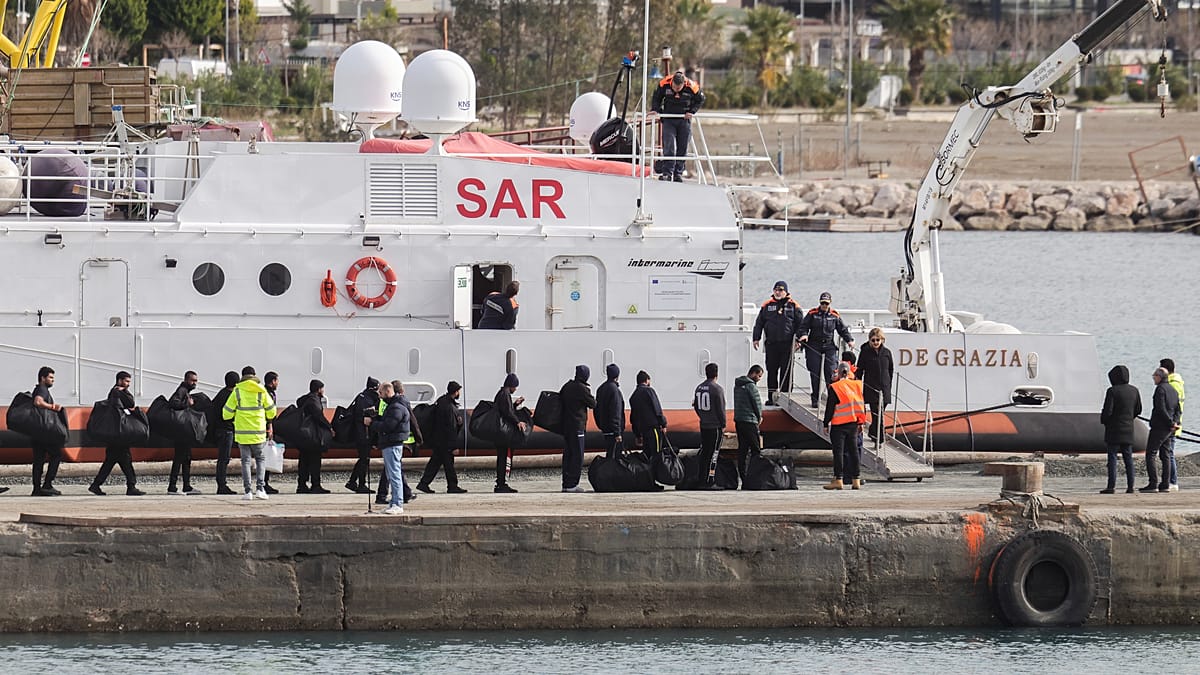
Italy has already launched a similar project with Albania, though its results have been modest. Initially projected to house around 3,000 migrants per month, the Albanian centres have reportedly accommodated only about 500 people in total since they were converted into deportation facilities in March 2025.
The return hub proposal has drawn sharp criticism from civil society and human rights organisations. Michele LeVoy, director of the Brussels-based NGO Picum, which advocates for the rights of undocumented migrants, said that sending people to deportation centres outside the EU would uproot children, adults and families from the lives they have built in Europe and subject them to prolonged detention in unfamiliar places.
Previous attempts to transfer migrants to non-EU countries have encountered difficulties. The United Kingdom abandoned a scheme to send asylum seekers to Rwanda, and Denmark dropped a similar plan in 2023 in favour of a European approach. The new initiative will be watched closely, as it tests the boundaries of EU law and the bloc's commitment to human rights. For more on migration challenges in Europe, see our coverage of fatal Atlantic crossings to the Canary Islands and the broader pressures on Europe's borders.