Spanish rescue services recovered the bodies of five African migrants on Wednesday night from a boat drifting in the Atlantic, about 120 kilometres southwest of Gran Canaria. The vessel, which had been carrying people from sub-Saharan Africa, was found in distress amid strong winds and waves of up to 2.5 metres.
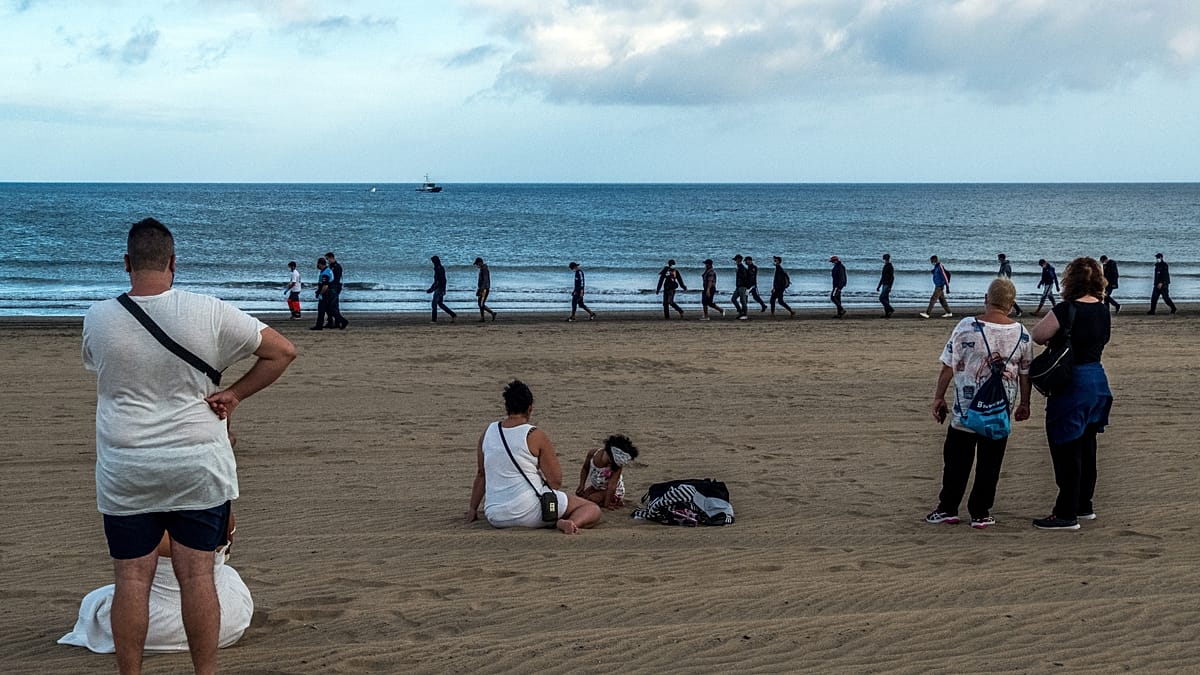
Salvamento Marítimo, Spain's maritime rescue agency, said it rescued 44 men from the boat. Three of them were airlifted by helicopter to a hospital on Gran Canaria, while the remaining 41 were brought to the port of Arguineguín early Thursday, where Red Cross workers provided medical care and support.
All survivors were men, some of them minors, and came from Mali or Senegal, according to José Antonio Rodríguez Verona, a spokesperson for the Red Cross in the Canary Islands.
Conflicting death tolls
The rescue agency initially reported that five bodies were on board, but adverse weather prevented their immediate recovery. The bodies were later taken to port along with the survivors.
However, the Spanish migrant aid NGO Caminando Fronteras has given a far higher estimate. Its spokesperson, Helena Maleno, wrote on X that 83 migrants—including three women and a baby girl—had died on a boat that left Gambia 27 days earlier. It remains unclear whether this refers to the same vessel.
Caminando Fronteras compiles its figures from calls with migrants' families and official rescue statistics, and its death tolls are often higher than those reported by authorities. A Salvamento Marítimo spokeswoman told AFP that the other alleged victims “have not been found or rescued” and that the alternative death toll could not be confirmed.
The Canary Islands have become a major entry point to Europe for migrants travelling from West Africa, a route notorious for strong currents and overcrowded, unseaworthy boats. The Atlantic crossing is one of the deadliest migration paths in the world, with hundreds of lives lost each year.
This latest tragedy comes as European border agencies and NGOs have reported an increase in departures from the West African coast, often in flimsy fishing boats or inflatable craft. The Spanish government has stepped up patrols and search-and-rescue operations, but the sheer scale of the route—and the dangers of the open ocean—continue to pose immense challenges.
Local authorities in the Canary Islands have repeatedly called for more support from the European Union to manage the arrivals and to address the root causes of migration in countries like Mali, Senegal, and Gambia. The EU has pledged funds and cooperation agreements, but critics argue that more needs to be done to prevent these deadly crossings.
For the survivors, the ordeal is far from over. Many will be transferred to reception centres on the islands, where they will begin the asylum process. But for the families of those who did not make it, the wait for news—and for official confirmation of their loved ones' fate—can be agonisingly long.