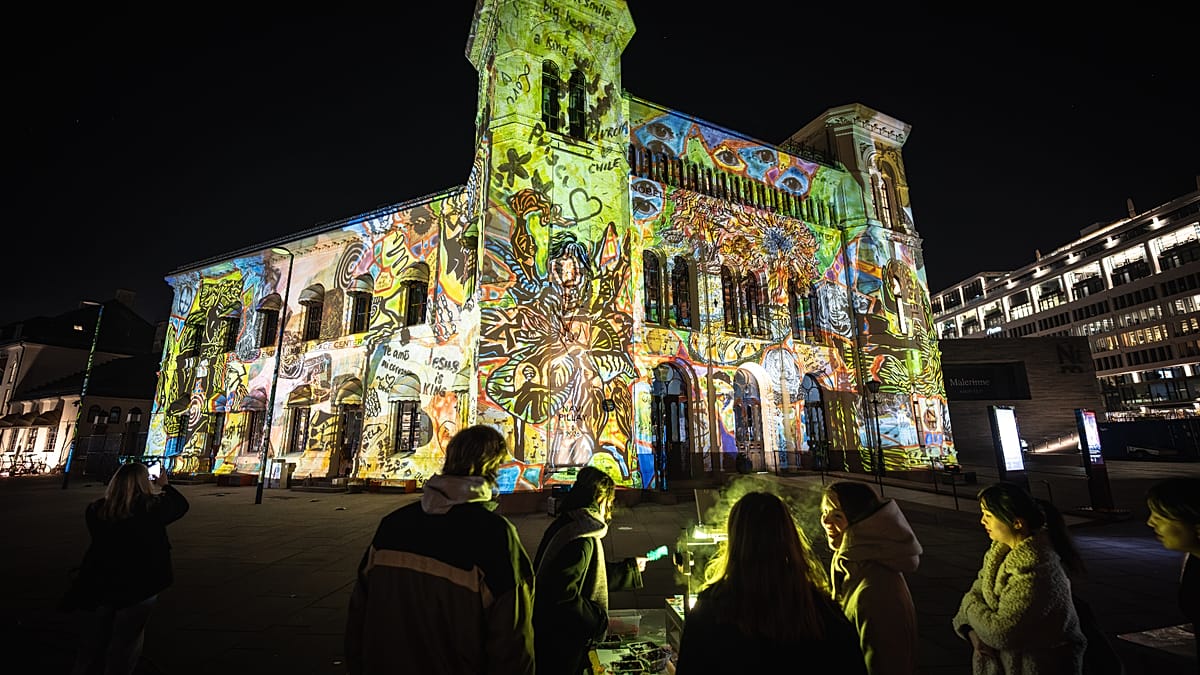
Oslo is once again turning its winter darkness into a canvas of colour and contemplation as the fifth edition of Fjord Oslo, an international open-air light art festival, takes over the Norwegian capital. Until early next month, installations will illuminate public squares, building facades and cultural landmarks, including the Nobel Peace Center, inviting residents and visitors to reflect on the meaning of peace.
This year's edition brings together artists from across Europe and beyond, each responding to the festival's central theme. Organisers say the goal is not merely to decorate the city, but to provoke thought about war, resilience, freedom and coexistence. The event is part of IMAGINE PEACE, a cultural project supported by the European Union, which links artists and audiences in a shared exploration of what peace means in the 21st century.
Art as a vehicle for reflection
For Anastasia Isachsen, a light artist and one of the festival's organisers, holding the event in Oslo carries particular weight. The city is home to the Nobel Peace Prize, an institution that has honoured peacemakers since 1901. "Hopefully we send a strong message by dedicating our festival to the topic of peace," she said. "It is about imagining what peace is on many different levels. It's also about global peace, international peace. But it's also on the personal level, what peace is for you as a person."
The festival's installations range from large-scale projections to intimate light sculptures, each offering a distinct perspective. Croatian artist Marko Bolkovic and his team took a participatory approach, asking people in six countries to describe peace in a single word. The responses, he said, were revealing. "We asked a lot of people around the world, especially in these six countries that are part of the festival, what is peace for you, just to say it in one word? And it was really interesting. Answers like father, friendship, mother, friends, things like that. Not always war or other stuff."
That emphasis on the personal and the everyday is a deliberate counterpoint to the often abstract geopolitical discussions of peace. By grounding the concept in human relationships, the artists hope to make it more tangible and more urgent.
Can art change minds?
The question of whether art can genuinely influence how people think about peace is central to the festival's mission. Norwegian visitor Ulrich Lauridsen believes it can, even if the effect is indirect. "I definitely think that art can change things. Not like stop a war, but it can get more people to want to stop a war because life is too precious to have wars and conflicts and all that."
For others, the festival's setting in Oslo adds a layer of symbolism. The Nobel Peace Center, which houses the Nobel Peace Prize, becomes a backdrop for works that grapple with the very ideals the prize represents. The juxtaposition of contemporary art and institutional history creates a dialogue between past and present, between aspiration and reality.
Kenyan visitor Faith Imani offered a personal definition of peace that resonated with the festival's theme. "I think it means freedom," she said. "The freedom to leave, the freedom to exist with each other, the freedom to be able to move within the world. So that is what peace means to me. The sense of freedom to just live and exist, coexist with everyone around."
Fjord Oslo is one of several light festivals that brighten European cities during the darker months, but its focus on peace gives it a distinct character. As Europe grapples with conflicts on its eastern borders and debates over security and diplomacy, the festival offers a space for quiet reflection. It also connects to broader conversations about the continent's role in promoting peace, a theme that has been central to EU policy and to the work of institutions like the European External Action Service.
The festival runs until early February, with installations spread across Oslo's city centre and waterfront. Visitors are encouraged to explore on foot, following a route that links the various works. For those unable to travel, the organisers have published an online map and a series of videos documenting the installations.
As the lights flicker over the Oslofjord, the message is clear: peace is not a static ideal but a living, evolving concept, one that requires imagination and engagement. Whether through a single word, a beam of light, or a shared moment of contemplation, Fjord Oslo invites its audience to take part in that imagining.