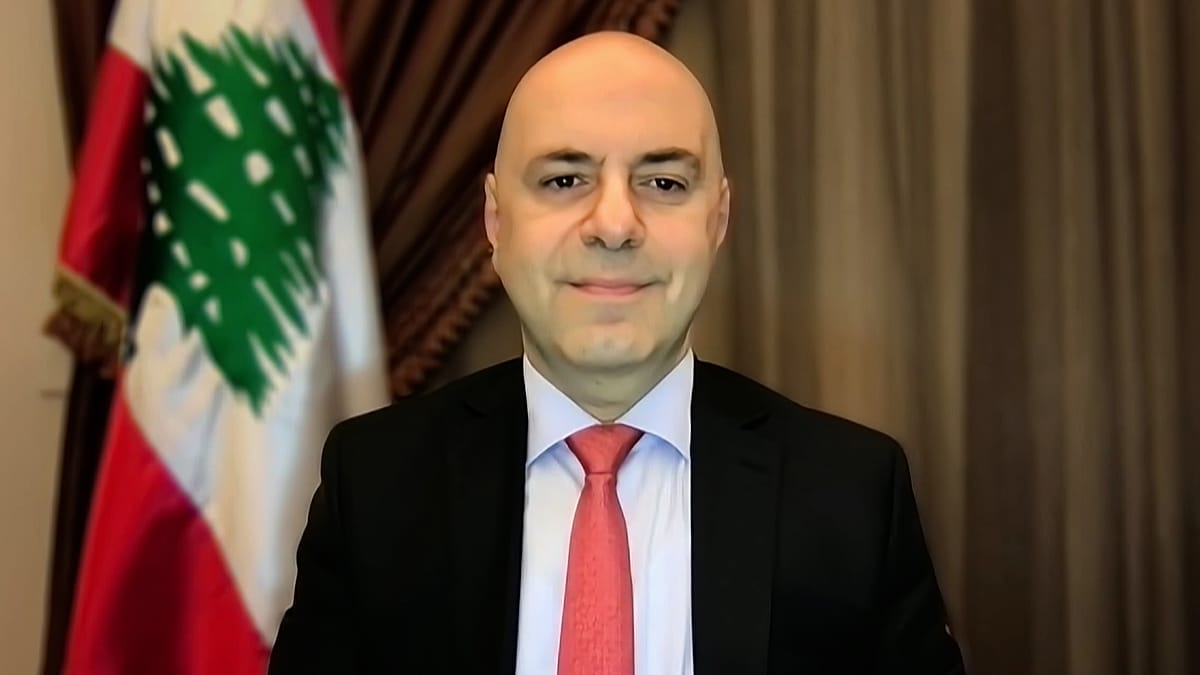
In a live interview from Beirut on Euronews' Europe Today, former Lebanese Deputy Prime Minister Ghassan Hasbani offered a bleak assessment of the situation along the Israel-Lebanon border. Despite reported US diplomatic efforts to de-escalate tensions, Hasbani said he has little faith in any party voluntarily ending the conflict.
“I don’t trust any side to stop anything,” Hasbani stated bluntly, reflecting the deep mistrust that pervades the region. He described Hezbollah as “a militarised force outside the Lebanese government control,” whose actions are heavily influenced by Iran. The Lebanese state, he stressed, is not at war with Israel and is instead trying “to de-escalate and avert or avoid further destruction in Lebanon.”
Limited Ceasefire, Limited Hope
Hasbani acknowledged that Israeli threats to strike Hezbollah strongholds in Beirut’s southern suburbs have been temporarily shelved following talks involving the Lebanese government and the United States. But he dampened any hopes of a comprehensive ceasefire. “The impression here on the ground is that the ceasefire would probably be limited to not targeting the Beirut suburb, if it holds,” he said.
This narrow understanding of a truce underscores the fragility of the current calm. For residents of the capital, the reprieve is conditional and could collapse at any moment. The broader conflict, involving cross-border exchanges between the Israeli military and Hezbollah, continues to simmer, with no clear off-ramp in sight.
Hasbani’s comments come amid a wider context of regional instability. The European Union has been closely monitoring the situation, given its potential to spiral into a broader war that could affect European security interests. The bloc has repeatedly called for restraint and a diplomatic solution, but Hasbani’s remarks suggest that such appeals may fall on deaf ears.
Lebanon’s internal challenges compound the crisis. The government, already weakened by years of political paralysis and economic collapse, struggles to assert control over its territory. Hasbani noted that the state is seeking to prevent future conflicts triggered by armed groups operating outside its authority. This echoes concerns raised in a recent Lebanese MP: No Real Ceasefire Exists as Hezbollah Disarmament Looms, which highlighted the difficulty of disarming Hezbollah amid ongoing hostilities.
The European angle is clear: any escalation on the Israel-Lebanon border risks drawing in European allies and destabilizing the Eastern Mediterranean. The EU has already imposed sanctions on Hezbollah’s military wing and supports the Lebanese Armed Forces as a counterweight. Yet, as Hasbani’s interview shows, the path to peace remains blocked by mutual distrust and the influence of external actors like Iran.
For now, Beirut’s southern suburbs may be spared, but the underlying conflict shows no sign of resolution. Hasbani’s warning serves as a reminder that without a broader political settlement, any ceasefire is merely a pause in a longer war.



