Less than eight hours from Madrid, travelers can step off a plane into the tropical bustle of Fortaleza, one of Brazil's five largest cities. With direct connections from several European capitals—including Lisbon, Paris, and Madrid—both Fortaleza and Recife are capitalizing on their geographic position as the Brazilian mainland points nearest to Europe. The result is a steady increase in international tourism to a region that blends modern urban life with centuries of history.
Fortaleza: A City of Skyscrapers and Sand
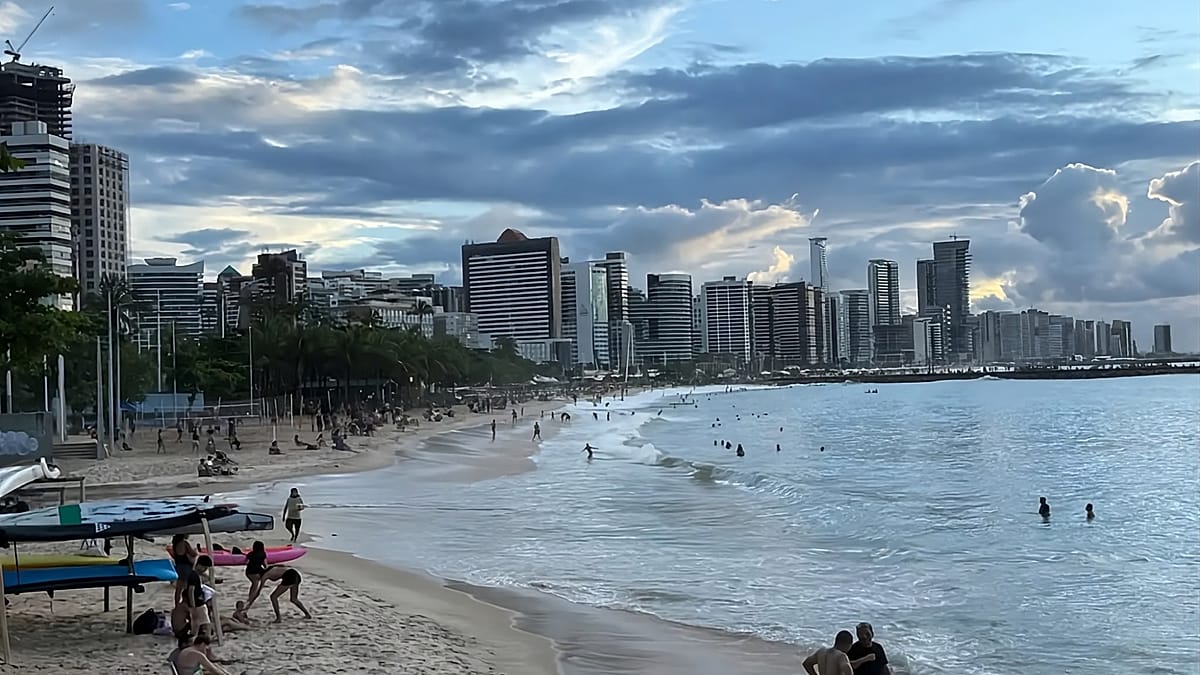
Fortaleza, capital of the state of Ceará and home to 2.57 million people, presents a skyline that locals compare to a cross between Miami and Benidorm. Its seafront promenade, Beira Mar, stretches six kilometers along the Atlantic, linking the beaches of Iracema, Meireles, and Mucuripe. Early mornings see dozens of amateur runners pounding the pavement, while later in the day, canoeists paddle the mild coastal waters. At the Mercado dos Peixes on Mucuripe beach, fishermen return in traditional jangadas—light sailing boats—with catches that supply Ceará's fish-and-seafood-heavy cuisine.
The city's origins lie in the 17th-century colonial rivalry between the Portuguese and the Dutch. In 1649, the Dutch built Fort Schoonenborch; six years later, the Portuguese reconquered it and renamed it Fortaleza de Nuestra Señora de la Asunción. In 2026, Fortaleza will mark the 300th anniversary of its founding, a milestone that permeates local pride. “This is a vibrant city with a rich blend of cultures that never sleeps,” says tour guide Castalha. “As early as three in the morning, lots of people are already out on the streets doing sport, running.”
By night, the city pulses with forró, a close-coupled dance style that is a hallmark of northeastern Brazil. The rhythm is quick, the steps simple, but keeping time requires practice—as this reporter discovered.
Beyond the City: Cliffs and Community Tourism
About 160 kilometers southeast of Fortaleza lies Canoa Quebrada, a coastal village famous for its red-and-white falésias (sandstone cliffs) and wind-sculpted dunes. Visitors explore the landscape in open buggies, racing across beaches and dunes, snapping photos of the crescent moon and star symbol carved into the cliffs—the emblem of Canoa Quebrada. The area first attracted European backpackers and hippies in the 1970s, drawn by its unspoiled beaches and laid-back atmosphere.
Further south, at Canto Verde beach in the municipality of Beberibe, a community of about 200 artisanal fishers offers a different kind of experience. “We make our living from artisanal fishing and we are promoting community-based tourism,” explains Roberto, a local. The inhabitants have fought property speculation and mass-tourism projects to create a sustainable reserve. Daniele Rocha, from Embratur, Brazil's International Tourism Promotion Agency, notes: “This is another of this place's attractions; it is a form of sustainable tourism that does not push out local people, but instead involves them and their traditions and customs.”
Recife: The Brazilian Venice
Just over an hour's flight south from Fortaleza, Recife presents a different face of northeastern Brazil. The capital of Pernambuco state, with 1.5 million inhabitants, was once the economic heart of Portuguese America, thanks to its strategic port and the sugar trade. Between 1630 and 1654, it served as the capital of New Holland, the Dutch colony in Brazil. That period left a lasting imprint: bridges, canals, and buildings that still shape the city's urban identity, earning it the nickname “the Brazilian Venice.”
Recife's history is etched into its streets: colonial churches, fortifications, Dutch-influenced architecture, and the Kahal Zur Israel synagogue—the first synagogue in the Americas. The city was also a stage for major revolutions. Its cultural life is defined by frevo, a music and dance style with jumps, acrobatics, and spins reminiscent of capoeira, performed by dancers carrying colorful umbrellas. UNESCO has recognized frevo as Intangible Cultural Heritage of Humanity. “The intense mixing of peoples—Europeans, Africans, and Indigenous—left a legacy that you can feel in every step of the frevo,” says a local cultural guide.
For European travelers seeking a destination that combines beach relaxation, historical depth, and vibrant culture, Fortaleza and Recife offer a compelling alternative to more traditional holiday spots. With direct flights from Madrid, Lisbon, and Paris—and a growing network of connections—the northeastern coast of Brazil is becoming increasingly accessible.