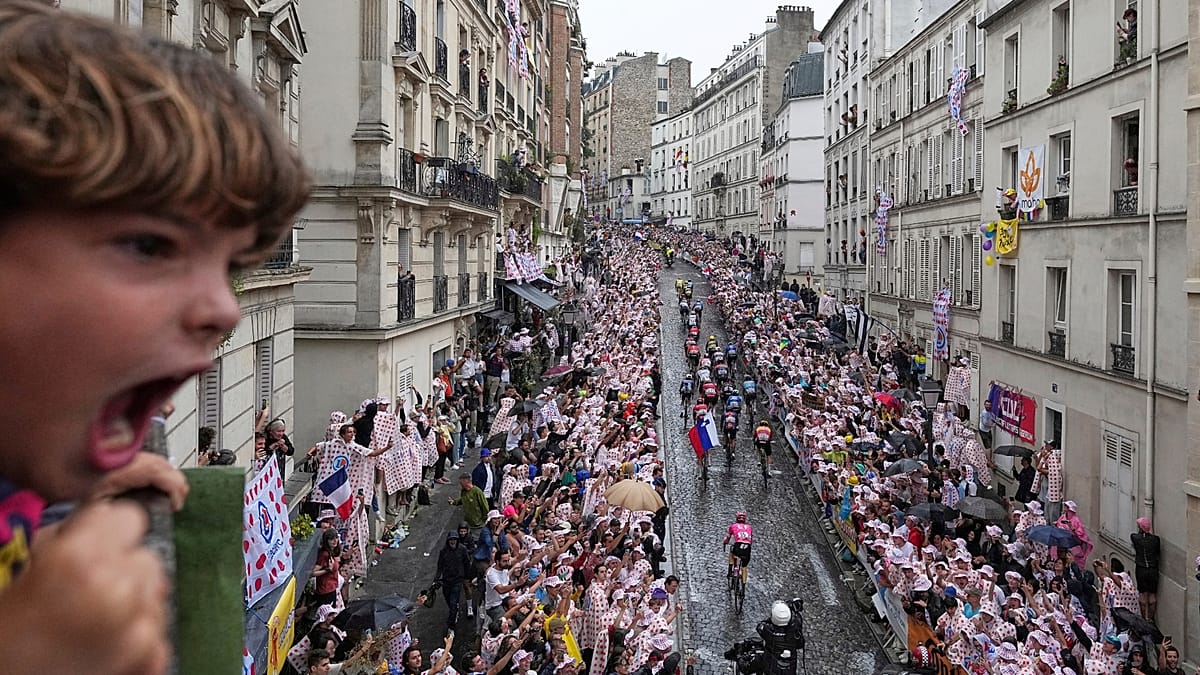
For the first time in decades, the final stage of the Tour de France will be a distinctly Parisian affair. Stage 21, originally scheduled to cover 133 kilometres through the Yvelines department, has been shortened to just 89 kilometres. The reason: wildfires raging in the Gironde region have forced the Interior Ministry to redeploy police and gendarmerie units from the race to bolster firefighting efforts. Riders were bused directly to the capital, bypassing the planned route.
A compact, high-intensity finale
The revised itinerary keeps the peloton entirely within Paris. The start is set for 17:50 on the Champs-Élysées, where riders will complete two extra laps before heading north to the Montmartre hill circuit. They will climb the steep, cobbled Rue Lepic three times — a spectacle that drew an estimated 180,000 spectators last year, according to Paris city hall. After the Montmartre loops, the race returns to the Champs-Élysées for a finish expected around 19:45.
The decision to cut the stage was pragmatic. A longer course would have required extensive security coverage, but with resources diverted to the Cap Ferret wildfire and other blazes, organisers opted for a route that could be safely managed with fewer personnel. The move also avoids disrupting emergency services already stretched by the heatwave-driven fires across southwestern Europe.
Pogačar on the brink of history
Barring a crash or mechanical failure, Tadej Pogačar will win his fifth Tour de France on Sunday. The 27-year-old Slovenian holds a commanding lead of 6 minutes 26 seconds over Belgium's Remco Evenepoel. His UAE Team Emirates XRG teammate, 22-year-old Mexican Isaac Del Toro, sits third in the general classification, nearly ten minutes behind the yellow jersey.
Pogačar's season has been extraordinary. Even before this Tour, he had already won the Tour de Suisse, the Tour de Romandie, and several major classics, cementing his status as the dominant rider in the world peloton. A fifth victory would place him alongside legends Eddy Merckx, Miguel Indurain, Jacques Anquetil, and Bernard Hinault — a pantheon of cycling royalty.
Last year, nearly 500,000 people lined the streets of Paris to watch the Tour's finale, with around 180,000 packed into Montmartre. City officials expect similar crowds this year, drawn by the unique challenge of the Rue Lepic climbs and the chance to witness a historic victory.
Security and spectacle in balance
The shortened stage is a reminder of the growing impact of climate-related disasters on major sporting events. The wildfires in France and Spain have forced mass evacuations and stretched emergency services across the continent. For the Tour, the priority was clear: ensure the safety of riders, staff, and spectators while still delivering a memorable finale.
Paris has long been the symbolic heart of the Tour de France, and this year's stage reaffirms that connection. From the Champs-Élysées to the cobbled streets of Montmartre, the capital offers a compact, intense course that tests riders' legs and delights fans. As the peloton sprints toward the finish line, the city will once again prove why it remains the race's most iconic destination.