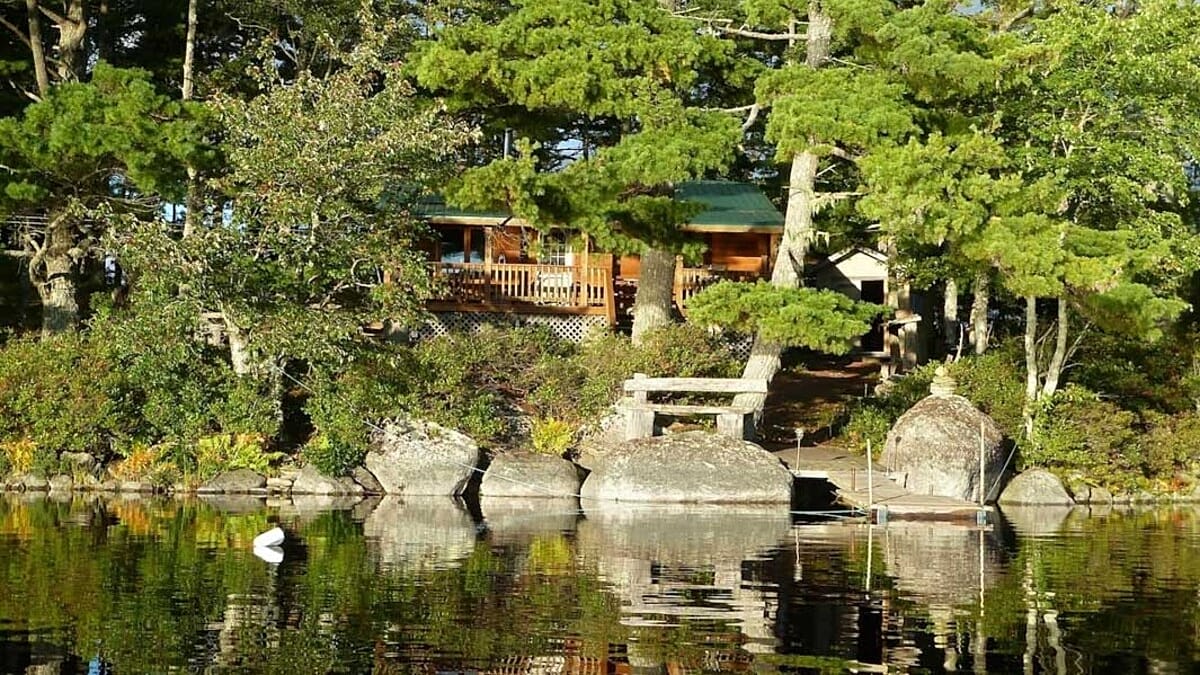
Most prize winners get a gift basket or a weekend getaway. Matthias R., a resident of Kahl am Main in Lower Franconia, ended up with something far more unusual: a private island in Canada. In 2005, he won the grand prize in a Haribo promotion—a 6.5-hectare plot on Back Lake in Nova Scotia, complete with a log cabin, a canoe, fishing gear, and a flight to get there. Now, two decades later, the island is on the market for 348,000 Canadian dollars (roughly €220,000).
From gummy bears to a wilderness retreat
Haribo's 2005 campaign was designed to sell the dream of escaping it all. The prize package included the island, a wooden house, a first flight to the property, and a canoe with fishing equipment. The company even threw in a supply of its famous Gold Bears—though, as the listing notes, they were hardly suitable for long-term survival in the wild. The promotion was backed by a hefty marketing push: 15 million promotional stickers were printed for the candy bags, and Thomas Gottschalk, then Haribo's advertising partner, was enlisted to help build the cabin and promote the contest on television.
The property, listed as "Back Lake Islands," sits in Shelburne County, about 30 minutes from the town of Shelburne. The estate agent's description paints a picture of rustic tranquillity: "Escape everyday life to your own private island paradise—just 30 minutes from the shops and amenities of Shelburne. A short boat ride from the shore takes you to your personal retreat, where you can enjoy lakeside living for at least three seasons of the year." The adjoining marshland, also part of the sale, is touted as ideal for exploring the unique natural environment.
The cabin itself is modest rather than luxurious: two bedrooms, a bathroom, solar panels for electricity, a pump drawing water from the lake, and a composting toilet. Two small boats, a jetty, a shed, and a generator are included. The agent recommends swimming, canoeing, fishing, and hiking as pastimes.
But the reality of island ownership has proven less idyllic. According to the German tabloid Bild, Matthias R.'s parents tended the property for years, investing considerable effort. The journey from Germany now takes around ten hours in total, and the family no longer makes the trip. Annual property taxes amount to roughly €2,500, on top of flights and car rental. As the owner put it, the dream was a gift, but the work came free of charge.
The sale raises a broader question about the allure of such prizes. For many, a private island seems like the ultimate escape—a place to disconnect from the noise of modern life. Yet as this case shows, the upkeep can be relentless, and the distance can turn a dream into a burden. The listing is now open to adventurers who might find the solitude perfect. Whether a buyer emerges remains to be seen, but the story serves as a reminder that even the sweetest prizes come with real-world costs.
For those interested in European perspectives on unusual investments, rising mortgage rates in Germany might offer a more grounded financial reality. Meanwhile, Roche's decision to freeze German expansion highlights broader economic uncertainties. And for a taste of the region's natural beauty, a recent hiking incident in South Tyrol shows that even Europe's own wilderness demands respect.