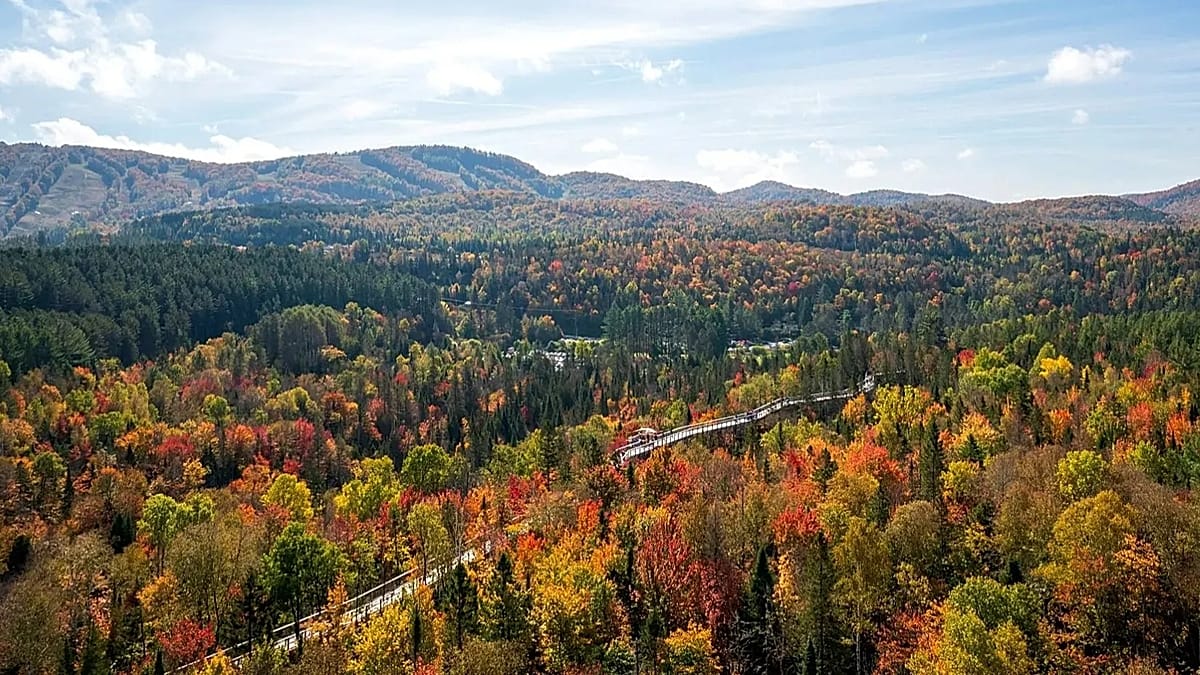
As the leaves begin to turn across the Northern Hemisphere, a new study has identified the world's most spectacular places for autumn colour. The ranking, compiled by cruise operator IgluCruise, assessed 40 popular destinations based on broadleaf density, daily sunshine hours in autumn, the availability of local tours, and rising search interest.
Surprisingly, New England—long considered the gold standard for leaf-peeping—did not claim the top spot. Instead, that honour went to Québec City in Canada, thanks to its dense tree cover, a wide range of bookable excursions, and a notable surge in online searches. Kyoto, Japan, came second, where the tradition of momijigari (leaf viewing) draws crowds each year to see the crimson maples and golden ginkgo trees. The Japan Meteorological Corporation has already forecast that Kyoto's red leaves will peak on 11 December 2026, with ginkgo trees turning yellow around 27 November.
Third place went to Burlington, Vermont, and the United States dominated the list with four entries overall: Portland, Maine (fourth), Jackson, New Hampshire (fifth), and Bar Harbor, Maine (seventh). Canada also performed strongly, with Halifax, Nova Scotia (ninth) and Saguenay, Québec (tenth) joining Québec City. Japan added a second city, Hiroshima, in eighth place.
Europe's lone representative
For European travellers seeking autumn splendour without crossing the Atlantic, the Wachau Valley in Austria is the standout choice, ranking sixth. Located about an hour by train from Vienna, this UNESCO World Heritage Site follows the Danube River through terraced vineyards, medieval ruins, and quaint villages. After a day of hiking or cycling among the golden vines, visitors can unwind in one of the region's traditional Heurigen wine taverns, where local vintners serve the year's new wine alongside hearty Austrian fare.
The Wachau's inclusion is a reminder that Europe's autumn beauty often lies in its cultural landscapes. The valley's mix of natural colour and centuries-old winemaking tradition offers a distinctly European take on leaf-peeping, one that pairs scenic walks with gastronomic discovery.
For those planning a European autumn getaway, the ranking aligns with broader trends in off-season travel. As Bruges tops a Reddit-based ranking of Europe's coziest autumn cities, travellers are increasingly seeking out destinations that combine seasonal charm with cultural depth. The Wachau, with its quiet roads and riverside paths, fits that bill perfectly.
While the study focused on global hotspots, it also highlights the appeal of European cities that may not make global top-tens but offer their own autumnal magic. Lisbon, recently named Europe's best city and cruise destination for 2026, enjoys mild autumns with plenty of sunshine, though its evergreen parks lack the dramatic colour change of northern latitudes. For the full spectrum of reds and golds, travellers might look to the forests of Bavaria, the Loire Valley, or the Scottish Highlands—all of which offer rich foliage without the crowds of Kyoto or New England.
The IgluCruise ranking is a useful starting point, but it also underscores a simple truth: autumn's palette is best experienced slowly, whether that means cruising the Danube through the Wachau or wandering the historic streets of Québec City. As the days shorten and the air turns crisp, these destinations offer a chance to witness nature's most vivid display—and, for Europeans, the Wachau Valley proves that you don't need to travel far to find it.