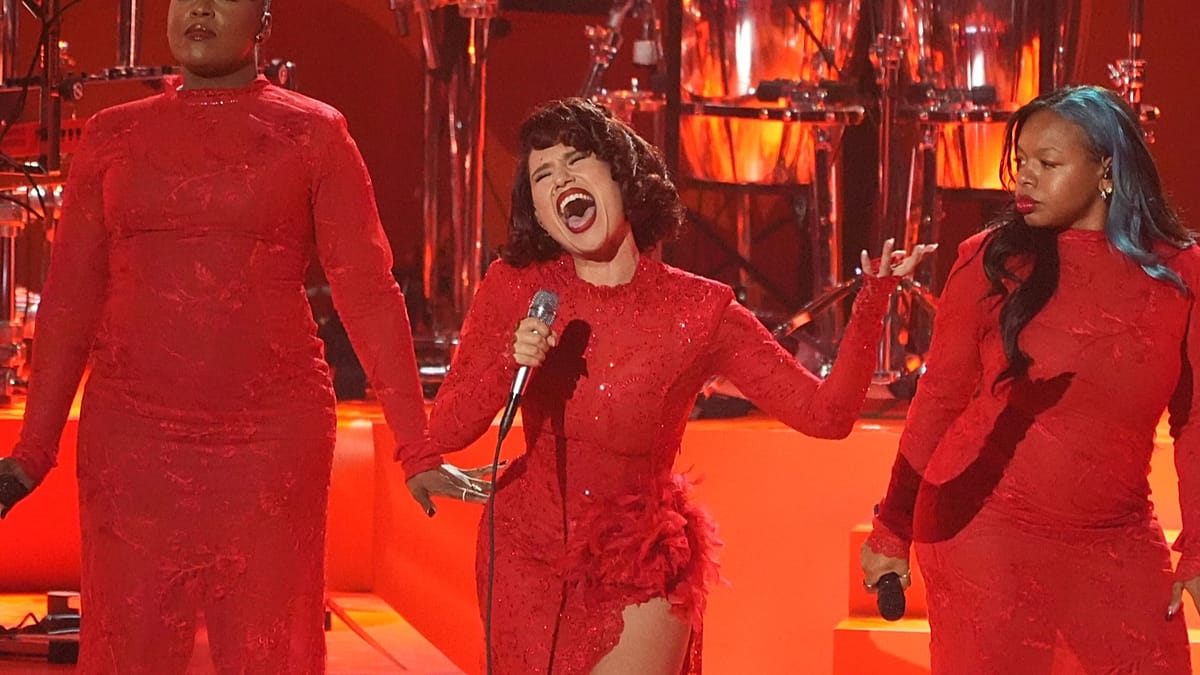
British singer-songwriter RAYE has taken home the 2026 Mercury Prize, the annual award for the best album by a British or Irish act. Her second record, This Music May Contain Hope, won over a jury that included some of the most talked-about releases of the year.
Born Rachel Keen, the London-raised artist saw off competition from Olivia Dean, who had been the bookmakers' favourite, as well as JADE, Florence + The Machine, and the War Child charity compilation Help (2). Notably, Paul McCartney received his first Mercury nomination at the age of 84 for The Boys of Dungeon Lane, but the prize went to the younger artist.
A blend of glamour and grit
The judging panel praised This Music May Contain Hope for fusing old-school Hollywood glamour with kitchen-sink realism. In their citation, they said the album tells “a story about a young woman navigating the everyday trials of life and love, on an album that is joyous and indeed hopeful.”
“RAYE displays real imagination and scope in showing what an album can be, going beyond any one style or genre to realise her vision,” the jury added. “The judges agreed that RAYE’s superb album will serve as a huge inspiration for years to come.”
Accepting the award, an emotional RAYE said: “I cannot tell you how grateful I am to be holding this. I’m shaking, I’m jetlagged, I’m tired, I’m grateful, it’s all blurry.”
She went on to stress the importance of the album format, a theme that has defined her career. “I’ve always banged on about how much I believe in albums. Albums are so important. And not to be bitter, because I feel like I’m mostly at peace with my past, you know? But to come from a place where it’s all about singles and chasing the next thing, I just feel so grateful to be recognised.”
RAYE’s comments echo her well-documented split from her former record label, which she accused of blocking the release of her debut album. She eventually put out My 21st Century Blues independently in 2023, a record that earned her a Mercury nomination and a record-breaking six BRIT Awards in 2024.
She also reflected on the healing power of music. “The tears are going to flow now, so I’m just going to say ‘This Music May Contain Hope’. ‘Hope’ is a very cheesy word, especially for us British. We don’t do that kind of deep stuff like that, but hope is just something that we all need. Music is that, music is medicine. I just hope that message comes across to anyone who needs it and thank you so much for this prize.”
RAYE joins a distinguished list of Mercury winners that includes Sam Fender, Ezra Collective, Michael Kiwanuka, Little Simz, Arlo Parks, and Young Fathers, as well as Arctic Monkeys, Pulp, PJ Harvey, and Franz Ferdinand. Her victory underscores a broader trend in British music toward genre-blending, emotionally direct songwriting that resonates beyond the charts.
As the music industry continues to evolve, with streaming favouring singles over albums, RAYE’s win is a reminder that the long-form record still holds cultural weight. Her independent path—from label disputes to critical acclaim—offers a blueprint for artists seeking creative control.
The Mercury Prize, now in its fourth decade, remains one of the most respected accolades in European music, celebrating artistic merit over commercial success. RAYE’s triumph, with its message of hope and resilience, arrives at a time when audiences across the continent are looking for music that speaks to both personal and collective struggles.