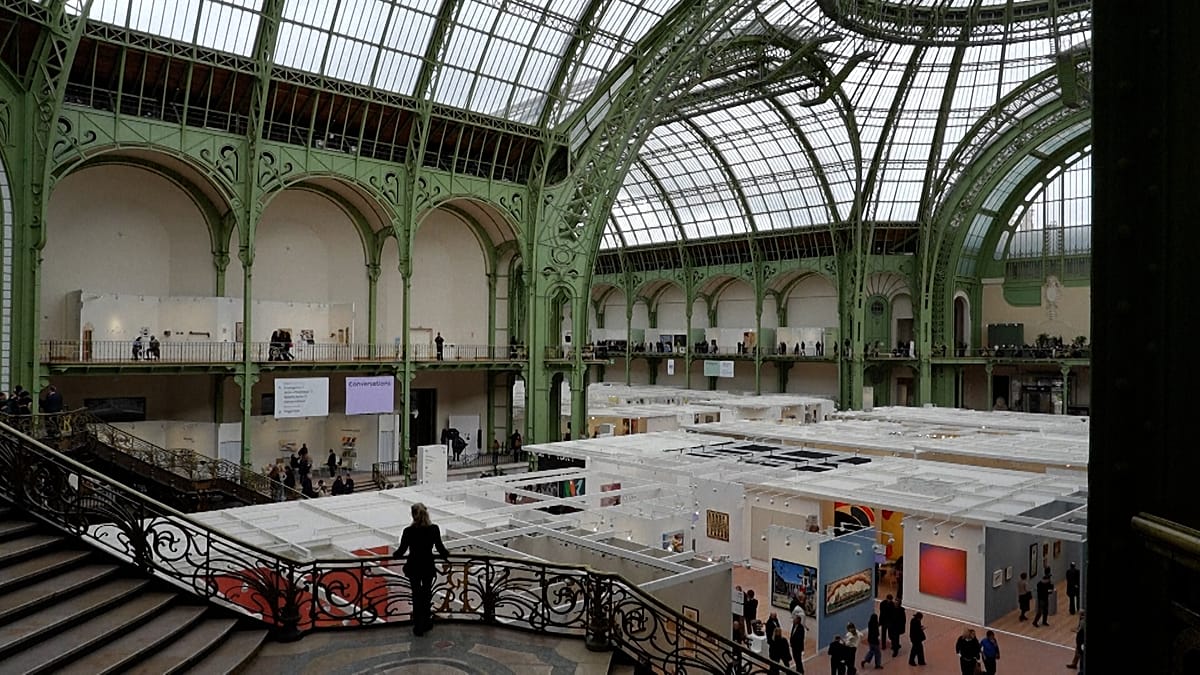
The Grand Palais in Paris is once again hosting Art Basel Paris, one of the most anticipated events on the European art calendar. International galleries and contemporary artists have converged on the French capital, but this year's edition unfolds against a backdrop of violent protests that have shaken the city and the country.
Organizers have responded by stepping up security around the fair, a move that reflects the tense atmosphere in Paris. Visitors will notice additional checkpoints, a more visible police presence, and stricter bag controls. The measures are designed to reassure collectors and exhibitors while keeping the focus on the art.
A resilient art market
Despite the unrest, the fair has drawn a strong turnout from major galleries across Europe and beyond. Dealers report solid interest from collectors, particularly from France, Germany, and the United Kingdom. The resilience of the art market in times of political turbulence is a recurring theme, and this year's edition appears to be no exception.
Art Basel Paris has become a cornerstone of the European cultural calendar since its launch, offering a platform for both established names and emerging talents. The fair's location in the Grand Palais, a historic monument, adds to its appeal. For many attendees, the event is a chance to engage with contemporary art in a setting that is itself a work of architecture.
Security concerns and public sentiment
The decision to bolster security comes after days of protests that have led to clashes with police, looting, and damage to businesses across Paris. The unrest has raised questions about public safety and the government's ability to maintain order. Macron has convened a security council to address the situation, and authorities are preparing for further demonstrations.
For the art world, the heightened security is a practical necessity. "We are grateful for the precautions taken by the organizers," said one gallery owner from Berlin. "It allows us to focus on our work and our clients." Others expressed concern that the unrest could deter some international visitors, though early attendance figures suggest that the fair's pulling power remains strong.
The protests have also had a direct impact on small businesses in the capital. A Paris shop owner lost a decade of work in a single night of looting, highlighting the human cost of the violence. Such stories are a reminder of the challenges facing the city beyond the glittering facade of the art fair.
European context
The unrest in France is not an isolated phenomenon. Similar tensions have emerged in other European countries, with France and Italy blaming foreign powers for riots, though evidence remains thin. The situation has prompted discussions about social cohesion and the role of the state in maintaining public order.
For the European art community, Art Basel Paris is more than just a commercial event. It is a symbol of cultural exchange and continuity. The decision to proceed with the fair despite the unrest sends a message about the importance of art and culture in times of crisis. As one curator from Milan put it, "Art does not stop, and neither do we."
The fair runs for several days, and organizers remain optimistic that it will conclude without major incidents. In the meantime, the art world watches closely, aware that the intersection of culture and politics is rarely straightforward.