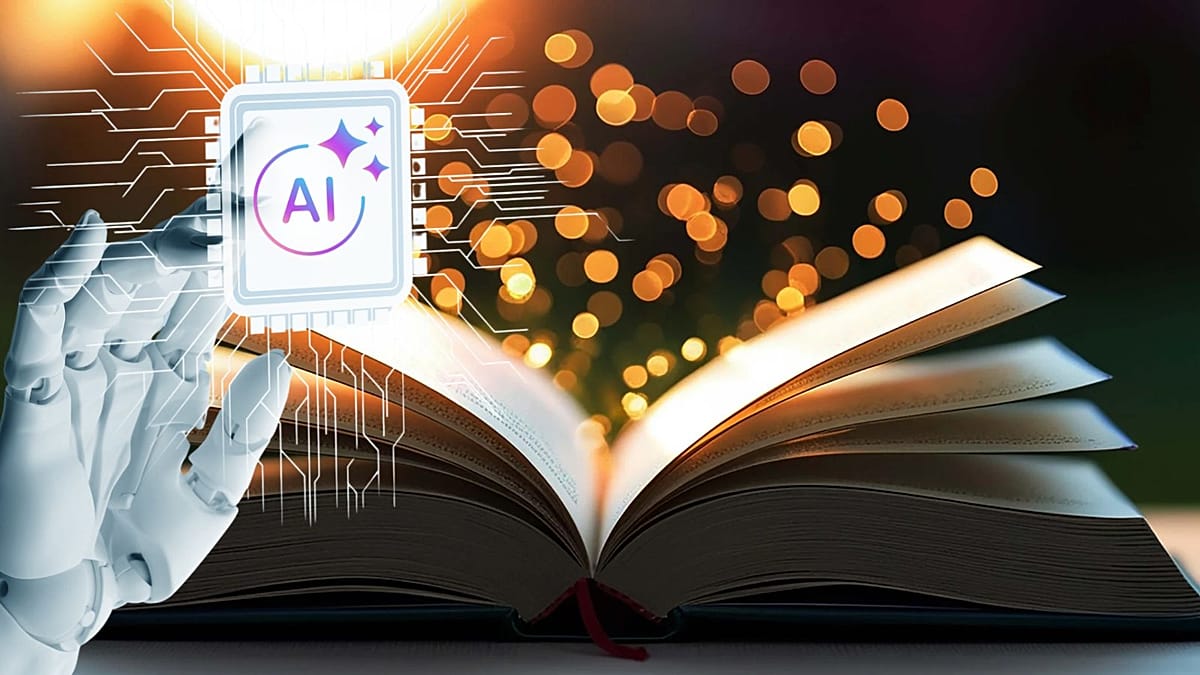
A new literary prize in France is openly embracing artificial intelligence as a co-author, a move that lands at a particularly sensitive moment for the country's publishing world. The Prix Pascal de Littérature IA, announced this week, invites submissions of unpublished manuscripts written with the assistance of large language models such as ChatGPT, Claude, Gemini, or LLaMA.
The prize's launch comes in the wake of the Thélyson Orélien affair, which has shaken French letters since September. Orélien, a Canadian-Haitian author, was accused of using AI extensively in his novel C'était ça ou mourir. On Tuesday, his Canadian publisher confirmed the use of AI and severed ties with the writer. Orélien continues to deny the allegations, telling Libération's Rachid Laïreche that he used AI tools for historical research, much as one might use a translation service. "I said that I wrote the book; it's not as if AI wrote it," he insisted, adding that he "didn't expect any of this."
A prize that asks, not judges
The Prix Pascal's organisers—technology entrepreneurs Philippe Rodriguez, Albin Serviant, and Gilles Mentré—are positioning the award as a platform for debate rather than provocation. "Whilst others hunt down AI using conflicting detection tools, the Prix Pascal asks authors to declare its use: no proselytising, no lawsuits—transparency as the basis for debate and collective intelligence," they state on the prize's website.
Entrants must submit a manuscript alongside a technical dossier detailing the algorithmic assistance used. The prize is open to anyone writing in French, anywhere in the Francophone world, regardless of nationality or residence, and without the need for a publisher. The jury, composed of five prominent figures yet to be announced, will seek "an unpublished work that is useful or thought-provoking." The winner of the 2026 prize will be revealed in mid-December, with publication support offered instead of a cash award.
The prize is named after Blaise Pascal, the 17th-century mathematician and philosopher, whom the organisers describe as "the only Western thinker to have been both a pioneer of mechanical devices and a master of language." They cite his aphorism: "À mesure qu'on a plus d'esprit, on trouve qu'il y a plus d'hommes originaux"—the more wit one has, the more one realises there are original people.
French law neither regulates nor prohibits the use of AI in literary creation, so the prize is legally sound. Yet its timing is awkward. The literary community is still reeling from the Orélien scandal, and many authors and publishers are calling for safeguards against unacknowledged AI use. The Prix Pascal's insistence on transparency could be seen as a constructive counterpoint, but it also risks normalising a practice that many creatives view as a threat to authorship.
Rodriguez, a founding partner at the mergers and acquisitions firm Avolta; Serviant, former chair of the LGBTQ+ magazine Têtu; and Mentré, who teaches at Harvard and the University of Paris 1 Panthéon-Sorbonne, are no strangers to controversy. Their initiative has already drawn sharp reactions on social media, with some accusing them of opportunism and others welcoming a more open conversation about AI's role in literature.
The debate extends beyond France. Across Europe, publishers and writers are grappling with similar questions, from the fallout in Quebec to discussions in Frankfurt and London. The Prix Pascal may be a French initiative, but its implications resonate across the continent's literary scenes.
As the call for entries opens, the literary world will watch closely to see who dares to submit—and whether the prize can foster a genuine dialogue or merely add fuel to an already fiery dispute.