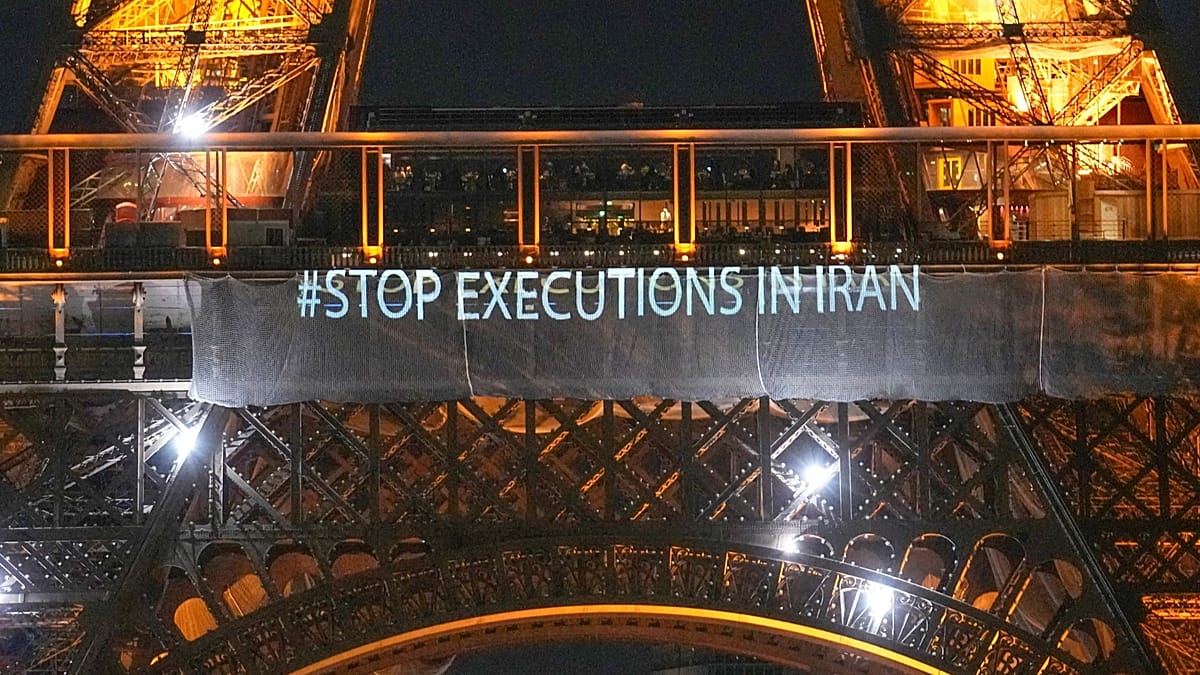
The diplomatic rift between Paris and Tehran has widened after France took a leading role in an international statement condemning Iran's use of the death penalty. French Foreign Minister Jean-Noël Barrot accused the Iranian regime of continuing its "bloodshed" against protesters, while Tehran dismissed the French stance as "blatant hypocrisy."
In a post on X, Barrot wrote: "Seven months after the widespread atrocities against the Iranian people who rose up to demand justice and dignity, this regime continues its bloodshed by carrying out an increasing number of executions." The French Foreign Ministry confirmed that Paris had spearheaded the campaign, noting that the initial statement, signed by 26 countries and the EU's foreign policy chief, had since gained additional support, bringing the total to 32 signatories.
Iran's Foreign Minister Abbas Araghchi responded forcefully, accusing France of applying double standards. "Countries like France should stop lecturing the world about 'human rights' and international law. The hypocrisy is blatant and embarrassing," he wrote on X. He added: "Your backing of Israel's genocide in Gaza—and aggression against Iran—has destroyed whatever moral high ground you imagined you had."
International condemnation
The exchange followed the release of a joint statement on Wednesday, in which more than 30 countries—including France, the United Kingdom, Canada, Australia, New Zealand, Germany, and Italy—along with EU foreign policy chief Kaja Kallas, condemned Iran's use of the death penalty against protesters "in the strongest possible terms." The signatories accused the Islamic Republic of executing protesters to "silence dissent," stating that "the use of the death penalty to intimidate communities and punish people for exercising their human rights is unjustifiable under any circumstances." They called on Tehran to immediately halt executions and release those detained.
The diplomatic spat comes amid mounting warnings from the United Nations and human rights groups about a new wave of executions in Iran. The latest arrests and sentences date back to late December, when protests initially focused on economic hardship—runaway inflation, high living costs, and rising prices—escalated into widespread anti-government demonstrations.
Iranian officials have reported that more than 3,000 people were killed, attributing the violence to "terrorist actions" orchestrated by the United States and Israel. However, rights groups outside Iran have reported significantly higher casualty figures and accused security forces of opening fire on protesters.
The joint US-Israeli attack on Iran on 28 February, which marked the start of a new Middle East war, further intensified the security crackdown. Observers note that the number of arrests and executions linked to the military conflict and protests has multiplied since then.
The United Nations and human rights organizations have expressed deep concern over the escalation of judicial measures, citing a lack of fair trials and the use of forced confessions. UN High Commissioner for Human Rights Volker Türk said in August that Tehran was using executions to "spread fear and terror." He reported that since March 19, at least 56 people had been executed on national security-related charges, with more than 100 others at risk of execution.
France's strong stance reflects its broader concerns about human rights in Iran, a position that has often put it at odds with Tehran. The latest exchange underscores the fragile state of Franco-Iranian relations, which have deteriorated further amid the ongoing Middle East conflict. As the international community watches, the question remains whether diplomatic pressure will translate into concrete change for those facing execution in Iran.