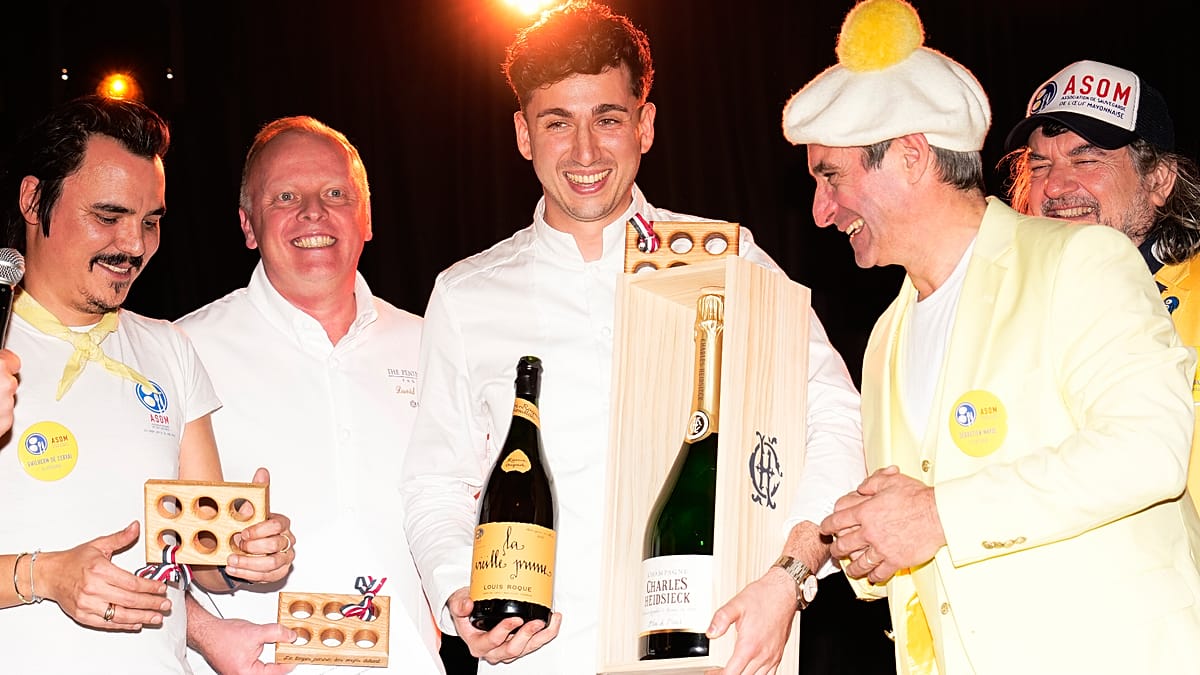
Sixteen chefs gathered in Saint-Ouen, just outside Paris, on Monday to compete for an unusual but fiercely contested title: world champion of egg mayonnaise. The competition, held on 23 November 2026, celebrates a dish that looks deceptively simple but demands real culinary precision.
Egg mayonnaise — or œuf mayonnaise — is a cornerstone of French bistro dining. A perfectly boiled egg, a silky homemade mayonnaise, and a careful garnish: the elements are few, but the margin for error is slim. Competitors were judged on texture, seasoning, and presentation, as well as the quality of the mayonnaise itself.
A dish that rewards restraint
The event drew finalists from across France, each bringing their own interpretation of the classic. Some opted for traditional mustard-spiked sauces, while others experimented with herbs, spices, or a hint of vinegar. But the judges made clear that innovation must never overshadow the dish's essential character.
"Egg mayonnaise is about balance," said one of the judges, a Parisian chef who has spent decades in bistro kitchens. "The mayonnaise should be rich but not heavy, the egg perfectly cooked, and the seasoning precise. It's a test of fundamentals."
The competition has grown in recent years, reflecting a broader appreciation for the craft behind everyday French cooking. It also comes at a time when cost-of-living pressures are pushing diners toward simpler, more affordable dishes — and chefs toward making them exceptional.
From bistro staple to global stage
While the championship is rooted in French culinary tradition, its appeal has spread. This year's finalists included chefs from Belgium and Switzerland, underscoring the dish's reach across Europe. Organizers say they hope to expand the event further in coming years, potentially hosting qualifiers in other countries.
The winner, announced late Monday, was a chef from Lyon, whose mayonnaise was praised for its "velvety texture and perfect acidity." The runner-up, a young cook from Brussels, impressed judges with a subtle tarragon infusion.
For the competitors, the title is more than a line on a résumé. "It's about respect for the classics," said one finalist from Marseille. "Anyone can boil an egg, but making it sing — that's the art."
The event also highlighted the importance of quality ingredients. Several contestants sourced eggs from small farms in Normandy and the Loire Valley, and one used a mustard made in Dijon. Such attention to provenance is increasingly common in French gastronomy, as chefs and diners alike seek out authentic, sustainable products.
As the competition wrapped up, organizers announced plans for a larger venue next year, possibly in Paris proper. The growing interest, they said, shows that even the humblest dishes can inspire passion — and that the world's appetite for French culinary excellence remains undiminished.