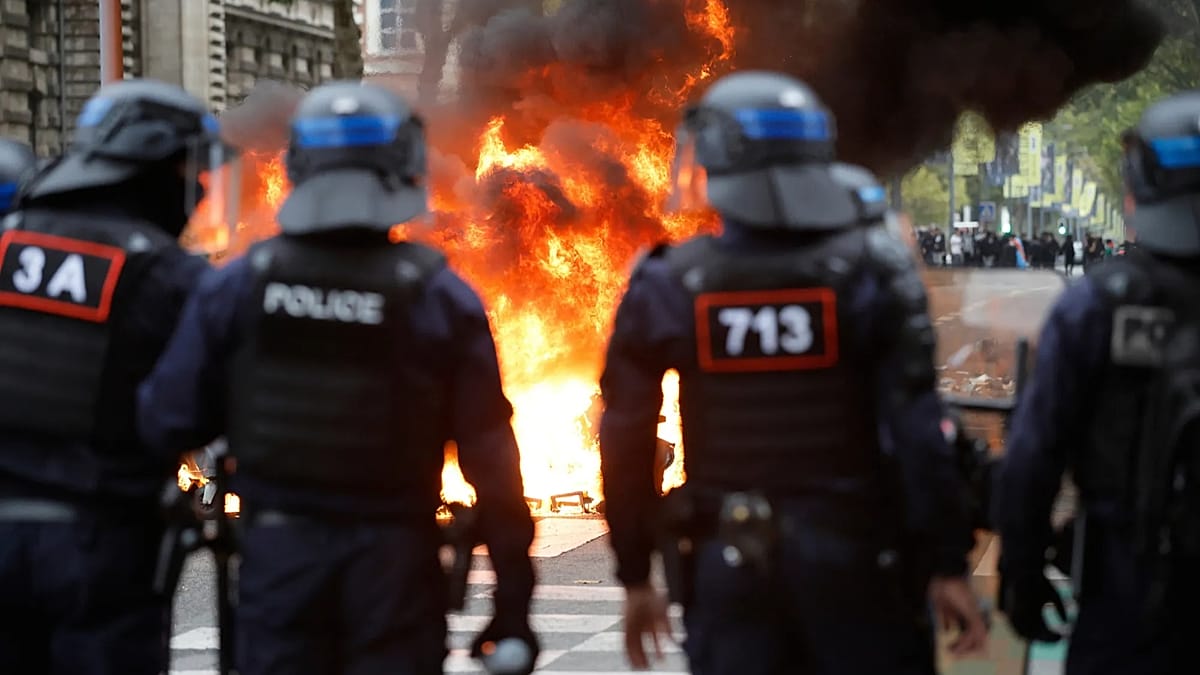
French authorities detained 625 people on Wednesday as blockades of lycées and clashes with police widened beyond the Paris region, Interior Minister Laurent Nuñez said, describing what he called an escalation of violence outside a number of schools.
At least 83 police officers and gendarmes were wounded during the day's protests, which touched 356 schools, Nuñez added. He condemned the targeting of law-enforcement officers, the throwing of projectiles, verbal abuse, attempted arson and conduct he said amounted to urban violence.
The unrest, now in its second week, has become a serious domestic challenge for President Emmanuel Macron's government. Speaking in Madrid, Macron accused hard-left politicians of legitimising violence, while insisting his administration would not tolerate vandalism.
Grievances beyond the classroom
Students have been demonstrating outside schools over a range of complaints: punishing timetables, oversized classes, a shortage of teachers and classrooms that became unbearably hot during this year's heatwaves. The movement began in the Île-de-France region around Paris but has since spread to cities across the country.
The worst-affected locations included Paris, Bordeaux in the southwest, Lyon in the southeast and Lille in the north, where police again fired tear gas during confrontations. The lycée system covers the final three years of secondary education for students aged 15 to 18, making the blockades a visible disruption to daily life in many French cities.
Education Minister Edouard Geffray said 119 students and staff members have been injured since the unrest started last week. "It is imperative that our students be able to return to class, especially those who are currently prevented from doing so," he said.
A government under pressure
The scale of the detentions and injuries underlines how quickly a school-level dispute has grown into a broader test of public order. The interior minister's figures suggest the movement is expanding rather than fading, even as ministers appeal for calm.
For students, the argument is concrete. "We don't condone vandalism; we came to defend our rights because we have horrendous schedules, we work 8:00 am to 6:00 pm and that's not right," said Juan, a pupil at the Montbello high school in Lille, which had been blockaded in recent days.
The confrontation has also drawn in national politics. Macron's remarks in Madrid reflect a government keen to frame the disorder as the work of agitators rather than a legitimate expression of student discontent, a distinction that will shape how the Élysée responds in the coming days.
The unrest follows a pattern of French protest movements that begin around a specific grievance and then broaden into a wider challenge to authority. With schools blockaded, police injured and hundreds detained, the coming week will test whether the government can reopen classrooms without further inflaming the streets.