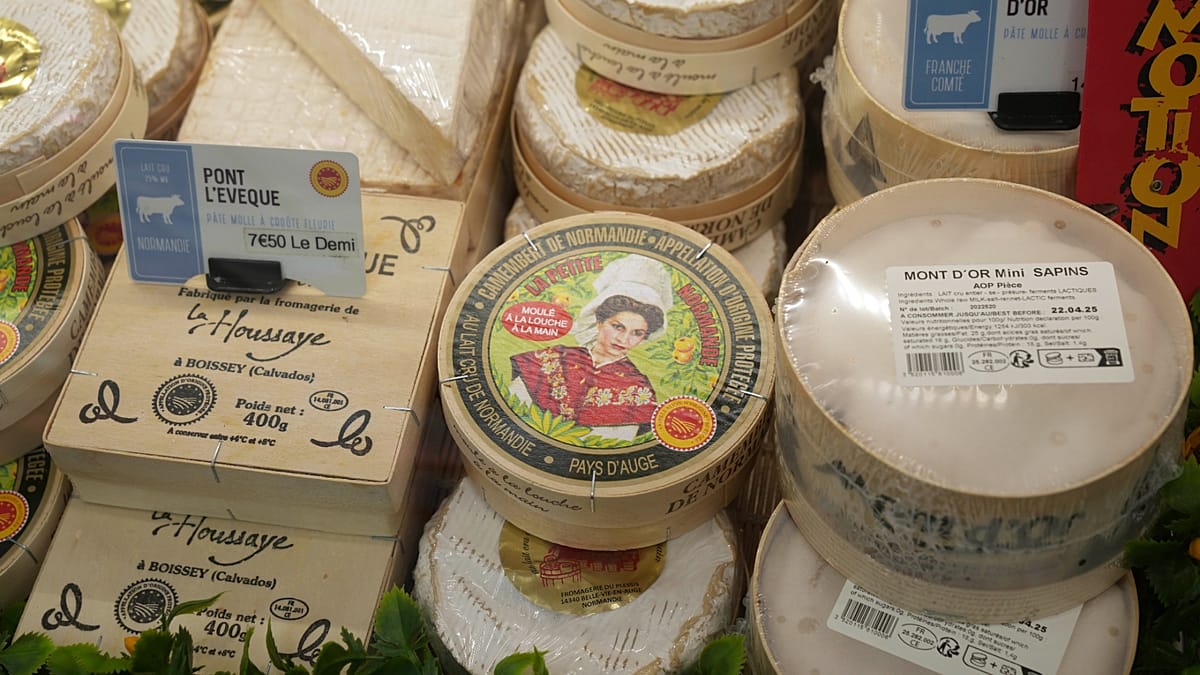
France has temporarily relaxed its famously strict rules on cheese production, allowing farmers to feed their cows with fodder from outside designated areas as record heat and drought devastate grasslands across the country. The emergency measures apply to three of the most revered Alpine cheeses—Abondance, Beaufort, and Comté—and could be extended to others.
The decision, announced by the National Institute of Origin and Quality (INAO), comes after one of the hottest and driest summers on record. In July, drought affected 95% of mainland France, leaving pastures that are normally lush and green dry and bare. According to the Agriculture Ministry's statistical service, growth on permanent grasslands by 10 August was a third below the 1989–2018 average.
Relief for farmers, but at what cost?
For producers of these hard cheeses, made from raw milk of cows grazing in the Alps and Jura mountains, the rules are normally ironclad. To earn the coveted appellation d'origine protégée (Protected Designation of Origin) label, they must adhere to strict guidelines on where animals graze and what they eat. The summer's extreme conditions have made those rules impossible to follow.
"The fodder situation is highly degraded in almost all regions," the ministry said earlier this month. In response, the government has authorised farmers to supplement their cows' diets with more fodder and grain brought in from elsewhere. This is a temporary measure, but it underscores the growing pressure climate change is putting on traditional food production across Europe.
The INAO has also indicated it will grant similar relief for other cheeses, including Reblochon, Cantal, Bleu d'Auvergne, and Fourme d'Ambert. These cheeses, like their Alpine counterparts, rely on pasture-based feeding systems that are increasingly vulnerable to extreme weather.
The impact of this summer's heat has been felt far beyond the cheese world. Europe has seen thousands of excess deaths, wildfires raging across the continent, and major rivers like the Danube dropping to record lows, revealing fossils and WWII wrecks. Winegrowers are reporting some of the earliest harvests on record, a sign of how profoundly the climate is shifting.
For French farmers, the relaxation of rules is a lifeline, but it also raises questions about the future of these iconic products. "We are in uncharted territory," said one dairy farmer in the Haute-Savoie region. "We have never had to feed our cows like this in summer. It's a sign that things are changing."
The temporary measures are a pragmatic response to an emergency, but they also highlight the delicate balance between preserving tradition and adapting to a warming world. As Europe grapples with the realities of climate change, the rules that have protected these cheeses for decades may need to become more flexible—or risk becoming obsolete.
For now, consumers can still enjoy their favourite French cheeses, but the story behind them is more complicated than ever. The drought has not only affected the quantity of milk but also its quality, which could alter the taste and texture of the final product. Some producers worry that even with the relaxed rules, the cheeses may not meet the high standards that have earned them their protected status.
As the summer draws to a close, the focus shifts to recovery and the long-term resilience of Europe's agricultural systems. The cheese industry, like many others, is learning that climate change is not a distant threat but a present reality that demands adaptation.