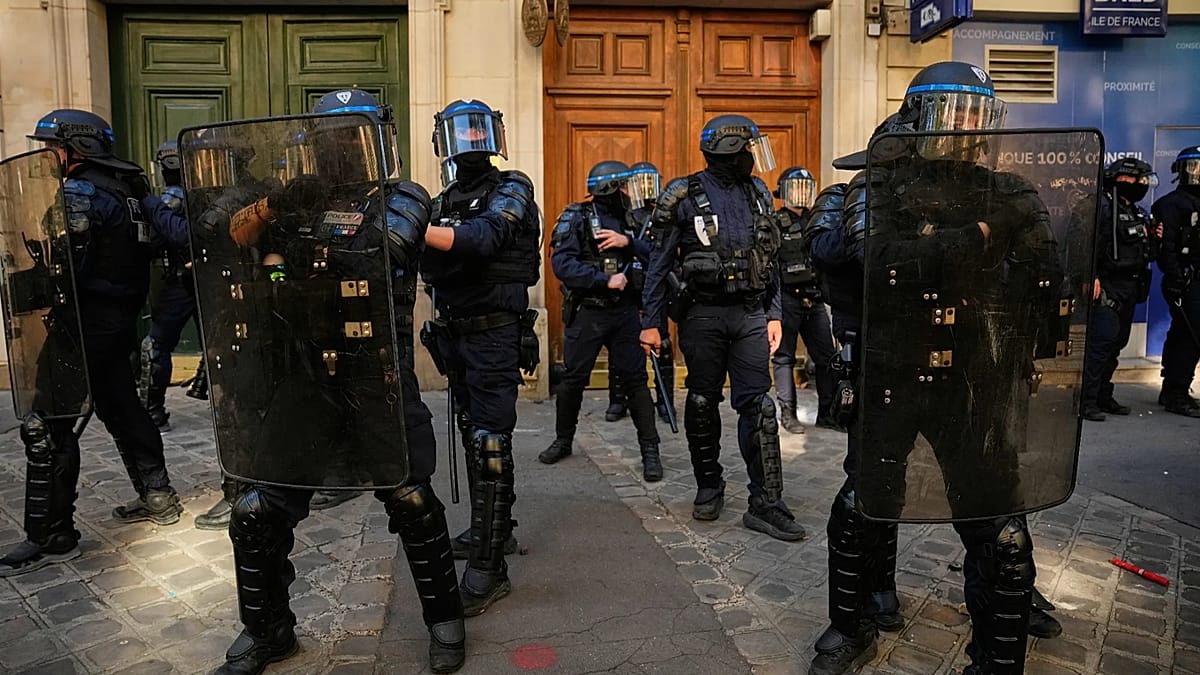
France has temporarily halted police use of stun grenades at high school student protests, following a serious injury to a 15-year-old and growing accusations of excessive force. Interior Minister Laurent Nunez announced the suspension on RTL radio on Wednesday, saying it would remain in effect until the circumstances of the incident are fully clarified.
The teenager was wounded on Monday when a stun grenade fired by police exploded near him, resulting in the loss of his hand. Nunez stressed that the measure applies only to the ongoing student demonstrations and is intended to last just long enough to establish the facts.
The decision comes as France grapples with a wave of protests that began in late September, when students started blockading high schools to demand better facilities and more teachers. According to the interior ministry, more than 6,500 people—most of them minors—have been arrested since the movement began, and hundreds of students, police officers, and teaching staff have been injured.
Police under scrutiny
Nunez revealed that 18 internal investigations have been opened into alleged police misconduct during the protests. One officer was charged on Tuesday after a 14-year-old in the northwest of Paris was hit in the face by a tear gas grenade at close range, losing several teeth.
Lawyers representing detained teenagers have reported widespread mistreatment. Prisca Ancion of the Collective for Judicial Action told AFP that every arrested student has described experiencing "an insult, a slap, having their head held down on the ground, chokeholds."
The suspension has drawn sharp criticism from opposition figures. Manuel Bompard, national coordinator of the hard-left France Unbowed (LFI), said: "It took several children being maimed for life for Nunez to give up using grenades against high school students." The government has accused LFI of inflaming tensions, a charge the party denies.
On Tuesday, President Emmanuel Macron convened an emergency meeting with Prime Minister Sébastien Lecornu and key ministers. Lecornu, who is scheduled to address the protests later on Wednesday, wrote on X: "The voice of high school students is precious and must be heard."
The protests have drawn large crowds across the country. The interior ministry reported that a quarter of a million people demonstrated on Tuesday alone, with at least 488 arrests and 43 members of the security forces wounded. In Rennes, police used water cannons to disperse demonstrators.
The situation has echoes of previous unrest in France, but the scale of arrests of minors has raised particular concern. The violence in Paris has been especially intense, with police firing tear gas at crowds of students.
As the government seeks to restore order, it faces a delicate balance between protecting public safety and respecting the right to peaceful protest. The suspension of stun grenades is a step toward addressing the concerns of critics, but it remains to be seen whether it will be enough to quell the anger of students and their supporters.
The protests have also drawn attention to broader issues of school funding and infrastructure, which have been neglected for years. Students have staged multiple nationwide demonstrations to press their demands, and the movement shows no signs of abating.
Meanwhile, the political fallout continues. The government's handling of the protests will likely be a key issue in the coming weeks, as Macron's administration faces pressure from both the left and the right. The French student rallies have coincided with political turbulence elsewhere in Europe, including Spain's snap election call.
For now, the focus remains on the injured teenager and the many other young people who have been caught up in the violence. The suspension of stun grenades is a small but significant concession, and many will be watching to see if it leads to a broader reassessment of police tactics at protests.