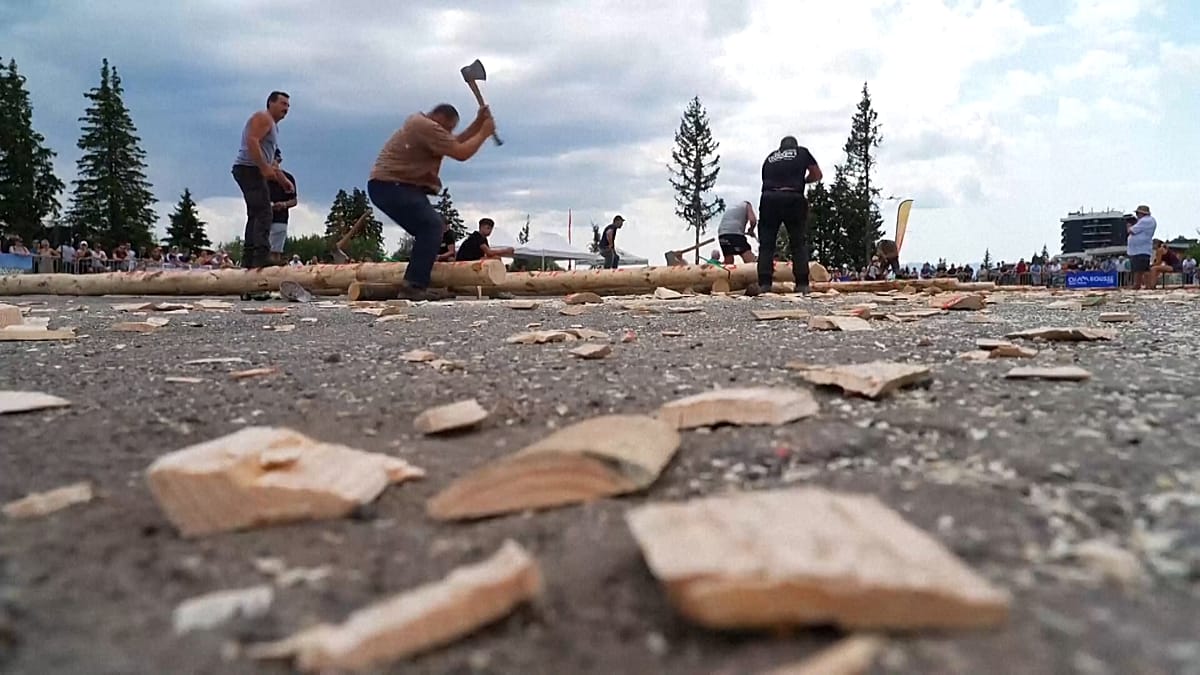
In the Alpine resort of Chamrousse, the rhythmic thud of axes against timber echoed through the mountains as France’s oldest lumberjack competition unfolded. Now in its 73rd year, the championship brought together 60 competitors who tested their precision and speed in a series of traditional forestry disciplines, watched by an audience of around 2,000.
The event is more than a contest; it is a living link to the region’s forestry heritage. For generations, communities across the French Alps have relied on skilled woodcutters to manage forests, and this competition keeps those techniques and values in the public eye. Organisers emphasise that the aim is not merely to crown a champion but to pass on knowledge that might otherwise fade.
Skills honed over decades
Participants ranged from seasoned professionals to younger enthusiasts, each bringing their own approach to the block. Disciplines included precision cuts, speed chopping, and the classic underhand chop, where competitors stand on a log and split it beneath their feet. The atmosphere was a mix of intense focus and communal celebration, with spectators cheering on favourites and marvelling at the dexterity on display.
One competitor, a local forester from the nearby Belledonne range, noted that the championship is a chance to honour a craft that modern machinery has largely replaced. “It’s about respect for the tree and for the skill,” he said. “You can’t rush it; you have to read the wood.”
The event also serves as a social gathering, drawing families and tourists alike to the high-altitude setting. For many in the crowd, it was their first encounter with competitive lumberjacking, and the organisers hope it sparks a wider appreciation for sustainable forestry.
Preserving a cultural tradition
Chamrousse, best known as a ski destination, transforms in the summer into a hub for mountain culture. The championship is part of a broader effort to keep Alpine traditions alive, much like other regional events across Europe. Similar competitions exist in Scandinavia and the Alps, each with its own local flavour, but the French event holds the distinction of being the oldest in the country.
The choice of venue is deliberate. The surrounding forests are managed under strict sustainability guidelines, and the wood used in the competition is sourced from local, certified operations. This ties the event to broader environmental concerns, echoing the water restrictions imposed across much of France during recent droughts, which have highlighted the fragility of natural resources.
Organisers also point to the educational value. School groups were invited to watch demonstrations and learn about tree species, growth cycles, and the role of forests in carbon storage. In an era of climate change, such knowledge is increasingly relevant, and the championship offers a hands-on way to engage with these issues.
The competitive spirit remains fierce, however. After two days of eliminations, the final saw the top contenders go head-to-head in a sprint of axe work that had the crowd on its feet. The winner, a 34-year-old from the Isère department, took home the trophy for the second time, praising the organisation and the level of competition.
For the spectators, the event was a reminder of the physical demands of forestry work. “It looks easy from the stands, but you can see the effort in their arms and backs,” said one visitor from Lyon. “It’s a real sport.”
As the championship wrapped up, organisers were already looking ahead to next year’s edition, hoping to attract even more participants and spectators. They see the event as a bridge between past and future, ensuring that the skills of the axe remain a living part of Alpine identity.
In a world where digital distractions dominate, the lumberjack championship offers a tangible, earthy counterpoint. It is a celebration of craft, community, and the enduring relationship between people and the forests that surround them.